


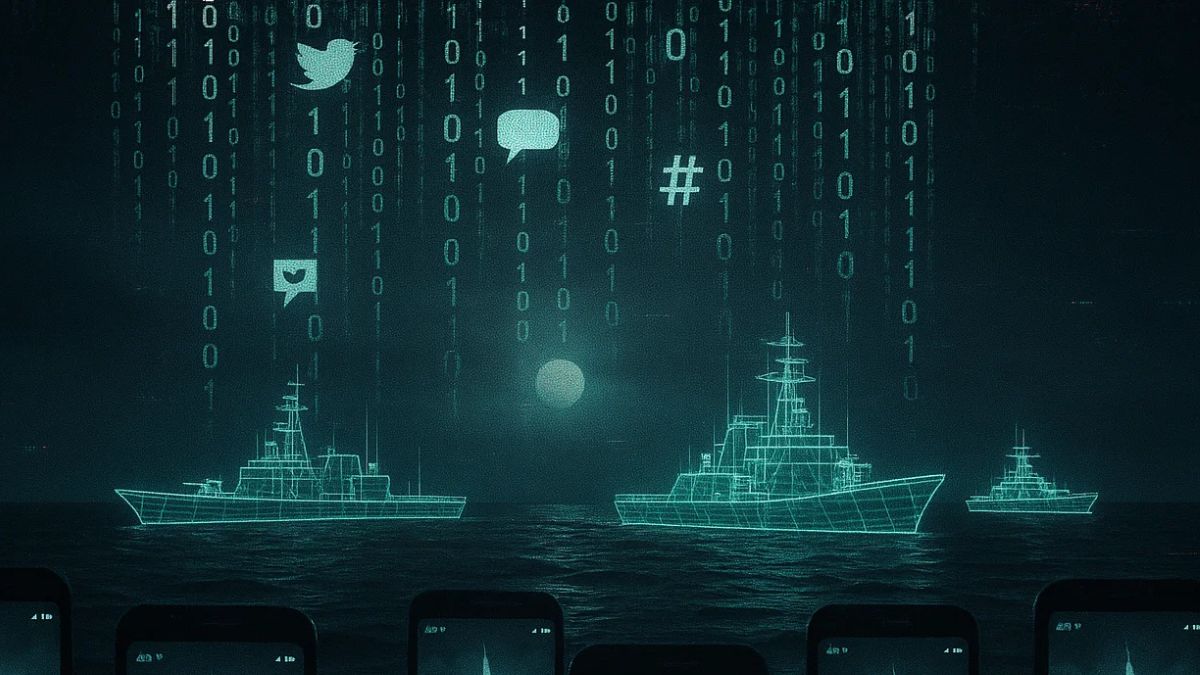
Late at night, during anxious moments along the maritime frontier, social media often erupts with dramatic claims. Videos surface showing missiles streaking across the sea, captions declare enemy retreats, and posts describe ports under attack. The content looks spontaneous, but the timing is precise. Look closely and patterns begin to appear. Profiles seem varied, yet their behaviour matches like cloned circuits. This surge of activity rarely comes from everyday users. It is driven by automated propaganda networks.
Researchers and defence analysts increasingly describe this digital apparatus as Pakistan’s “AI navy” – a fleet that exists not in water, but in code. In an age where perception shapes power, such networks operate as force multipliers. They spread synthetic statements, doctored clips and deepfake announcements faster than journalists or officials can verify them.
How do these bot systems flood platforms with fake naval content?
A typical cycle begins with a small number of seed accounts, often styled as defence commentators or patriotic watchers. These accounts post a fake clip or AI-generated statement. Within seconds, hundreds of other profiles replicate the post, sometimes with minor tweaks, sometimes word for word. Posting times align almost perfectly, timelines show little personal activity, and replies are minimal. The mission is amplification, not discussion.
The networks remain largely dormant during periods of calm, but they activate instantly when naval exercises or border flare-ups dominate attention. Their aim is simple: overwhelm the information space before fact-checkers or officials can respond. Repetition creates perceived truth. When hundreds of accounts circulate the same claim, many users begin to assume it is real, or at least plausible.
What does coordination reveal about the machinery behind the campaign?
Patterns have become increasingly visible. Identical spelling errors appear across anonymous handles. The same hashtags trend at the same moment. Short naval clips cascade across X, Facebook, YouTube Shorts and Telegram almost simultaneously. Human behaviour seldom syncs with such precision. Machine-driven dispatches can.
Cross-platform spread makes these campaigns harder to contain. A manipulated video that travels through thousands of accounts in minutes gains traction, builds momentum and reaches audiences far beyond South Asia. International observers, analysts and even newsrooms occasionally pick up these artificial waves. By the time the claim is debunked, the narrative has already travelled too far.
Bots also crowd replies under critical stories, report journalists en masse, and swamp analysts who point out inaccuracies. The goal is intimidation through volume, reducing visibility of fact-checks and making the environment hostile for verification
Why does this digital navy matter?
The risk is erosion of trust. When feeds are saturated with machine-generated certainty, scepticism spreads to genuine information as well. Real warnings and verified updates get lost beneath algorithmic noise. Public debate becomes polluted, and narratives of maritime power drift away from reality.
This manufactured navy does not patrol the Arabian Sea. Its ships exist as pixels, its power sits on servers, and its victories depend on virality rather than capability. Yet it succeeds in seizing attention. In the information arena, a trending hashtag can matter more, in the moment, than a fleet on standby.
The task ahead lies with platforms, regulators and users. Artificial popularity must not be mistaken for consensus. Automated outrage must not define public opinion. Until accountability and transparency improve, Pakistan’s “AI navy” will continue to sail across timelines, unseen in water but visible everywhere online.