


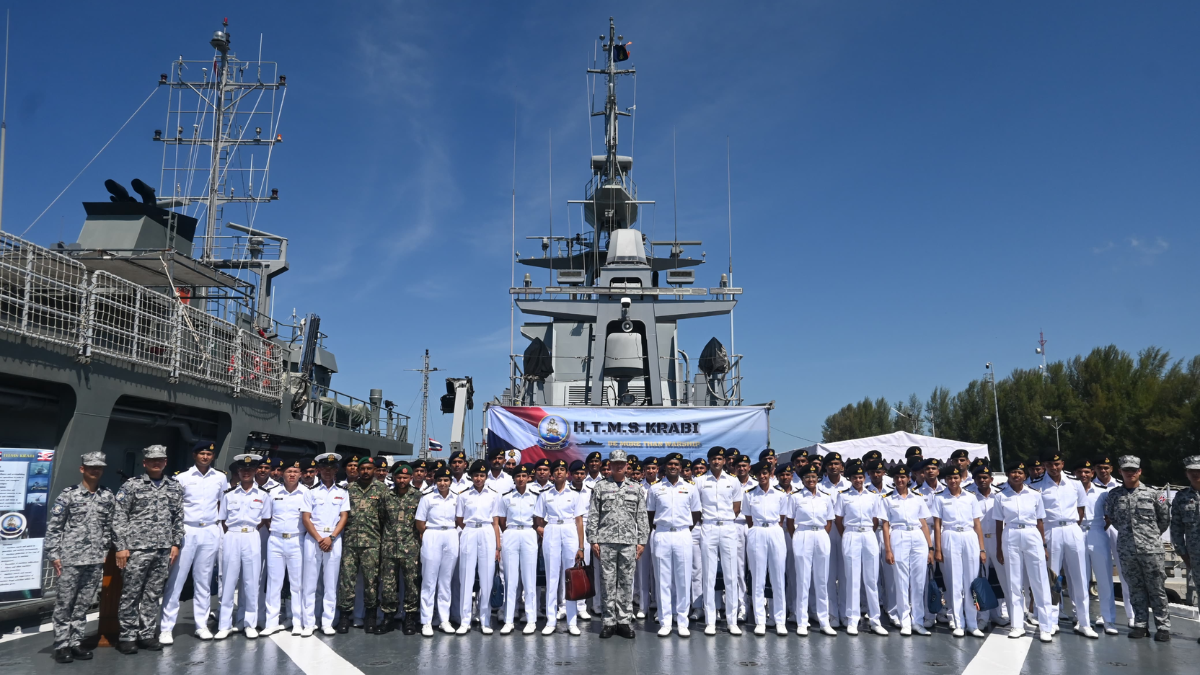
The departure of the Indian Navy’s First Training Squadron (1TS) from Phuket on 28 January 2026 sent a signal that reached far beyond the Andaman Sea. That day, the squadron—led by INS Tir and accompanied by INS Sujata, INS Shardul and ICGS Sarathi—conducted a final Passage Exercise (PASSEX) with the Royal Thai Navy’s HTMS Huahin. In strict military terms, a PASSEX is a routine drill to ensure ships can communicate and manoeuvre safely together. In diplomatic terms, however, this particular exercise functioned as the opening act of a much larger agenda: the 2026 ASEAN–India Year of Maritime Cooperation.
The timing of the Thailand visit is deliberate. It serves as an operational prelude to a significant institutional transition. In the coming weeks, Thailand is set to formally hand over the chairmanship of the Indian Ocean Naval Symposium (IONS) to India.
By deploying its training squadron—the cradle of its future naval leadership—to Phuket just ahead of this transition, New Delhi is signalling continuity rather than disruption. The cadets onboard are not merely learning seamanship and navigation; they are witnessing the transfer of regional stewardship in real time. The “bridges of friendship” highlighted in official statements are, in practice, functional diplomatic channels—kept alive through seamless professional interaction between the 1TS and their Thai counterparts.
While the steel hulls of the warships naturally draw attention, the deeper success of the deployment lies in its softer texture. The 1TS journey, which began in Singapore’s high-tech docks and passed through Belawan, Indonesia, has placed sustained emphasis on the human dimension of maritime security.
In Indonesia, engagement went beyond drills and manoeuvres. School visits, sporting exchanges, and informal interactions formed the core of the outreach. As Indian cadets interacted with local students and played football with Indonesian sailors, they were putting India’s SAGAR doctrine—Security and Growth for All in the Region—into practice. The logic is straightforward: lasting maritime security rests on trust, and trust is built between people, not just institutions.
The wake left by these ships points to a deeper current in regional relations. India’s reputation as a first responder—earned through timely assistance during past natural disasters—is now being reinforced through consistent peacetime presence and partnership. This voyage reflects a quiet maturation of strategy–a shift from abstract claims of being a security provider to the tangible reliability of a preferred partner.
As the ASEAN–India Year of Maritime Cooperation unfolds, the emphasis is clear. Influence is no longer measured by fleet size alone, but by the assurance that in difficult waters, support is close at hand. As the 1TS turns toward its next set of coordinates, the message is unmistakable: the Indian Navy is working steadily to keep regional sea lanes free, open, and genuinely connected.