


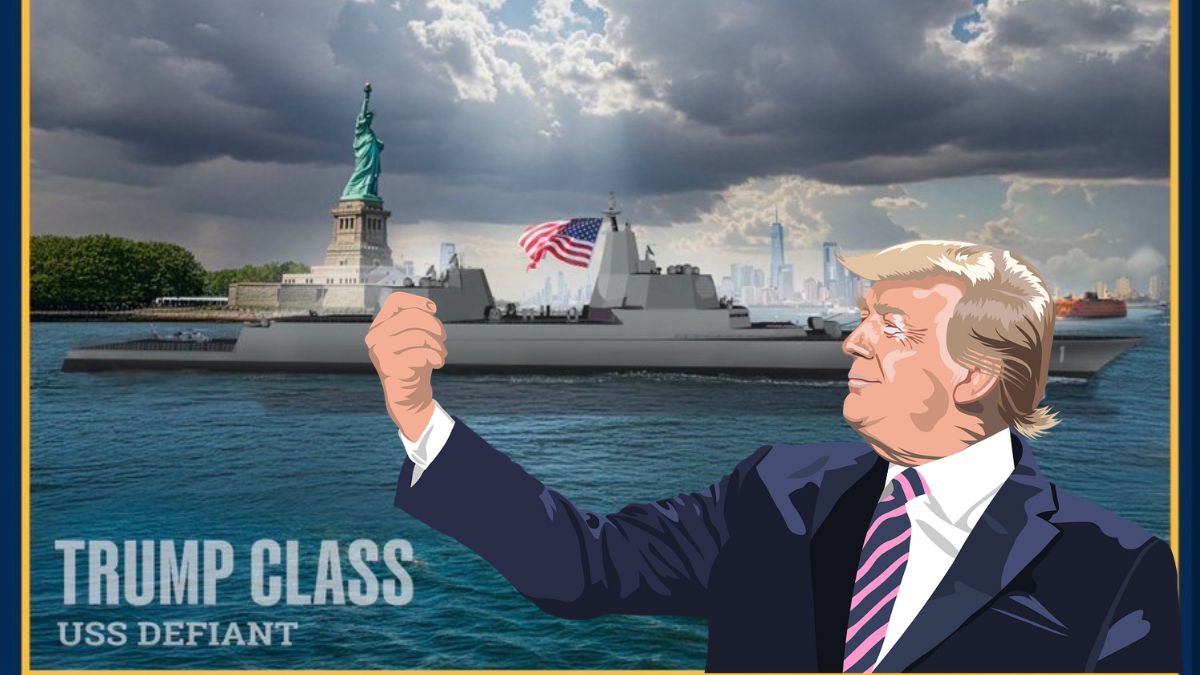
Apparently, US President Donald Trump likes things to be not just remarkble but big and beautiful! Whether it was his ‘One Big Beautiful Bill’, which became law in July this year, or the upcoming and perhaps the world’s most lethal warship ever to be built, Trump seems to be working very hard to leave a legacy behind that would be nothing less than “big and beautiful”.
On Monday (December 22, 2025), Trump unveiled plans for a new series of heavily armed US Navy “battleships”, named after himself, which would be part of the revamped ‘Golden Fleet’ – the US Navy’s bold investment to revitalise America’s maritime industrial base, rapidly building and sustaining the Fleet, and fundamentally changing how it does business.

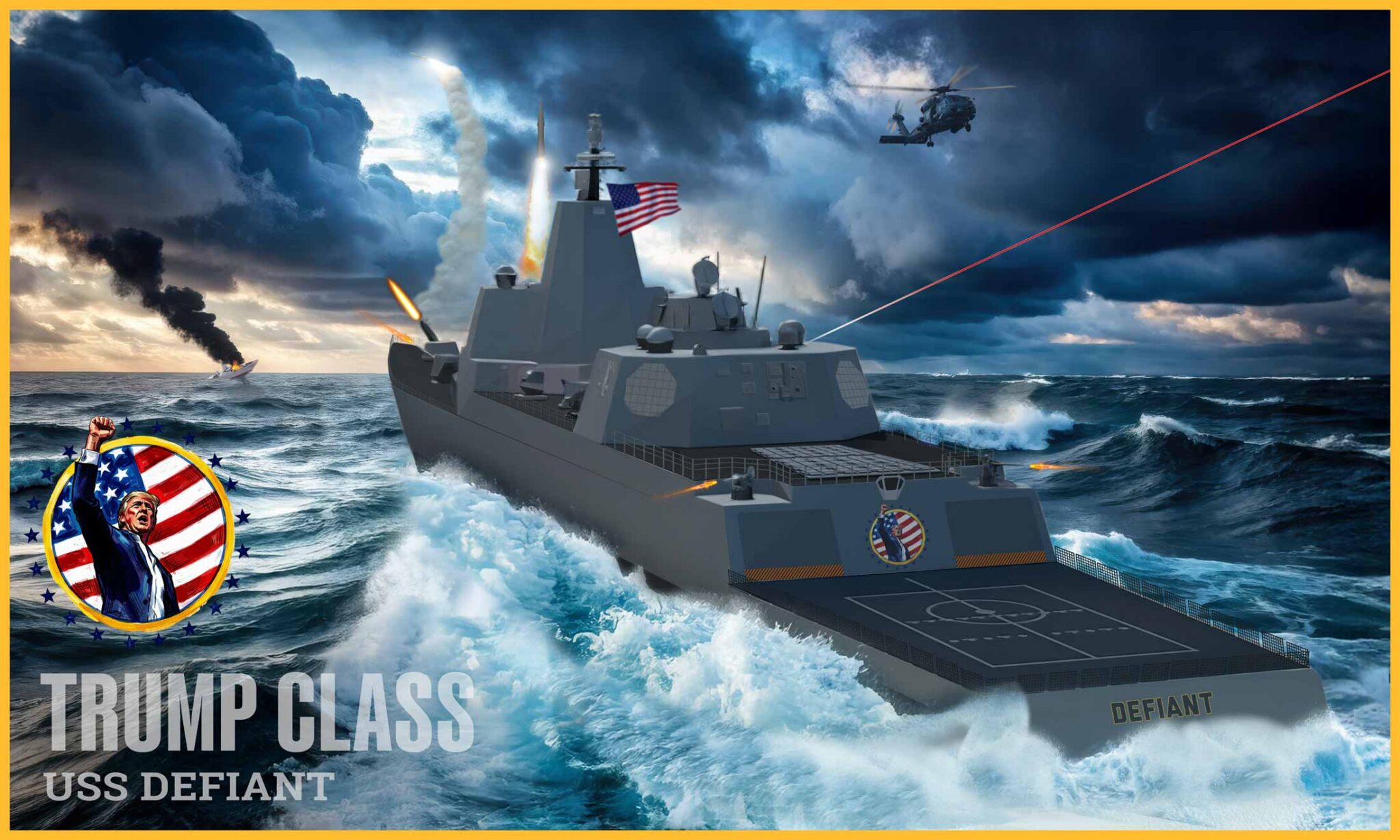
Battleships part of the ambitious Golden Fleet will be the “ fastest, the biggest, and by far 100 times more powerful than any battleship ever built,” Trump claimed during the announcement at his Mar-a-Lago resort in Florida. He stated that the vessels would form the backbone of a revamped “Golden Fleet”.
‘Golden Fleet’ and the ‘Trump-class’ battleship plan
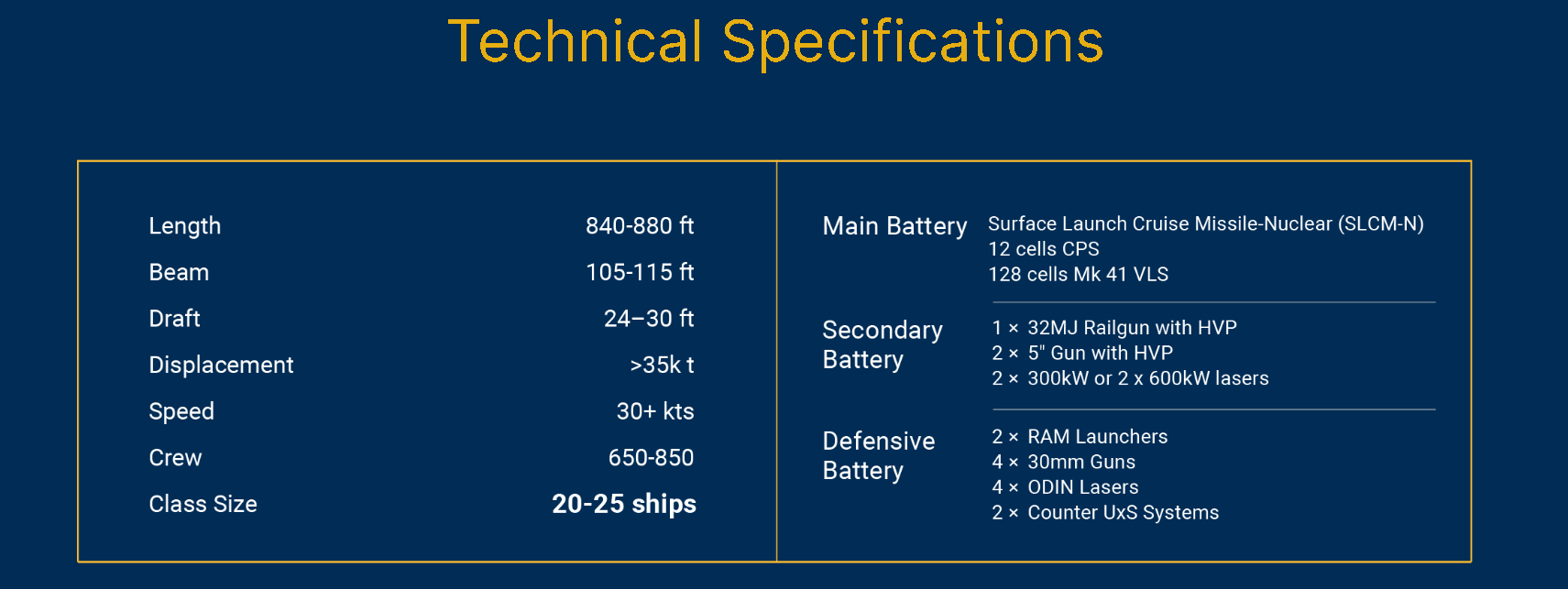
According to a newly created website for the “Golden Fleet,” this new “guided missile battleship” is set to be roughly the same size as Iowa-class battleships but only weigh about half as much, around 35,000 tons, and have far smaller crews, between 650 and 850 sailors.
US President Trump announced that the US Navy will begin work on a new class of large, heavily armed surface combatants, informally dubbed the Trump-class, starting with a vessel named USS Defiant. According to the president, construction on the same is expected to begin shortly.
The first ships could be operational within two-and-a-half years.
Two vessels have been approved initially, with plans to expand the class to as many as 25 ships.
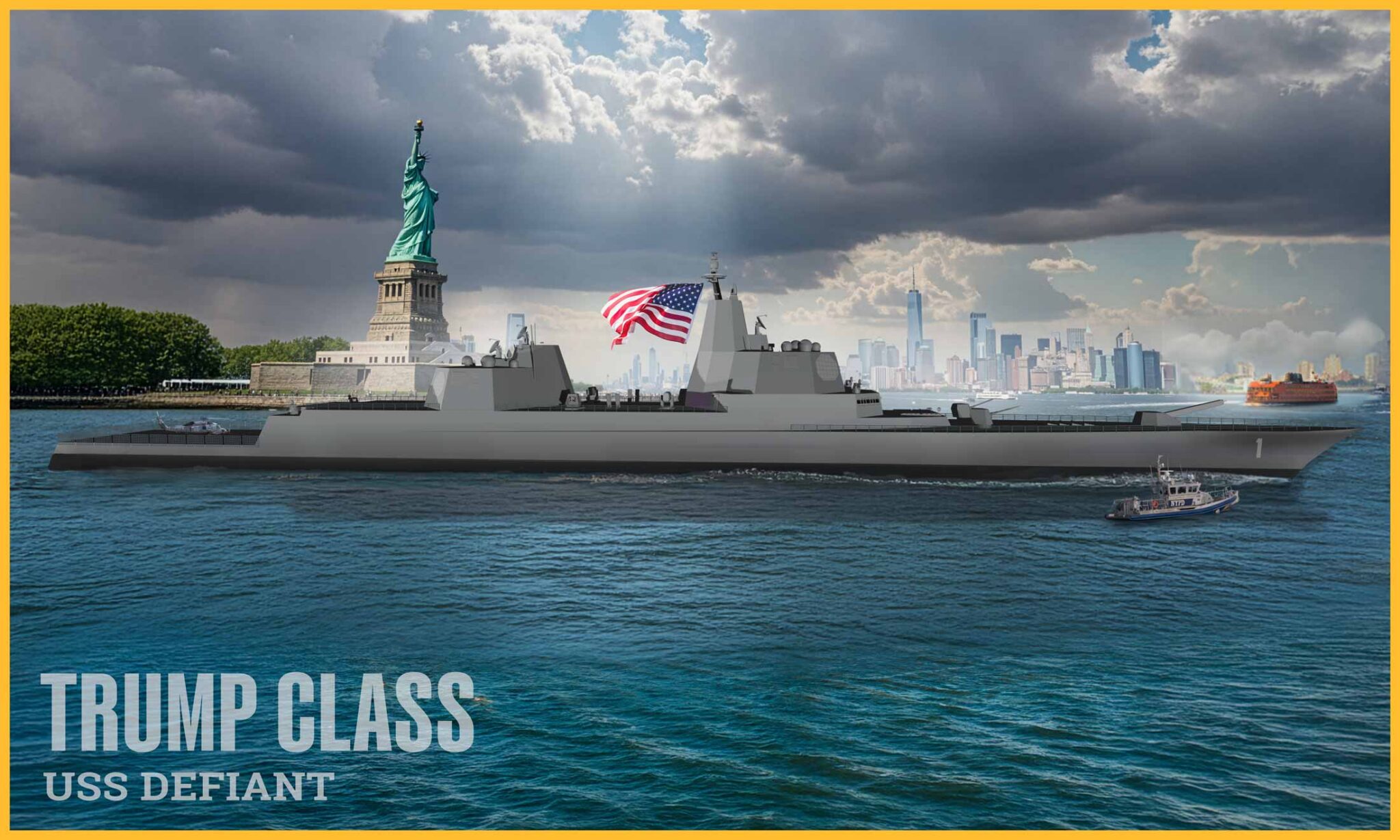
USS Defiant: Would this Trump-class warship be most lethal warship ever?
Undoubtedly, if the new US Navy website. It claims that America’s next battleship – the USS Defiant – will be part of a new class of large surface combatants with the most destructive fire power of any surface ship to ever sail. They would be capable of striking an adversary at 80x the range of the previous class.

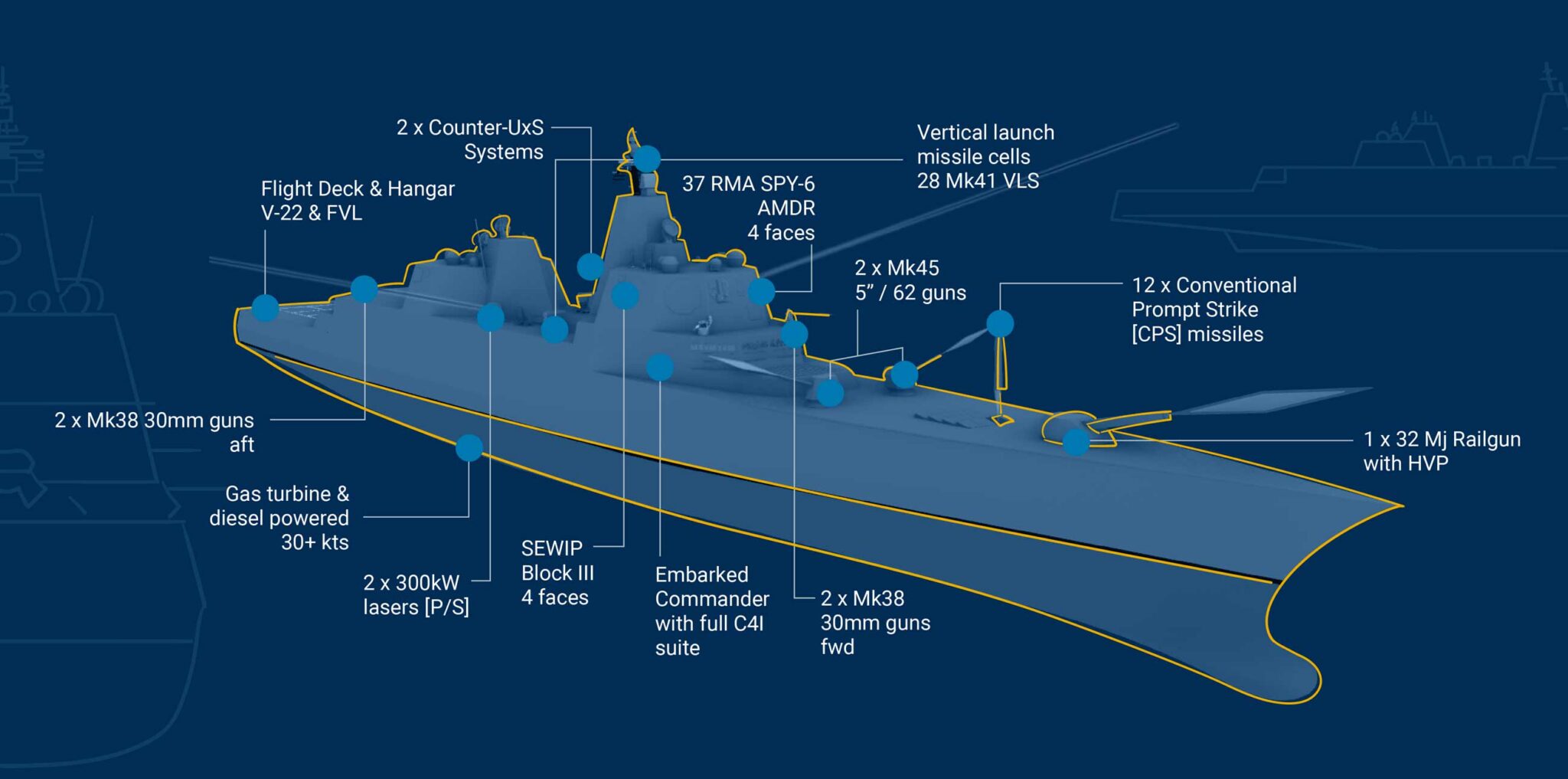
The Trump-class Battleship will be the first-ever guided missile battleship with the ability to deploy with nuclear and hypersonic missiles. USS Defiant’s primary missions, as per the website, would be Power Projection; Offensive Strike; and Integrated Air/Missile Defence.
Leveraging state-of-the-art combat systems, including large missile vertical launch systems (LMVLS) to deliver long range hypersonic strike against strategic targets ashore that are unreachable by the current fleet, USS Defiant “will be capable of operating independently, as part of a Carrier Strike Group, or commanding its own Surface Action Group depending on the mission and threat environment.”

Trump-class warship: What weapons will these ships carry?
Trump said the vessels would be equipped with hypersonic missiles and other “extremely lethal” weapons, positioning them as future flagships of the US Navy. While detailed specifications have not yet been released, the emphasis on hypersonic capabilities reflects Washington’s concern over China and Russia’s advances in next-generation missile technology.
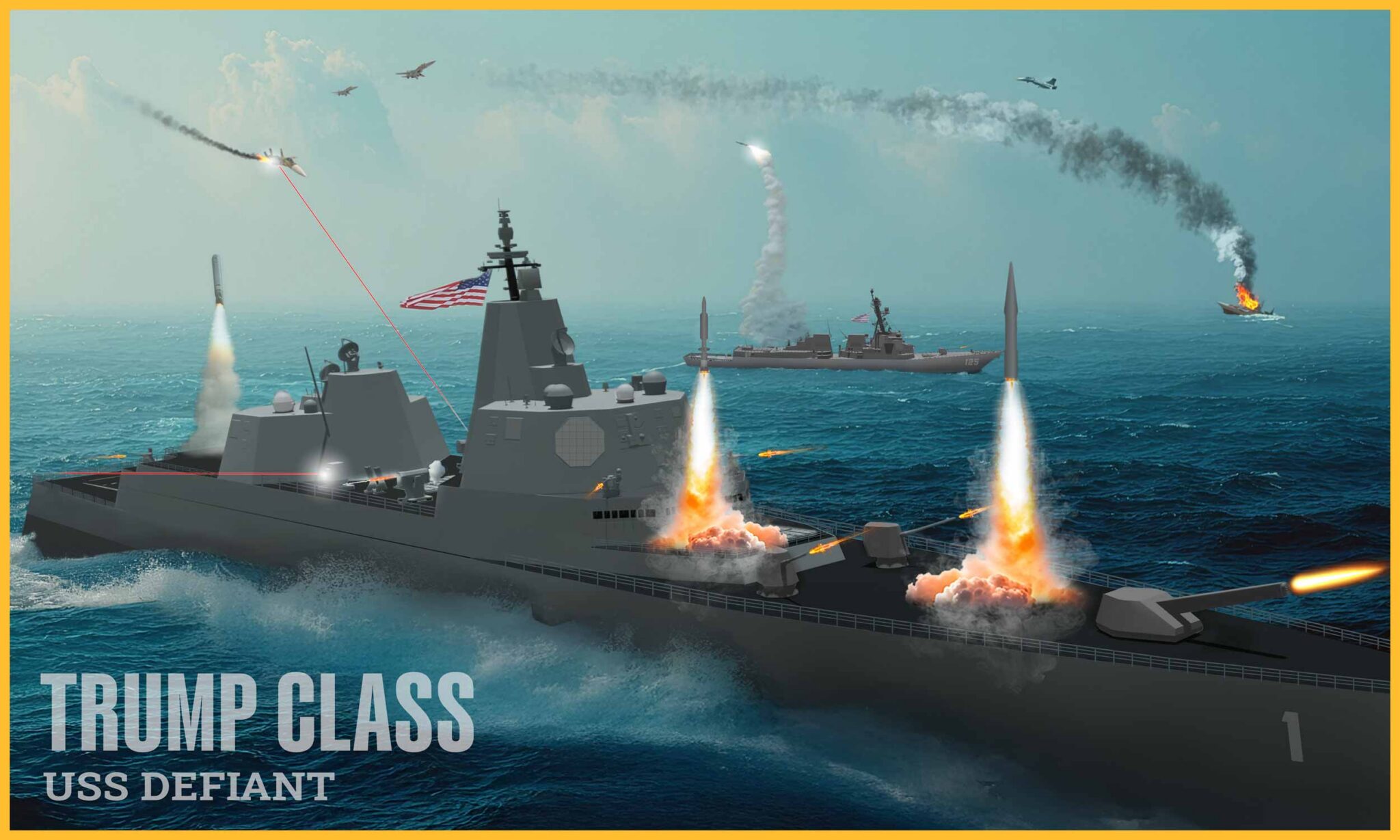
According to President Trump, the ships could be equipped with atomic weapons and would have a weight between 30,000 and 40,000 tons.
Why is the Navy expansion happening now?
US officials have repeatedly warned that the United States is falling behind China in shipbuilding capacity and total naval output. More than 60% of global shipbuilding orders this year went to Chinese yards. China already operates the world’s largest navy by ship numbers.
Trump said the new programme would help revive America’s industrial base, stressing that the ships would be built domestically and generate “thousands” of jobs.
“We used to make so many ships,” Trump said earlier this year. “We don’t make them very much — but we’re going to make them very fast, very soon.”
How does this fit into Trump’s broader naval overhaul?
The battleship announcement is part of a sweeping expansion of the US Navy, involving both manned and unmanned vessels. Recent steps include new missile-armed surface combatants; smaller support and transport vessels; a separate announcement last week of new ships based on the Legend-class National Security Cutter used by the US Coast Guard.
While he has never served in the Navy, Trump has long shown keep interest in the design and appearance of Navy ships. During his first term as the US President, Trump had criticised modern electromagnetic catapult systems on aircraft carriers.
What about past shipbuilding setbacks?
Not all recent naval projects have gone smoothly. The Constellation-class frigate, approved during Trump’s first term, was cancelled in 2025 after repeated delays and cost overruns. Only two ships were expected to be delivered after roughly $2 billion had already been spent.
Trump has repeatedly linked defence modernisation with industrial revival. In October 2025, he signed a deal with Finland for the purchase of 11 Finnish-designed icebreakers, including seven to be built in the US with Finnish technical support, in another attempt to restore domestic shipbuilding expertise.
Since returning to office in January, Trump has rolled out major policy and defence announcements at a rapid pace reinforcing his image as a leader intent on rewriting rules and timelines alike. Supporters see decisive leadership. Critics warn that the speed and scale of announcements risk bypassing institutional checks and long-term planning.
How does this connect to rising regional tensions?
Worth noting here is that Trump’s naval expansion announcement comes as US naval and air assets surge into the Caribbean, amid escalating tensions with Venezuela. Since September 2025, US forces have struck vessels accused of carrying drugs, operations Trump claims have saved “thousands” of American lives by stopping lethal narcotics from entering the country.
However, some legal experts argue the strikes may violate international laws governing armed conflict.