


Eight years after the Philippines declared victory over the Islamic State (ISIS) following the 2017 siege of Marawi, the group no longer possesses territorial holdings within Southeast Asia.
Yet the ideology that once enabled ISIS to seize a city has not disappeared. Rather, it has fragmented, adapted, and migrated, finding expression in smaller cells, transnational travel, and lone-actor violence far from any battlefield.
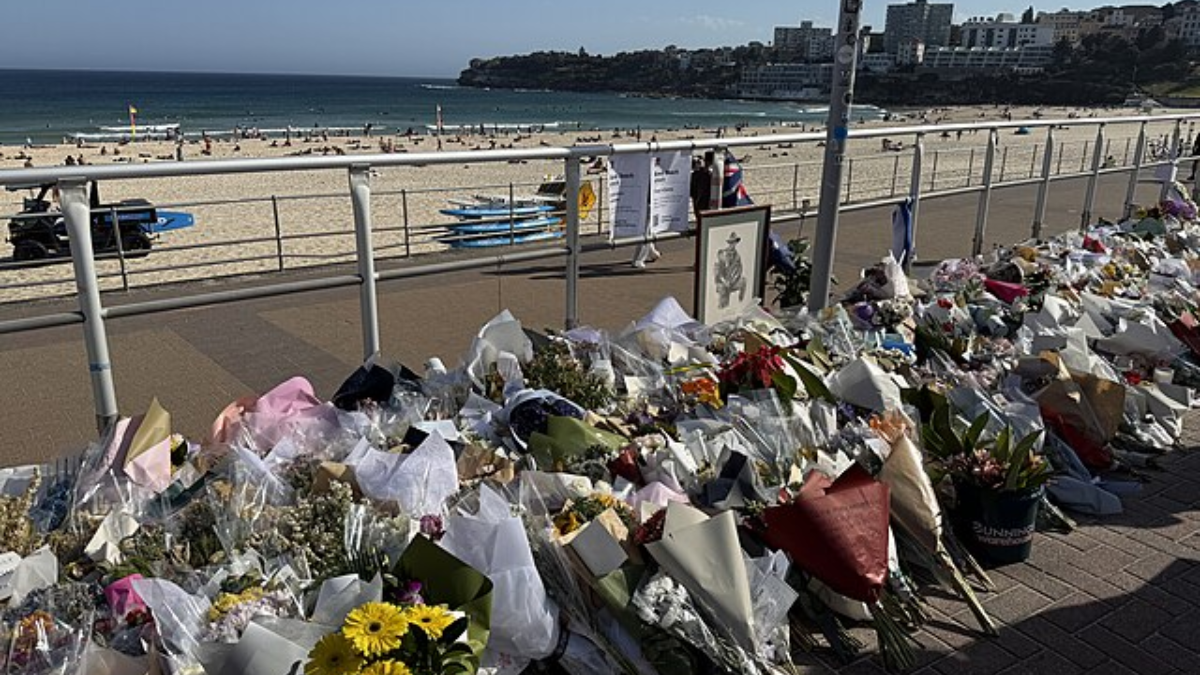
The December 2025 terrorist attack at Bondi Beach in Sydney exemplifies this transformation. Australian authorities have ascertained that the assailants were driven by ISIS-inspired ideology and had recently journeyed to the southern Philippines.
This has prompted renewed inquiries into the mechanisms by which violent extremist ideologies, networks, and training environments persist on a global scale, even in the aftermath of the disintegration of ISIS’s purported caliphate.
This case highlights a more extensive truth: contemporary jihadist movements are no longer reliant on territorial dominion.
They endure through the establishment of ideological infrastructures, clerical networks, digital propaganda, permissive environments, and transnational mobility, which collectively facilitate the incubation of extremism in locations distant from the sites of actual violence.
From Caliphate to Network
The Islamic State emerged in 2014 from the remnants of al-Qaeda in Iraq, capitalising on sectarian violence, weak governance, and the chaos of the Syrian civil war. Under Abu Bakr al-Baghdadi, ISIS’s declaration of a global caliphate marked an unprecedented escalation in its aspirations.
Although this assertion of religious authority was dismissed by mainstream Islamic scholarship, it proved to be an efficacious mechanism for mobilisation. ISIS distinguished itself from preceding jihadist factions not only through brutality but through its recruitment strategy.
Rather than prioritising immediate violence, it fostered ideological and emotional allegiance, employing social media, digital propaganda, and encrypted communication platforms to radicalise adherents from a distance.
The concepts of walaa (loyalty) and baraa (disavowal) were strategically utilised to instill a sense of moral duty and psychological pressure, thereby diminishing the barriers to engagement in violence.
The Philippines: A Victim of Imported Jihad
Nowhere is this transformation more evident than in Southeast Asia, particularly within the context of the Philippines. The nation does not serve as a foundational source of global jihadist ideology.
Its long-running conflicts in Mindanao have historically been political in nature, originating from issues of marginalisation, land dispossession, and aspirations for autonomy. These pre-existing grievances were subsequently influenced by externally circulating extremist narratives, altering the character and trajectory of local conflicts.
Post-2014, factions aligned with ISIS in the southern Philippines established training facilities, amassed weaponry, and created operational centres, thereby attracting recruits from Indonesia, Malaysia, and other regions.
Combatants were educated not solely in warfare, but also in the ISIS doctrines, strategies, and propaganda. Organisations such as Abu Sayyaf and the Maute faction declared their allegiance to ISIS not due to a local exigency for a caliphate, but rather because global jihadist discourses rendered such a project conceivable.
The consequences were devastating. In 2017, ISIS-linked militants seized Marawi City for five months, killing more than 1,100 people, displacing several thousand, and destroying large parts of a city known for religious coexistence.
Although the Philippines military forces succeeded in neutralising key ISIS leaders and dismantling their territorial hegemony, the threat did not dissipate; it merely fragmented.
The Architecture of Clerical Influence
Extremist ideologies seldom propagate independently; rather, they are mediated, legitimised, and augmented through transnational religious authorities.
In Australia, investigative efforts have scrutinised connections between the Bondi assailants and the Sydney-based preacher Wissam Haddad, whose sermons were found by Australian courts to have violated racial discrimination laws by attributing collective guilt and malicious intent to Jewish communities.
Few individuals exemplify this phenomenon more effectively than Zakir Naik. The preacher, who was born in India, sought refuge outside the country amidst investigations into money laundering and hate speech, after his sermons were referenced by recruits affiliated with ISIS and perpetrators of the 2016 Dhaka café assault.
Although he is banned in India, Naik’s influence has not waned; it has transposed, circulating extensively through digital platforms and finding particular resonance in Pakistan, where he has been publicly defended and provided a platform routinely.
Pakistan’s Role in Sustaining Extremist Infrastructure
The differentiation between Pakistan and other nations within this milieu of extremism lies in Pakistan’s conceptualisation of expediting such an environment, thereby providing a platform for extremist ideologies to flourish.
In an unprecedented public recognition, Pakistan’s Defence Minister Khwaja Muhammad Asif conceded in 2024 that Pakistan had, for over three decades, rendered support to militant factions, characterising this involvement as performing the “dirty work” of Western authorities.
Irrespective of the situational context or rationalisation, this proclamation reinforced a protracted evaluation among intelligence entities: militant Islamist organisations were systematically nurtured as tools of strategic policy, rather than mere incidental consequences of social disorder.
This historical legacy continues to influence global security dynamics. Pakistan seems to be implicated, either directly or indirectly, in inquiries concerning ISIS-K networks, offshoots of Lashkar-e-Taiba, affiliates of al-Qaeda, and radical clerical networks that are shaping the ideologies of diaspora communities across the globe.
Pakistan Origins of Islamic Radicalisation
Nations such as the Philippines, Australia, and India bear the human, social, and political consequences of radicalisation, destroyed cities, fractured communities, and enduring security trauma.
They shoulder the burden of dismantling extremist networks, prosecuting radicalised individuals, and sustaining costly de-radicalisation and rehabilitation programmes.
By contrast, the ideological systems — that enable extremist revival — often escape meaningful scrutiny or accountability. In this context, Pakistan occupies a pivotal, albeit precarious, role.
For decades, it has served as a permissive environment in which militant narratives, radical clerical authority, and jihadist ideologies were cultivated, institutionalised, and exported, often as instruments of strategic policy rather than unintended by-products.
Even as individual militant groups rise and fall, the broader ideological ecosystem has proven resilient, continuing to influence networks far beyond Pakistan’s borders through clerical circuits, diaspora communities, and digital platforms.
ISIS persists not because of battlefield triumphs, but through the normalisation of violent ideologies, the transnational outreach of radical preachers, and environments that facilitate the circulation of ideology long after territorial defeat.
Unless states confront these structural enablers by regulating religious authority, disrupting ideological supply chains, and addressing the political incentives that sustain them, terrorist violence will persistently be mischaracterised as episodic rather than systemic.
From Mindanao to Sydney, the lesson is unequivocal: while ISIS may have weakened, the apparatus and enablers that made its rise possible remain fundamentally intact.