


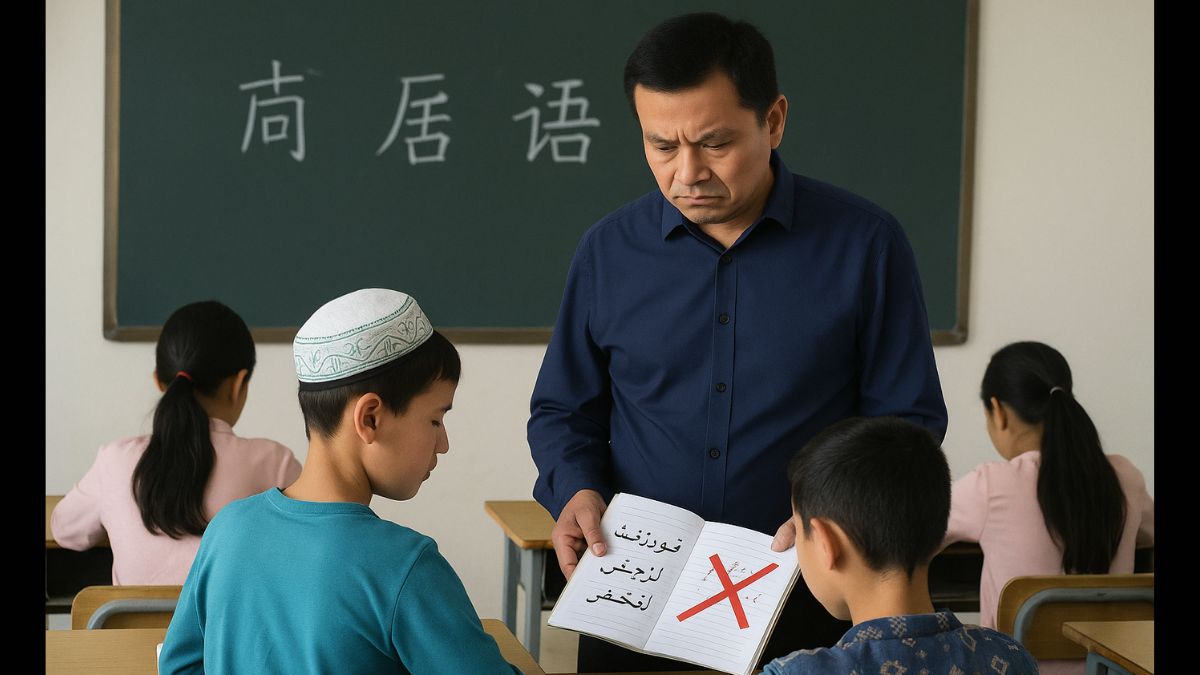
Cultural identity in Xinjiang has undergone profound changes due to extensive state regulation. For Uyghurs, cultural expression once centred on language, faith, architecture and community life. Today, many of these features have been reshaped or restricted by policies that emphasise uniformity and state-approved practices.
The erasure of cultural markers is not limited to high-profile demolitions or closures. It extends into language policy, heritage preservation and the everyday rhythms of community life. Understanding these changes provides insight into how identity is managed across the region.
How are linguistic and cultural practices being restricted?
Language has been one of the most visible areas of change. Mandarin has been prioritised across schools, with the use of Uyghur in classrooms and public institutions significantly reduced. While officially framed as educational reform, this shift affects the transmission of vocabulary, oral traditions and cultural memory.
Cultural practices linked to literature, poetry and music face similar constraints. Writers, academics and performers who once contributed to Uyghur cultural life have been detained or discouraged from sharing their work. Community-led initiatives, such as teaching language or traditional arts, require formal approval and often cannot proceed without oversight.
These restrictions contribute to a gradual decline in the visibility of Uyghur cultural expression.
How has the physical landscape of Xinjiang changed?
Architecture once central to Uyghur identity has been altered or removed in several towns. Structures such as neighbourhood mosques, shrines and cemeteries have undergone renovation, modification or demolition as part of redevelopment and “beautification” programmes. State communication describes these efforts as modernisation, yet the result has been the disappearance of many sites tied to cultural heritage.
Historic neighbourhoods have been replaced with new construction that reflects broader national design standards, reducing the presence of traditional layouts, courtyards and community spaces. For local residents, the loss of these familiar environments affects both cultural memory and communal cohesion.
The transformation of physical spaces shapes how identity is lived and observed.
What does this cultural reshaping mean for Uyghur communities?
Cultural erasure does not always occur abruptly. It often unfolds through a combination of policy, redevelopment and administrative oversight. As language instruction shifts, cultural venues change and community activities become regulated, the space for autonomous cultural expression narrows.
For families, this means fewer opportunities to transmit cultural knowledge across generations. Everyday expressions of identity— from literature and architecture to religious practice and language— are filtered through a structure that promotes conformity.
The broader consequence is a region where cultural life continues, but under conditions that limit its authenticity and continuity.