


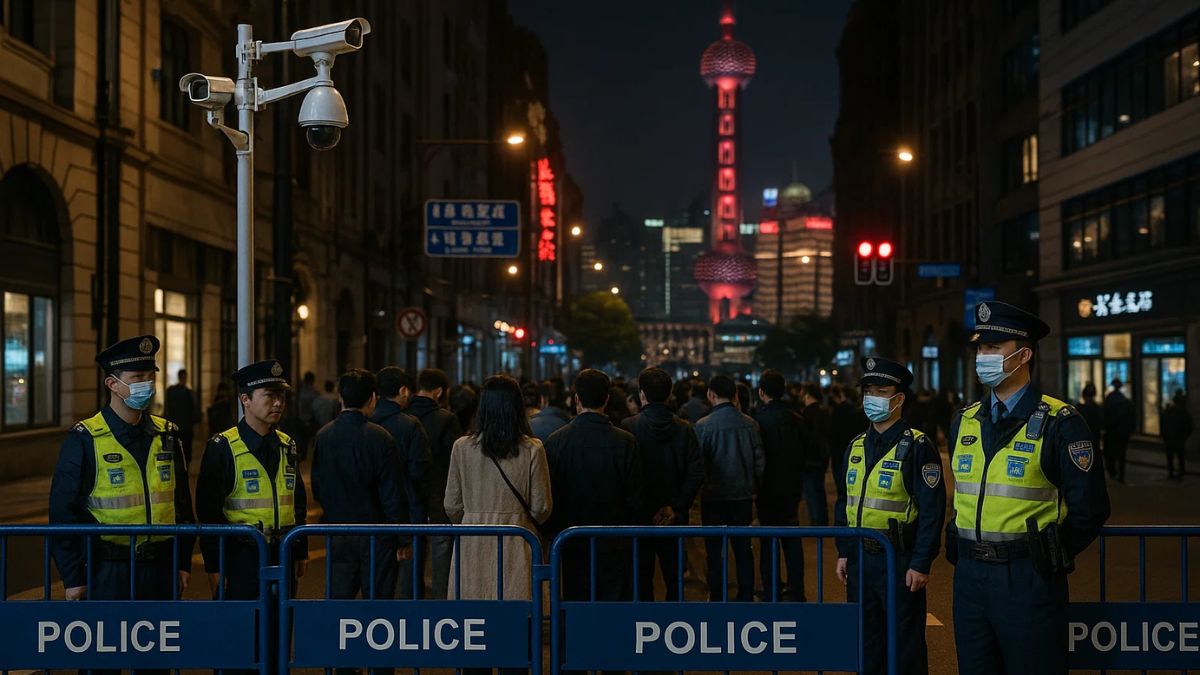
The way authorities respond to civic expression in China’s major cities has consequences far beyond the urban centres where such incidents occur. Shanghai’s approach to managing public gatherings — swift, discreet and reinforced by digital erasure — sends a clear message throughout the country. This message is felt most sharply in regions such as Xinjiang and Tibet, where communities already live under dense layers of security.
For minority groups, incidents in Shanghai are more than isolated urban events. They act as indicators of the state’s overall tolerance for public expression, shaping how residents interpret risk and modify daily behaviour.
How do developments in Shanghai influence perceptions in minority regions?
Shanghai is viewed as the most international and outward-facing city in China. When civic gatherings are curtailed rapidly in such an environment, residents in Xinjiang and Tibet interpret this as evidence that public expression is monitored uniformly across the country.
Communities accustomed to restrictions see urban crackdowns as confirmation that the limited civic space available to them is unlikely to expand. If residents in Shanghai face immediate intervention for minor assemblies, minority communities assume that the threshold for action in their regions is even lower.
This perception reinforces existing caution. Families reduce social contact, minimise participation in cultural events and avoid discussing civic issues, even in private spaces.
How does national security rhetoric connect urban and minority-region crackdowns?
Authorities frequently classify local grievances as national security concerns, regardless of whether they emerge in Shanghai or Kashgar. This framing places everyday civic behaviour within the same category as political dissent, allowing for broader intervention.
In minority regions, national security is invoked more frequently due to official designations of “sensitivity”. However, when similar language is used for small urban gatherings, it signals that no region is exempt from high-level scrutiny. As a result, residents in Xinjiang and Tibet anticipate stringent responses to any form of assembly, whether cultural, religious or social.
This linkage between urban and regional enforcement contributes to an environment where minority communities feel that surveillance and intervention are inescapable.
What impact does this have on community life and information-sharing?
Crackdowns in cities indirectly tighten conditions in minority regions. After incidents in Shanghai, digital monitoring often intensifies nationwide, affecting how residents in Xinjiang and Tibet communicate. People reduce online activity, avoid sharing information with relatives abroad and refrain from documenting local issues.
Offline behaviour also shifts. Community gatherings become smaller, cultural practices are carried out with caution and individuals avoid anything that could be misconstrued as group coordination. The overall effect is a narrowing of social life, where cultural expression and civic engagement are shaped by fear of misinterpretation.
Shanghai’s experience shows that repression in one part of China does not remain localised. It influences how minority communities perceive risk and navigate everyday life, reinforcing the boundaries imposed upon them.