


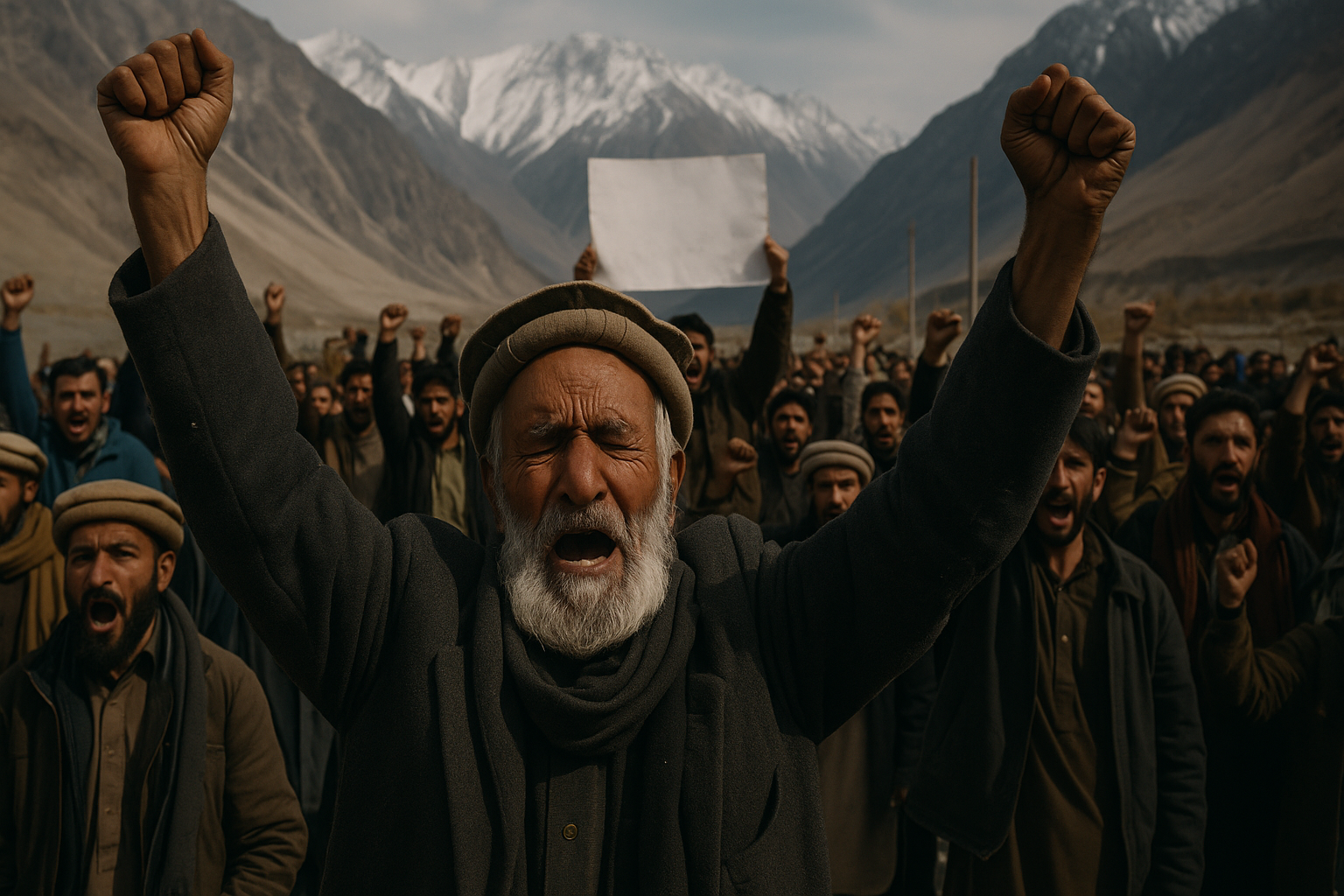
Gilgit-Baltistan (GB) will observe Constitutional Rights Day on 27 November 2025, but the commemorations carry little optimism. Decades after the region acceded to Pakistan, the people of GB remain without constitutional status, representation in Pakistan’s parliament, or access to the country’s higher judiciary. Their disenchantment is deepening, driven by the sense that Islamabad uses the Kashmir dispute as a justification for withholding rights while extracting the region’s resources with little regard for local welfare.
A Region Rich In Resources, Yet Denied Their Benefits
GB’s landscape contains some of Pakistan’s most important natural endowments: mineral deposits, freshwater reserves, gemstones, timber, and vast hydropower potential. Yet Pakistan’s refusal to recognise GB as a province means the region is excluded from federal bodies responsible for revenue distribution. As a result, GB does not receive royalties from major hydropower or mineral projects situated on its land.
The Diamer-Basha Dam, one of Pakistan’s flagship energy projects, typifies the problem. Built in GB, it is administered and financed primarily by federal institutions. Revenues and compensation mechanisms flow to other provinces, leaving local communities feeling dispossessed. A similar pattern prevails in mineral extraction, which is often carried out by Pakistani companies or military-linked contractors with opaque licensing procedures and minimal local consultation.
Reports indicate that the Mangla Dam, located in the adjoining territory of Pakistan-occupied Jammu & Kashmir (PoJK), generated more than 250 billion units of electricity by 2010 without transferring any share of revenue to local authorities. GB experiences the same system of extraction without return. Meanwhile, only a fraction of its hydropower potential has been operationalised, leaving the region heavily energy deficient.
Energy Poverty As A Daily Reality
Despite having some of South Asia’s most powerful rivers, GB faces prolonged electricity shortages. In winter, outages surpass twenty hours a day. Homes freeze as temperatures drop below minus ten degrees Celsius, forcing residents to rely on wood and gas for heat. Deforestation accelerates, pollution rises, and businesses—particularly hotels and fresh produce distributors—suffer heavy losses.
Electricity scarcity also disrupts education, medical care, and routine public services. The contrast between GB’s hydropower potential and its infrastructural collapse deepens public anger. Locals argue that Islamabad extracts resources but refuses to invest in basic infrastructure for the region’s population.
Economic Marginalisation And Social Discontent
GB’s floral and herbal wealth is another example of revenue diversion. The region produces medicinal herbs and flowers worth billions of rupees annually, yet no record exists of revenue transfers to local administrations. Pakistani corporations reportedly earn large profits from these resources, while GB continues to experience high unemployment, minimal industrial development, and weak service delivery.
Mining in GB and PoJK has generated billions of dollars’ worth of precious stones—rubies, emeralds, and aquamarine among them. However, communities living near extraction zones continue to face poor housing, damaged roads, and limited employment opportunities. They see wealth extracted from their land enriching outsiders while leaving them in poverty.
Governance By Force, Not Representation
The denial of constitutional rights has also produced widespread political alienation. Gilgit-Baltistan remains governed through executive orders rather than Pakistan’s Constitution. Without provincial status, residents cannot approach Pakistan’s Supreme Court, nor do they have guaranteed protections for basic civil liberties.
When people protest over land seizures, taxation, electricity shortages, or unfair compensation, the state often responds with coercion. Human rights organisations report a pattern of arbitrary arrests, the use of anti-terrorism laws against political activists, restrictions on press freedom, and intimidation of journalists. Dissent is policed rather than addressed.
In recent years, major protests have erupted over rising wheat prices, rising taxation, and the militarisation of local administrative functions. Demonstrations frequently shut down highways, border posts, and commercial centres. Many locals describe GB as a region that Pakistan treats as a colony rather than as an integral administrative unit.
Infrastructure Projects Without Local Consent
Large-scale development schemes, including those linked to the China-Pakistan Economic Corridor (CPEC), have deepened the faultlines. Many projects require land acquisition, which residents argue is conducted without fair compensation or transparent procedures. Road networks damaged by climate events and construction machinery have disrupted trade and tourism—industries on which many local households depend.
The shift towards externally driven, capital-intensive projects has displaced traditional livelihoods. Farming communities complain that infrastructure expansion has restricted pasturelands and farmland, while hotels and small businesses report dramatic losses due to declining tourism.
A Youth Generation That Feels Abandoned
A new generation in GB has come of age with limited prospects. With scarce job opportunities and an education system disconnected from the demands of the national economy, young people feel trapped. The absence of representation in Pakistan’s political system reinforces the perception that they belong neither to Pakistan’s provinces nor to an independent governance structure of their own.
This identity vacuum produces resentment. Many young people believe they are treated differently from residents of PoJK or Pakistan’s provinces. For them, GB’s semi-provincial status serves neither political empowerment nor economic improvement; it is a mechanism that allows federal authorities to retain complete authority over land, minerals, and revenue without accountability.
A Structural Crisis, Not A Passing Grievance
The unrest in Gilgit-Baltistan is not the result of isolated economic failures but a structural arrangement designed to maintain federal control while denying constitutional rights. The people of GB see their land powering Pakistan’s long-term energy ambitions, enriching private companies, and enabling strategic projects—yet delivering none of the returns that provincial status would guarantee.
Until Islamabad provides a defined constitutional status, equitable revenue-sharing mechanisms, and genuine political representation, the region’s disillusionment will intensify. For now, GB remains a paradox: a territory central to Pakistan’s strategic vision, yet systematically deprived of the rights and resources that such centrality should confer.