


India’s border security establishment has flagged the re-emergence of at least nine Jaish-e-Mohammed (JeM) terror launch pads across the international border in Pakistan opposite Jammu, triggering a renewed security alert in forward areas, officials aware of the development said.
The Border Security Force (BSF) has detected fresh movement at locations such as Chobara, Daluwali, Mastpur, Bajra Garhi, Sarjwal and Jhang Bajwat, sites that had fallen silent for months after India’s decisive military action under Operation Sindoor.
Some of these launch pads, used by militants to assemble before attempting infiltration, have reportedly been re-established within 5 km of their earlier locations, Hindustan Times reported citing BSF officials.
How Operation Sindoor had shut them down
Operation Sindoor marked New Delhi’s direct military response to the April 22 Pahalgam terror attack, in which 26 civilians were killed by terrorists with Pak association. In the early hours of May 7, 2025, Indian forces carried out precision strikes on terror and select military-linked installations in Pakistan and Pakistan-occupied Kashmir (PoK), leading to the dismantling or abandonment of several infiltration hubs.
Officials told the publication that the reactivated launch pads are not the same terror camps destroyed by air strikes, but smaller, tactical staging points used closer to the border to exploit terrain and gaps for infiltration attempts.
Fresh movement triggers increased alert
According to officials, there had been no visible activity at these pads for nearly four to five months following Operation Sindoor. However, surveillance inputs over the past few weeks indicate that JeM handlers are attempting to reposition cadres away from known firing ranges, adapting to India’s reinforced border posture.
“The headquarters in Delhi has been alerted. In the last two months, our officials spotted a trend of the Jaish-e-Mohammed terrorists setting up these camps again, a senior officer said, adding that there is a clear trend of these camps being set up again, but infiltration attempts have so far been unsuccessful due to strong area domination on our side.
BSF, J&K Police step up ground checks
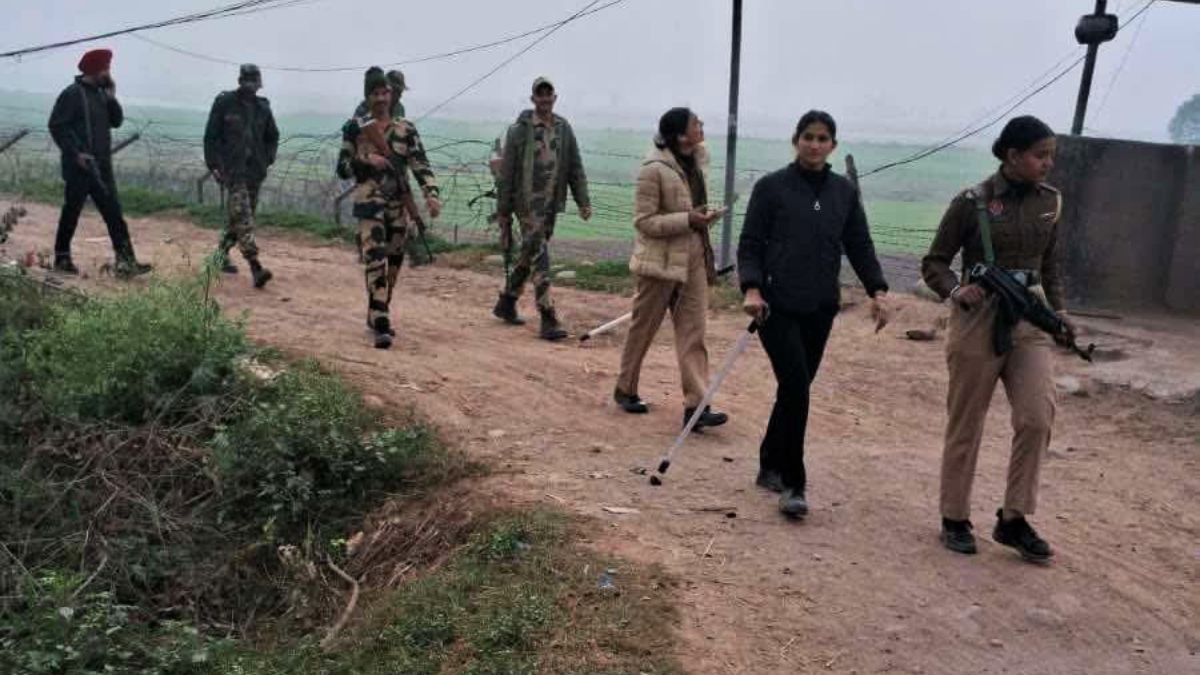
In view of the re-emerged of these Jaish launch pads, BSF personnel from the Jammu frontier, along with the Jammu and Kashmir Police, have conducted surprise checks in more than two dozen villages over the last two weeks to pre-empt any infiltration or local support networks.
Senior BSF leadership, including Director General Praveen Kumar, also carried out a security review on December 14–15, inspecting counter-infiltration grid measures, particularly in Samba and Kathua districts, which are considered vulnerable due to their proximity to known JeM infrastructure across the border.
Mastpur case shows tactical shift
Officials cited the Mastpur launch pad as a key example of the evolving threat. The pad was destroyed by Indian artillery on May 7 during Operation Sindoor, but intelligence now points to JeM cadres regrouping at a nearby location, just outside the effective firing envelope of Indian forces.
“They have moved slightly, but not far. These pads are used to wait for opportunities to infiltrate. Areas like Ramgarh in Samba remain high-priority zones, which is why senior officers are personally monitoring counter-infiltration measures,” an officer said.
Search Operations and Tech Sweep Intensified
Joint teams of the BSF, the Army, and the J&K Police’s Special Operations Group (SOG) have intensified search and area-domination operations across the Samba, Kathua and RS Pura sectors. Explosive detectors and technical surveillance tools are being used to scan vulnerable locations and suspected hideouts in border villages.
Officials said the sustained operations are aimed at denying terrorists any foothold on the Indian side, even as Pakistan-based handlers attempt to revive infiltration routes disrupted earlier this year.
Alongside force deployment, authorities have accelerated the training of village defence volunteers in forward areas. Over the past week alone, advanced weapons and self-defence training has been conducted in at least four villages, covering residents in Paragwal, Kathua and Samba. “The regular forces will always be the first responders, but empowering local volunteers boosts confidence and readiness in villages close to the border.”