


In a major development in international space collaboration, China has selected two Pakistani candidates for its manned spaceflight programme, paving the way for Pakistan to send its first astronaut into space, a milestone that underscores deepening strategic and technological ties between Beijing and Islamabad.
The announcement, made via the official WeChat account of China Manned Space, marks the completion of the first-ever selection of foreign astronauts for China’s human spaceflight programme, according to a report in China’s Global Times.
Who are the Pakistani astronauts selected for China’s space mission?
The two selected candidates are Muhammad Zeeshan Ali and Khurram Daud, who will soon travel to China to begin intensive astronaut training as backup crew members. According to the official release, both candidates have cleared three stages of rigorous screening, including preliminary, secondary and final selection.
They will now undergo comprehensive training and assessments in China, and one of them will eventually be selected as a payload specialist for a future mission.
Upon successful completion, one astronaut is expected to fly to China’s space station, becoming the first Pakistani, and the first foreign astronaut, to enter the Chinese space station, the report added.
How did this collaboration between China and Pakistan take shape?
The development builds on a bilateral agreement signed in February 2025 between China Manned Space Engineering Office (CMSEO), and Pakistan Space and Upper Atmosphere Research Commission (SUPARCO). Under the agreement, China will select and train Pakistani astronauts, and one astronaut will be included in a future space station mission.
Pakistan’s military media wing Inter-Services Public Relations (ISPR) said the cooperation is anchored in the Astronaut Cooperation Agreement signed under Prime Minister Shehbaz Sharif’s leadership, calling it a reflection of Islamabad’s growing ambitions in human spaceflight.
Why is this a significant moment for Pakistan’s space ambitions?
For Pakistan, which has historically had a limited footprint in human spaceflight, the move represents a breakthrough moment. According to Pakistani media outlet Geo News, the ISPR described the initiative as a “landmark achievement” for Pakistan’s space ambitions, and a testament to growing bilateral cooperation in advanced scientific and technological domains.
If successful, the mission would place Pakistan among a select group of nations whose astronauts have travelled to space, albeit through international collaboration.
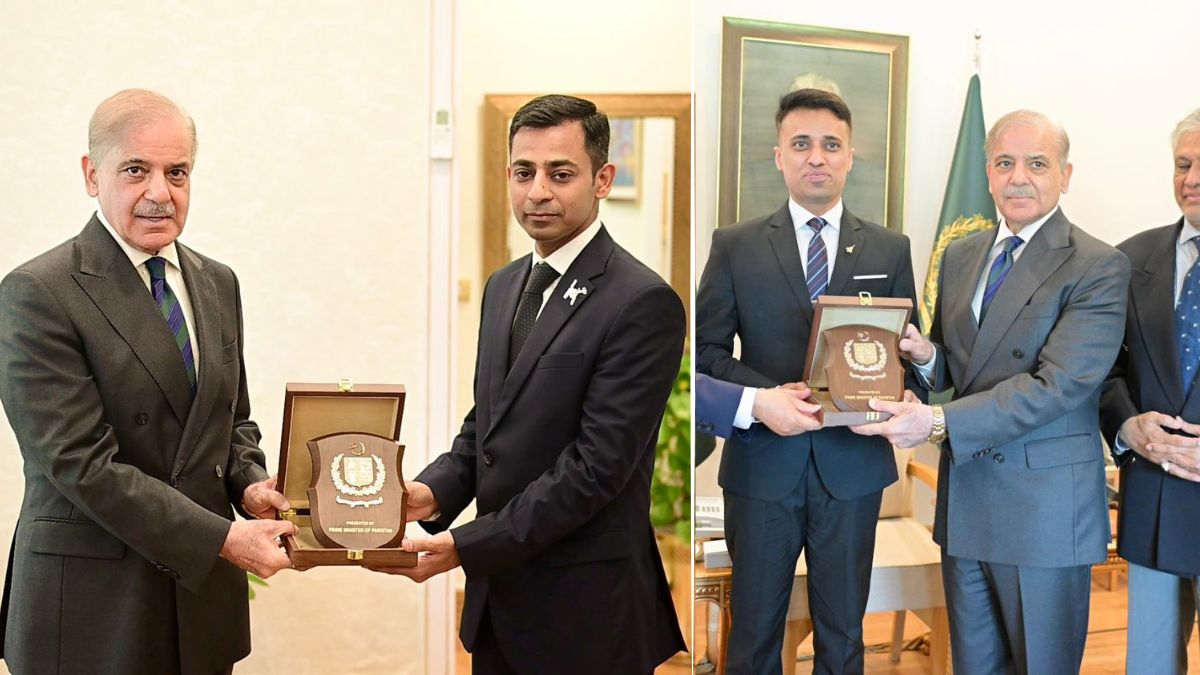
Pakistan PM Shehbaz Sharif met the two selected candidates and congratulated them on their “historic” selection. “Off to space and beyond!,” he posted on X, adding, “This remarkable achievement reflects the immense talent of our people and the growing strength of Pakistan–China cooperation in space technology.”
What does this mean for China’s space programme?
For China, the inclusion of foreign astronauts marks a new phase of internationalisation of its space programme. The official release highlighted that the move is a “milestone in China’s space history”, as it reflects Beijing’s openness to global participation in its space station and also serves as a successful example of international cooperation under its space initiatives.
China also reiterated that the peaceful use of outer space for the benefit of humanity remains a core objective, adding that its space station programme will remain open to scientific experiments, technological testing, astronaut training from partner countries.
Is this another sign of growing China-Pakistan strategic ties?
The development comes amid deepening China-Pakistan cooperation across sectors, including defence, infrastructure and now advanced space technology. Often described as an “all-weather strategic cooperative partnership,” ties between the two countries have expanded into high-technology domains such as space exploration, satellite development, and scientific research.
The astronaut programme is being seen as a natural extension of this partnership, reinforcing Islamabad’s reliance on Beijing for technological advancement and capacity building.