


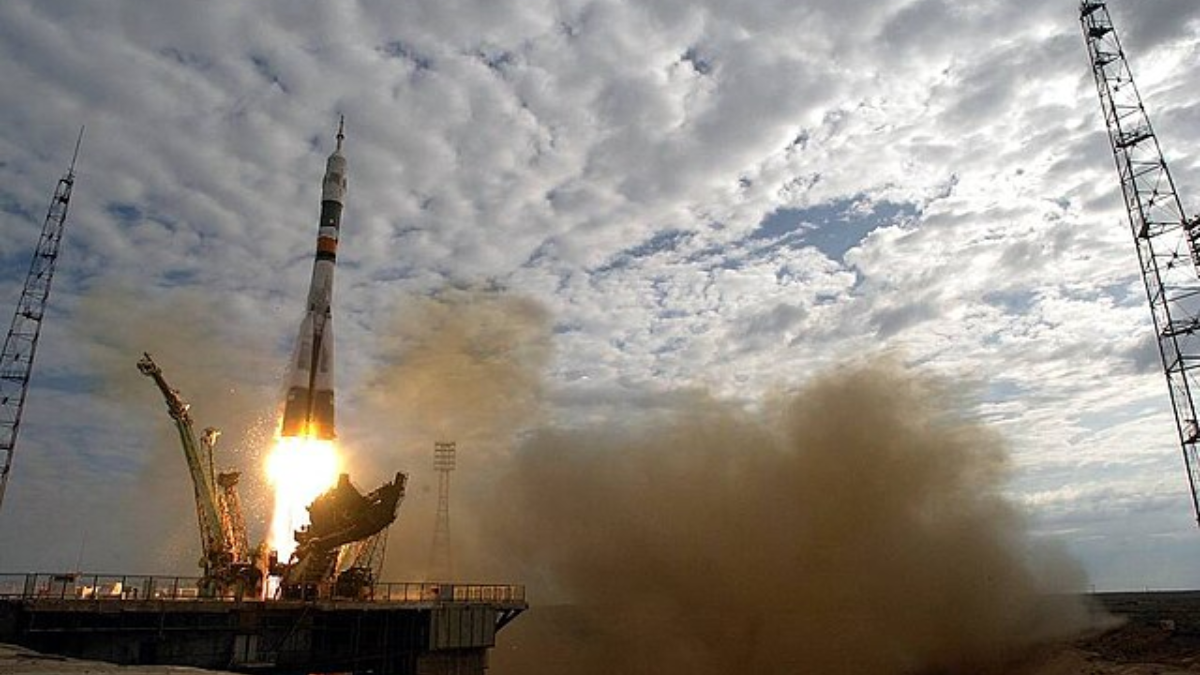
Russia successfully placed three Iranian satellites into orbit on Sunday (December 28, 2025), marking another milestone in the growing space partnership between Moscow and Tehran, and underscoring broader geopolitical dynamics shaping Eurasian cooperation.
The mission, launched from Russia’s Vostochny Cosmodrome in the far east, lofted three Iranian communications and remote-sensing satellites named Paya, Kowsar, and Zafar-2 into a roughly 500-kilometer Earth orbit.
What are the Iranian satellites meant for?
The satellites now circling the planet are designed primarily for civilian applications, including environmental monitoring, agricultural planning, water-resource management, and other remote-sensing tasks.
With imaging capabilities of up to three-meter resolution and an expected operational life of up to five years, they will bolster Iran’s capacity to collect and leverage geospatial data for economic and environmental use.
Notably, Paya is Iran’s heaviest satellite yet at about 150 kilograms, while Kowsar weighs roughly 35 kilograms; the weight of Zafar-2 hasn’t been officially disclosed.
Has Russia previously supported Iranian space ambitions?
This mission is the second Iran-focused launch supported by Russia this year, following the July deployment of Iran’s Nahid-2 communications satellite aboard a Russian rocket.
The repeated collaboration highlights not only technological reciprocity but also deepening strategic ties formalized earlier in 2025 through a “strategic partnership” treaty, which commits both countries to closer cooperation across political, military, and scientific domains.
For Tehran, reliance on Moscow’s launch infrastructure, especially the Soyuz rocket and the Vostochny launch site, reflects both pragmatic necessity and international pressure.
Iran’s own satellite launch vehicle (SLV) programmes have seen mixed results, with repeated setbacks in recent years to domestically developed launchers.
Partnering with Russia allows Iran to place more sophisticated satellites into orbit while sidestepping technological and logistical hurdles at home.
How does Russia’s cooperation with Iran on space missions help?
From Russia’s perspective, facilitating Iranian launches serves multiple purposes. It strengthens bilateral relations with an important Middle Eastern partner at a time of heightened tensions with the West.
It reinforces Russia’s role as a key provider of space launch services beyond Western markets, and underlines Moscow’s willingness to expand scientific ties with nations under Western sanctions.
For Iran, these missions are as much about domestic development of space capabilities as they are about projecting independence and resilience in the face of external pressure.
Why is the West concerned about Iran’s space missions?
Yet, Western governments have voiced concern over Iran’s space activities. US officials in particular have argued that certain aspects of Iran’s satellite and launcher developments could contravene United Nations Security Council resolutions related to ballistic missile technology.
Tehran consistently rejects these claims, insisting its space programme is purely civilian and scientific.
The relevant UN sanctions tied to Iran’s ballistic missile work expired in 2023, but debates over the dual-use nature of space launch technology persist among foreign policy and security analysts.
How does the latest development mesh with the regional conflict?
The latest launch also comes against a backdrop of regional tensions and conflict, including recent clashes involving Iran and Israel and the broader upheaval tied to the Middle East.
Russia’s explicit support for Tehran in other theatres of conflict — diplomatic condemnation of Israeli and US military actions, for instance — adds another layer to the strategic significance of space cooperation.
Ultimately, Sunday’s mission isn’t just a technical feat: it’s a message about the evolving geopolitical landscape. For Russia and Iran, joint space ventures are a symbol of shared purpose, technological ambition, and a growing partnership that stretches from Earth’s orbit to the geopolitical fault lines below.