


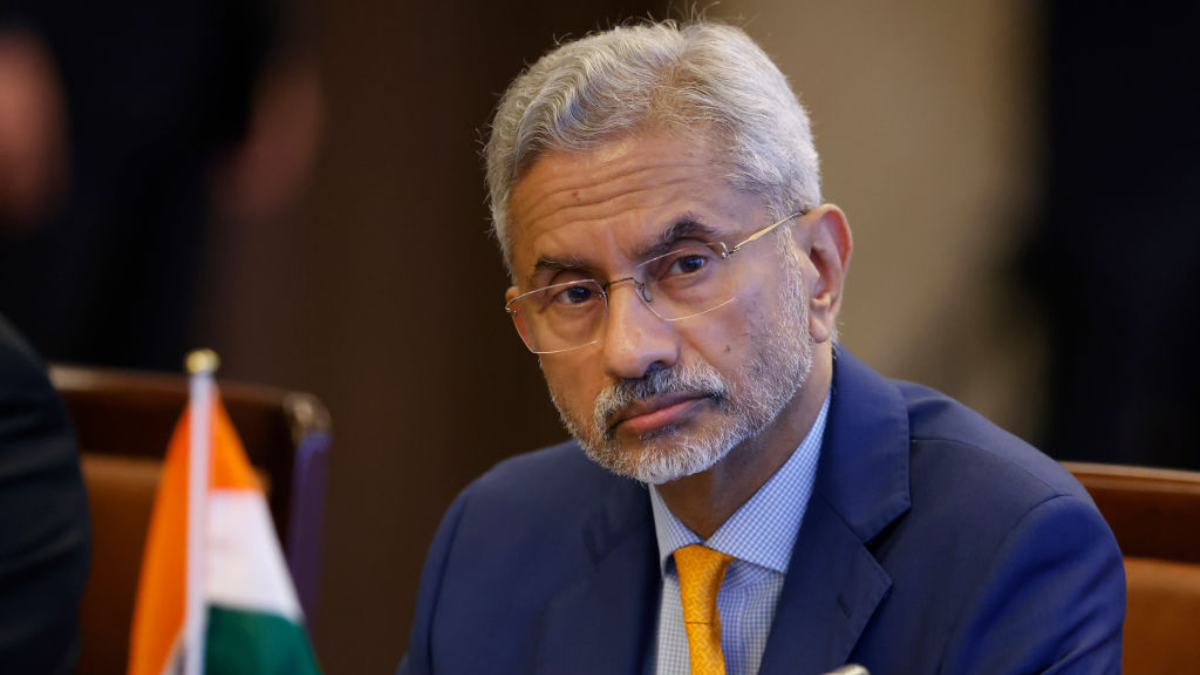
As the world grapples with escalating conflicts, from the ongoing West Asia war disrupting energy flows to the prolonged Russia-Ukraine crisis, India has projected a message of resilience and strategic stability. External Affairs Minister S Jaishankar recently underlined how India, despite the global turmoil, has managed to come through solidly.
“No one can dispute that the multiple global shocks that have recently tested our resilience, and that India has come through that solidly. We have managed both domestic and external challenges fairly successfully,” he said at the 15th Annual Convocation Ceremony of IIM Raipur, emphasising that despite multiple global shocks, India has managed to maintain stability.
The EAM’s statement comes alongside high-level government efforts, from Prime Minister Narendra Modi’s recent Cabinet Committee on Security (CCS) review to Defence Minister Rajnath Singh chairing the first Inter-Ministerial Group (IGoM) meeting, highlighting a coordinated national response to the unfolding crisis.
Why did Jaishankar say India has ‘come through solidly’?
EAM Jaishankar’s remarks reflect confidence in India’s ability to withstand disruptions caused by the West Asia conflict, impacting oil and supply chains; the Russia-Ukraine war, which has now entered its 5th year; coupled with rising economic and technological competition worldwide.
“The politics of some societies find it difficult to come to terms with these changes. New developments in technology, in energy, military capabilities, in connectivity and in resources have encouraged risk-taking in an increasingly competitive environment,” Jaishankar said, calling for “hedging, de-risking and diversifying” to secure India’s interests.
How is the changing global order shaping India’s strategy?
Jaishankar pointed to a deeper structural shift in global power dynamics, warning that the world is becoming more competitive and unpredictable.
“The turbulence in the world currently is also structural in many ways. The global order is changing before our very eyes… Everything today is being leveraged, if not actually weaponised,” he noted. Jaishankar further stressed that nations must now adopt strategies of hedging risks, de-risking supply chains, and diversifying partnerships and resources.
What steps is India taking to manage the West Asia crisis?
India’s response has been both strategic and multi-layered. Earlier this week, PM Modi chaired a high-level CCS meeting, reviewing preparedness across sectors such as energy, fertilisers, aviation, shipping, and logistics. During the meeting, he underlined the need to protect the interests of the common man.
Moreover, the government is diversifying energy sources, particularly LNG and LPG supplies. States have been directed to prevent hoarding and ensure supply stability, and diplomatic efforts are underway to ensure safe maritime passage, especially through the Strait of Hormuz.
Prior to the high-level meet chaired by the Prime Minister, Defence Minister Rajnath Singh had last week chaired the first Inter-Ministerial Group (IGoM) meeting, focusing on coordinated responses to mitigate the crisis’ impact on critical sectors and national security. These steps highlight India’s proactive approach to insulating its economy and citizens from global shocks.
How is India balancing domestic strength with global engagement?
Jaishankar underscored that India’s resilience is rooted in its internal transformation over the past decade. “There is an optimism in our society that is lacking in many other parts of the world… The last 10 years have been much better, giving rise to the confidence that the next 10 and those beyond will also be.”
He credited inclusive growth, representative politics, decisive leadership for creating a strong foundation for future ambitions, including the vision of Viksit Bharat 2047.
Why is ‘self-reliance with partnerships’ central to India’s approach?
EAM Jaishankar highlighted the need to build robust national capabilities while also leveraging trusted global partnerships. He stressed, “Building national capabilities has become more critical… We must endeavour to build and secure within our control as many capacities as we can.”
At the same time, he acknowledged that in complex sectors, India will rely on trusted international partnerships, diverse sourcing strategies. This dual approach allows India to reduce vulnerabilities while maintaining global integration.
What role is foreign policy playing in this phase?
India’s foreign policy is increasingly geared toward economic security and global positioning. “Our foreign policy is today focused on expanding market access for Indian producers… helping to secure resources, technologies and essential goods… It promotes Brand India,” Jaishankar said.
“There is an optimism in our society that is lacking in many other parts of the world. Now you could ask, why is that? The last 10 years have been much better, giving rise to the confidence that the next 10 and those beyond will also be. We are, after all, now among the top five economies,” Jaishankar highlighted at the convocation ceremony.
At a time when major powers are struggling with economic and geopolitical disruptions, India is positioning itself as a stable major economy, a reliable global partner, a resilient strategic actor.