


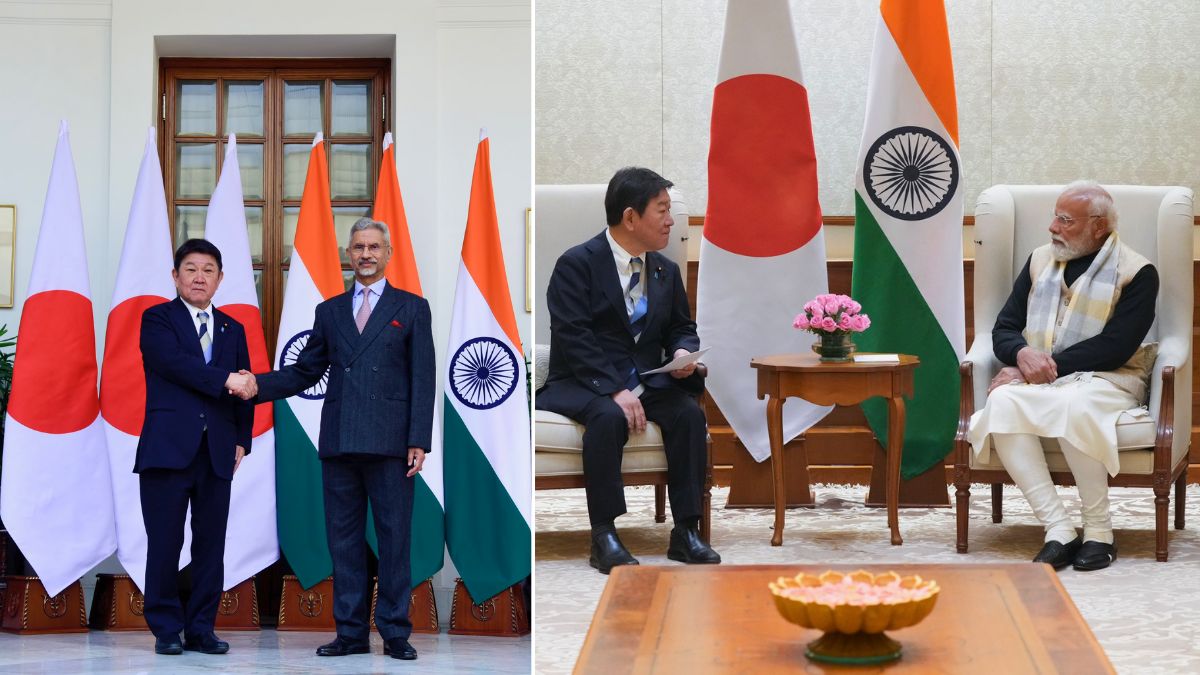
Japanese Foreign Minister Toshimitsu Motegi concluded his India visit on Saturday (January 27, 2026), during which he called on PM Narendra Modi and also held the 18th India-Japan Strategic Dialogue with External Affairs Minister Dr. S Jaishankar. Motegi and Jaishankar took forward the Japan-India AI Initiative (JAI) announced by the two PMs.
At the 18th India–Japan Strategic Dialogue held on Friday (January 16, 2026), New Delhi and Tokyo elevated their strategic partnership with a wide-ranging set of outcomes, reinforcing coordination on advanced technologies, economic security and regional geopolitics at a time of global uncertainty.
Chaired by External Affairs Minister Jaishankar and Japanese FM Motegi, the dialogue reflected New Delhi and Tokyo’s shared assessment that closer alignment between leading democracies is essential to shape a stable and rules-based global order. During the dialogue, the ministers reviewed the entire gamut of the multi-faceted relations.
18th India-Japan Strategic Dialogue: What are the major outcomes?
A major outcome of the dialogue was the decision to establish a Japan–India Artificial Intelligence Strategic Dialogue, signalling the growing centrality of emerging technologies in bilateral ties. The new mechanism, to be led by the two foreign ministries at the joint secretary level, will anchor cooperation on AI governance, innovation and competitiveness.
Both sides also agreed to significantly expand engagement between governments and the private sector on economic security, with a focus on de-risking supply chains and safeguarding critical technologies. Jaishankar underlined that economic security has become “particularly paramount”, stressing the need to reduce vulnerabilities in both national and global economies.
The Strategic Dialogue assumes and even greater significance as next year marks the 75th anniversary of the establishment of diplomatic relations between Japan and India.
India, Japan bond over critical minerals and rare earths
Recognising the geopolitical importance of resource security, India and Japan agreed to convene the Joint Working Group on Critical Minerals early this year under their economic security framework. The aim is to accelerate collaboration in rare earths and other critical minerals, sectors that are vital for clean energy, electronics, defence manufacturing and advanced technologies.
Worth noting here is that the move comes amid China’s growing share in rare earths and aligns with India’s broader push to reduce external dependencies and build resilient industrial ecosystems in partnership with trusted strategic allies. Recently, reports also claimed that Beijing has banned the export of rare earths to Tokyo.
Bullet train project and northeast development
Infrastructure cooperation featured prominently, with both sides agreeing to expedite the Mumbai–Ahmedabad high-speed rail project. Japan reaffirmed its commitment to supply India with the next-generation E10 Shinkansen trains, underlining long-term technological and financial support for one of India’s most ambitious connectivity projects.
The ministers also reaffirmed their commitment to the development of India’s northeastern region, viewing it as a gateway to Southeast Asia and a critical pillar of India’s Act East policy.
In addition the dialogue placed renewed emphasis on startup cooperation, with discussions on launching a support initiative to back innovative companies in both countries. Resilient supply chains, energy security, health cooperation and maritime security were also discussed, reflecting the expanding scope of the India–Japan partnership.
Expanding regional coordination also discussed
Beyond bilateral issues, Jaishankar and Motegi agreed to enhance engagement on developments in South Asia, West Asia and Africa, regions where both countries see growing strategic convergence. The discussions reflected a shared desire to coordinate approaches on development, stability and connectivity in these theatres.
Amid uncertainty over the future trajectory of the Quad, India reaffirmed that it attaches the highest priority to working with Japan in multilateral forums including the Quad, the United Nations, G4 and the G20.


Jaishankar described India and Japan as leading democracies and major economies with a responsibility to shape the global order. Japan, for its part, strongly reiterated the importance of the Quad, with Tokyo stressing that the framework remains vital to sustaining US engagement in the Indo-Pacific.
India-Japan defence cooperation and maritime security
Defence cooperation also figured prominently, with Japan expressing interest in fast-tracking a deal to supply the Indian Navy with the Unified Complex Radio Antenna (UNICORN) system. Tokyo confirmed that discussions are underway on the transfer of equipment and technology, a move seen as a step towards deeper defence-industrial collaboration and enhanced maritime interoperability.
Meanwhile, the Japanese FM also test drove the Delhi Metro, which Japan helped build, and toured the old city. “This was my first visit to India in six years, and I was able to experience firsthand the vibrancy of India, which is further increasing its presence due to its world’s largest population and high economic growth rate,”.
“The Ministers also exchanged views on various regional and global issues of interest. They stressed the crucial role played by the strong and enduring partnership between India and Japan in ensuring a free, open, peaceful, prosperous and rules-based Indo-Pacific region,” the MEA said, adding they looked forward to celebrating the year 2027 as the 75th anniversary of the establishment of diplomatic relations between India and Japan.