


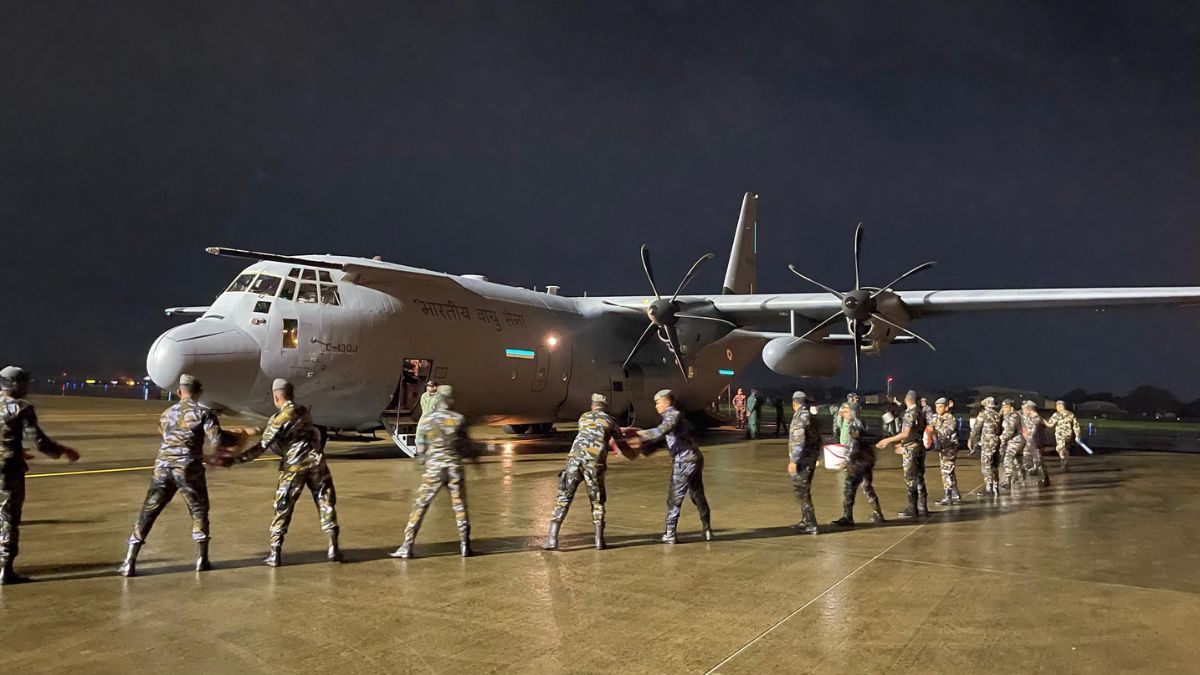
India initiated a large-scale Humanitarian Assistance and Disaster Relief (HADR) operation, codenamed Operation Sagar Bandhu, to aid Sri Lanka following the devastation from Cyclone Ditwah.
The operation was initiated after torrential rain and damaging winds swept across multiple provinces from November, leaving communities cut off and essential services suspended. Roads, electricity and water networks have suffered damage, while displaced residents continue to seek shelter and basic supplies.
New Delhi has deployed military assets, rescue teams and aircraft to Colombo as heavy flooding, collapsed infrastructure and landslides continued to affect large parts of the island nation.
What triggered India’s Operation Sagar Bandhu?
Sri Lanka endured intense rainfall of over 300 mm in a single day as the cyclone made landfall. Major districts experienced flooding and widespread destruction, prompting an immediate call for assistance. India activated Operation Sagar Bandhu under its humanitarian assistance and disaster relief framework and its stated “Neighbourhood First” approach. The Indian government said the mission was designed to provide quick aid in a situation of distress and restore access for emergency work already underway in the country.
As conditions worsened, the Indian Navy redirected assets that had been present in Colombo for a scheduled fleet review. The decision led to the rapid mobilisation of naval and air force resources to deliver supplies, deploy rescue expertise and evacuate affected civilians.
How are the navy, air force and NDRF contributing?
The Indian Navy sent INS Vikrant and INS Udaygiri to transport food, medical support and other essentials to Colombo.
The navy also contributed aerial rescue capability: helicopters from INS Vikrant (Chetak helicopters) were deployed for search and rescue operations in flooded and inaccessible zones, often working in coordination with the Sri Lanka Air Force.
The Indian Air Force sent transport aircraft from Hindon to deploy disaster-response teams and relief cargo. Over the course of the operation, the IAF deployed C-130 and IL-76 aircraft from Hindon Air Base on the intervening night of November 28-29, 2025, airlifting 21 tonnes of relief material (including tents, blankets, and rations), over 80 NDRF personnel, and 8 tonnes of specialised search-and-rescue equipment, into Sri Lanka.
On November 30, 2025, the IAF, working closely with Sri Lankan authorities, conducted major rescue and evacuation operations in the Kotmale region, which is cut off by road because of landslides caused by Cyclone Ditwah.
IAF helicopters evacuated 45 stranded passengers, including:
- 6 critical casualties
- 4 infants
- 12 Indian nationals and over 30 foreign nationals (from Germany, South Africa, Slovenia, the UK, Poland, Belarus, Iran, Australia, Pakistan and Bangladesh), as well as Sri Lankan citizens.
The National Disaster Response Force (NDRF), including rescue personnel and canine units, has begun operations on the ground to reach unsafe areas, help stranded populations and assess damage to housing and public facilities.
The NDRF teams were equipped with inflatable rescue boats, hydraulic cutters and breaching tools, advanced communication systems and medical first-aid kits — preparing them to respond to flooding, collapsed structures and evacuations in challenging terrain.
The mission has also included the evacuation of stranded Indian nationals. IAF aircraft have been operating flights to bring back citizens after disruption of commercial and ground transport inside Sri Lanka.
How significant is the scale of the operation?
Indian authorities say close coordination between the navy, air force and NDRF has made it possible to move supplies by sea and air simultaneously. Relief materials, search teams and medical support have all been transported within a short timeframe, reflecting a multi-agency effort designed to secure affected districts and assist local authorities in managing the crisis.
The extent of India’s engagement highlights the scale of the damage and the urgency of the need for continued support. Supplies, evacuation flights and further deployments are expected to continue as authorities in Colombo face ongoing challenges from flooding, displacement and blocked access routes.