


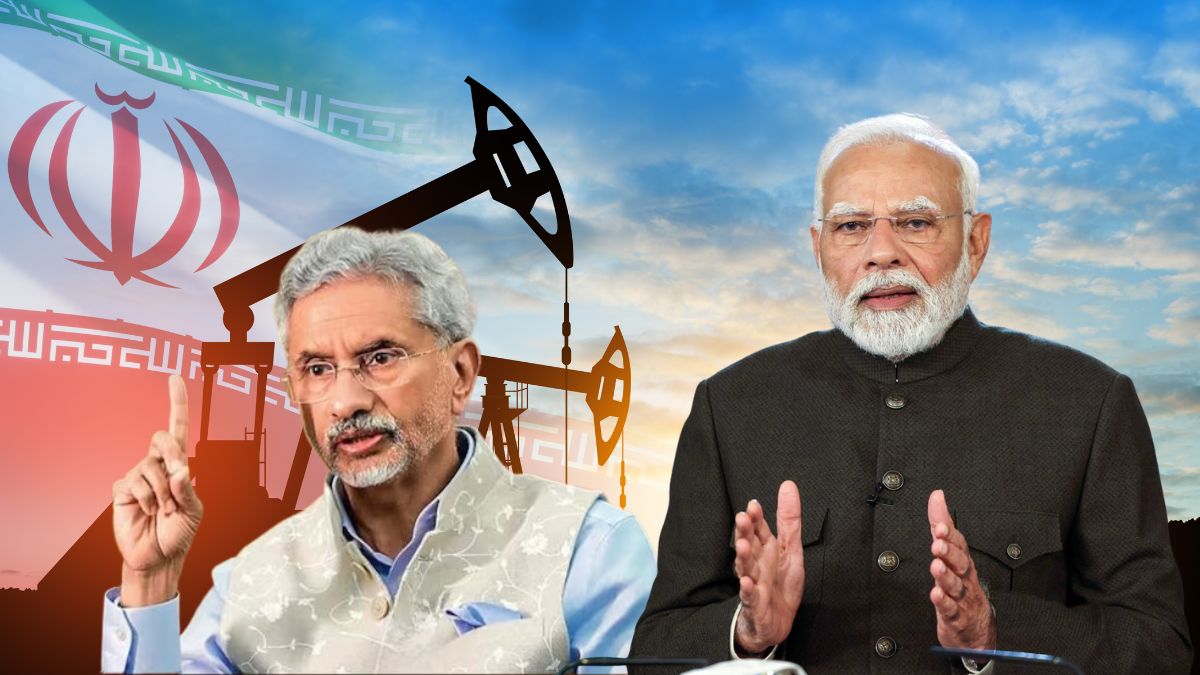
As the war in West Asia continues to escalate, India has stepped up diplomatic engagement with Iran and regional partners, with Prime Minister Narendra Modi speaking directly with Iranian President Masoud Pezeshkian and External Affairs Minister S. Jaishankar holding multiple discussions with Tehran’s foreign minister.
Its already been a fortnight of the US-Israel-Iran war, with concerns over civilian safety, energy security and the disruption of global shipping routes is only growing. Even amid all the chaos, India on Thursday (March 12, 2026) received its oil tanker through the Strait of Hormuz since the war broke out.
The Ministry of External Affairs has revealed that EAM S Jaishankar has held three rounds of talks with his Iranian counterpart Abbas Araghchi in the past few days. On Tuesday (March 11, 2026), the EAM shared that he held a detailed conversation with Araghchi over the developments in West Asia.
Modi speaks to Iranian President as conflict escalates
Prime Minister Narendra Modi on Thursday (March 12, 2026) held a telephone conversation with Iranian President Masoud Pezeshkian, expressing serious concern about the deteriorating security situation in the West Asia. The call marked the first direct contact between the two leaders since the conflict involving Iran erupted last month.
“Had a conversation with Iranian President Dr. Masoud Pezeshkian to discuss the serious situation in the region. Expressed deep concern over the escalation of tensions and the loss of civilian lives as well as damage to civilian infrastructure,” Modi said in a post on X.
PM Modi emphasised the importance of dialogue and diplomacy to restore peace and stability in the region. He also highlighted that the safety of Indian nationals and uninterrupted movement of goods and energy supplies remain India’s top priorities.
Jaishankar holds 3 rounds of talks with Iran
Parallel to the Prime Minister’s outreach, External Affairs Minister Jaishankar has held three rounds of conversations with Iranian Foreign Minister Abbas Araghchi in recent days, reflecting India’s active diplomatic engagement According to MEA spokesperson Randhir Jaiswal, the discussions focused on issues linked to maritime security and India’s energy interests.
“External Affairs Minister Dr. S. Jaishankar and the Foreign Minister of Iran have had three conversations in recent days. The last one discussed issues pertaining to the safety of shipping and India’s energy security,” Jaiswal said during the weekly media briefing.
However, the government declined to disclose further details, indicating that the situation remains sensitive and rapidly evolving.
Strait of Hormuz crisis raises global energy concerns
The diplomatic efforts come amid growing instability in the Persian Gulf, particularly around the Strait of Hormuz, one of the world’s most critical energy chokepoints. Roughly 20% of global oil and liquefied natural gas (LNG) shipments pass through the narrow waterway, making it vital for global energy markets.
Recent hostilities have sharply reduced maritime traffic through the strait.
Why the Conflict Matters for India
The situation carries significant implications for India. Nearly one crore Indians live and work across West Asia and the Gulf, making their safety a major priority for the government. Additionally, around 10,000 Indians are currently in Iran, more than 40,000 Indians live in Israel.
The region is also critical for India’s energy security, with a large share of the country’s oil and gas imports coming from Gulf producers. India is the world’s second-largest buyer of liquefied petroleum gas (LPG), and about 90 percent of these shipments pass through the Strait of Hormuz.
Meanwhile, India has started expanding diplomatic outreach across West Asia. In recent days, PM Modi has spoken to multiple leaders across the region, including those from Oman, Kuwait, Bahrain, Saudi Arabia, United Arab Emirates, Jordan, Israel, Qatar. During these conversations, he reiterated India’s call for de-escalation, respect for sovereignty and peaceful resolution of disputes.