


India has once again called out Pakistan’s long-running playbook of misinformation, firmly rejecting Islamabad’s claims on Operation Sindoor and accusing it of peddling “false and self-serving narratives” to deflect global attention from its own role in cross-border terrorism.
Pakistan, an elected member of the Security Council, has a single-point agenda – to harm India and its people. India’s Permanent Representative to the UN, Ambassador Parvathaneni Harish, underlined that “this hallowed chamber cannot become a forum for Pakistan to legitimise terrorism.”
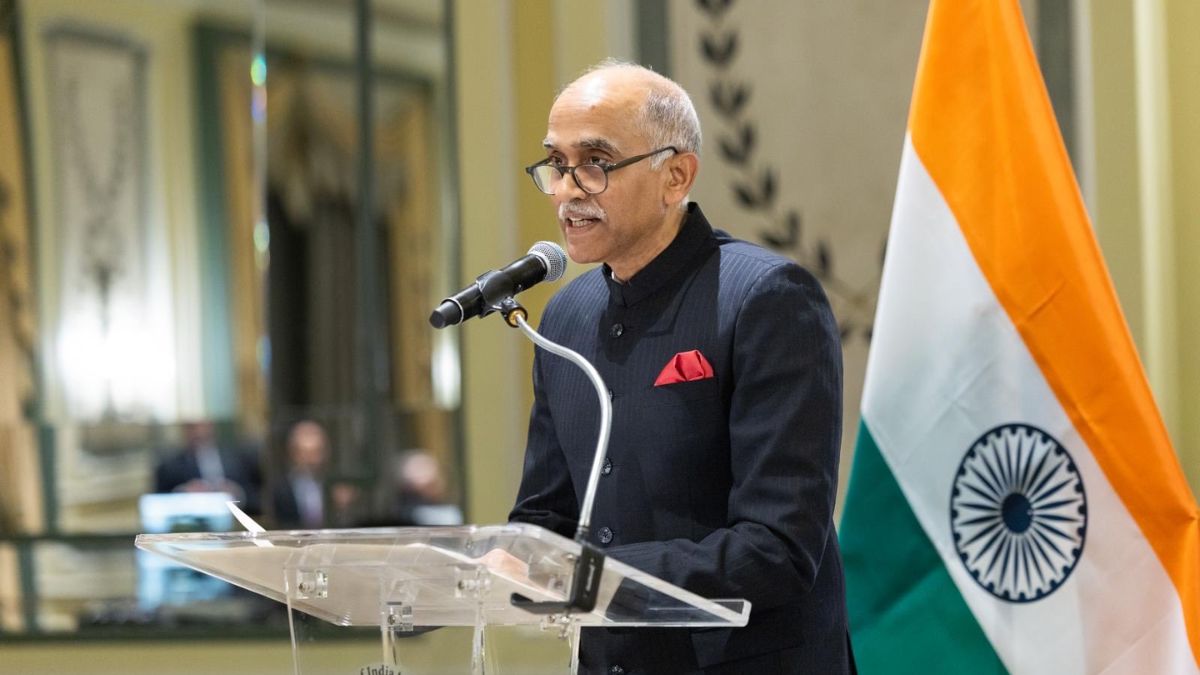
Speaking during a UN Security Council Open Debate, Ambassador Parvathaneni delivered a sharp rebuttal to Pakistan’s remarks, making it clear that New Delhi would not allow the UNSC to be misused as a platform to legitimise terrorism or distort facts.
What did Pakistan claim on Operation Sindoor this time?
India on Monday (January 26, 2026) dismissed Pakistan’s comments on Operation Sindoor as a deliberate attempt to mislead the international community. Ambassador Parvathaneni said Pakistan’s UN representative was driven by a “single-point agenda” aimed at harming India and undermining its legitimate counter-terror actions.
He underlined that Pakistan’s version of events was neither new nor credible, noting that Islamabad has repeatedly relied on selective narratives and denial even when evidence is widely available in the public domain.
Top military leadership in India has often shared facts and numbers, revealing the damage and heavy losses that Islamabad suffered during Operation Sindoor. Air Chief Marshal Amar Preet Singh had in October 2025 disclosed that India inflicted extensive damage on Pakistan’s air power, including US-made F-16s and Chinese JF-17 fighter jets.
What was India’s Operation Sindoor?
The Indian envoy recalled that Operation Sindoor, launched in the early hours of May 7, 2025, was a direct response to the April 22 Pahalgam terror attack, in which 26 innocent civilians were killed by Pakistan-sponsored terrorists. He stressed that the attack was condemned by the UN Security Council itself.
The UNSC had explicitly called for accountability of the perpetrators, organisers, financiers and sponsors of the attack. Moreover, India’s action was in line with that mandate. “That is exactly what we did,” Ambassador Parvathaneni said, underlining that India acted to uphold international expectations, not undermine them.
Was India’s military response escalatory?
Rejecting Pakistan’s attempts to paint India as the aggressor, the envoy said India’s response was “measured, non-escalatory and responsible.”
Operation Sindoor, he explained, was aimed solely at dismantling terrorist infrastructure, targeting nine terror camps located in Pakistan and Pakistan-occupied Jammu and Kashmir (PoJK). The objective was clear: disable terrorists and prevent future attacks, not provoke a wider conflict.
What about claims of damage inside Pakistan?
Calling out Pakistan’s selective amnesia, Ambassador Parvathaneni pointed out that the impact of India’s operation is well documented. He noted that multiple Pakistani airbases were hit. Images of destroyed runways and burnt-out hangars are publicly available. However, Islamabad has not been able to prove its point.
Pakistan continued to threaten further attacks until May 9, after which its military sought a cessation of hostilities. These facts, Parvathaneni said, stand in stark contrast to Islamabad’s claims of restraint or victimhood.
India calls out Pakistan’s plan to make terrorism ‘new normal’
Responding to Pakistan’s reference to a so-called “new normal,” India issued one of its strongest rebukes. “Terrorism can never be normalised,” Ambassador Parvathaneni said, adding that tolerating Pakistan’s use of terrorism as an instrument of state policy is itself dangerous.
He warned that the Security Council must not become a forum to excuse, rationalise or sanitise acts of terror under any pretext.
India reiterates Pakistan has ‘no locus standi’ on Kashmir?
India categorically rejected Pakistan’s comments on Jammu and Kashmir, reiterating that Islamabad has no locus standi to speak on the issue. The Union Territory, the envoy asserted, “has been, is, and will always remain an integral and inalienable part of India,” leaving no room for ambiguity or external commentary.
On the Indus Waters Treaty, Ambassador Parvathaneni stated India had entered the agreement 65 years ago in good faith, but Pakistan had repeatedly violated its spirit through wars and sustained cross-border terrorism. With this, he clarified that India was compelled to place the treaty in abeyance until Pakistan credibly and irrevocably ends its support for terrorism.
What Was India’s Broader Message to the UN?
Concluding his intervention, Ambassador Parvathaneni reiterated that strengthening international rule of law and reforming multilateral institutions are strategic necessities if the UN is to effectively maintain global peace and security. India, he asserted, will continue to act decisively to protect its citizens while exposing false narratives.