


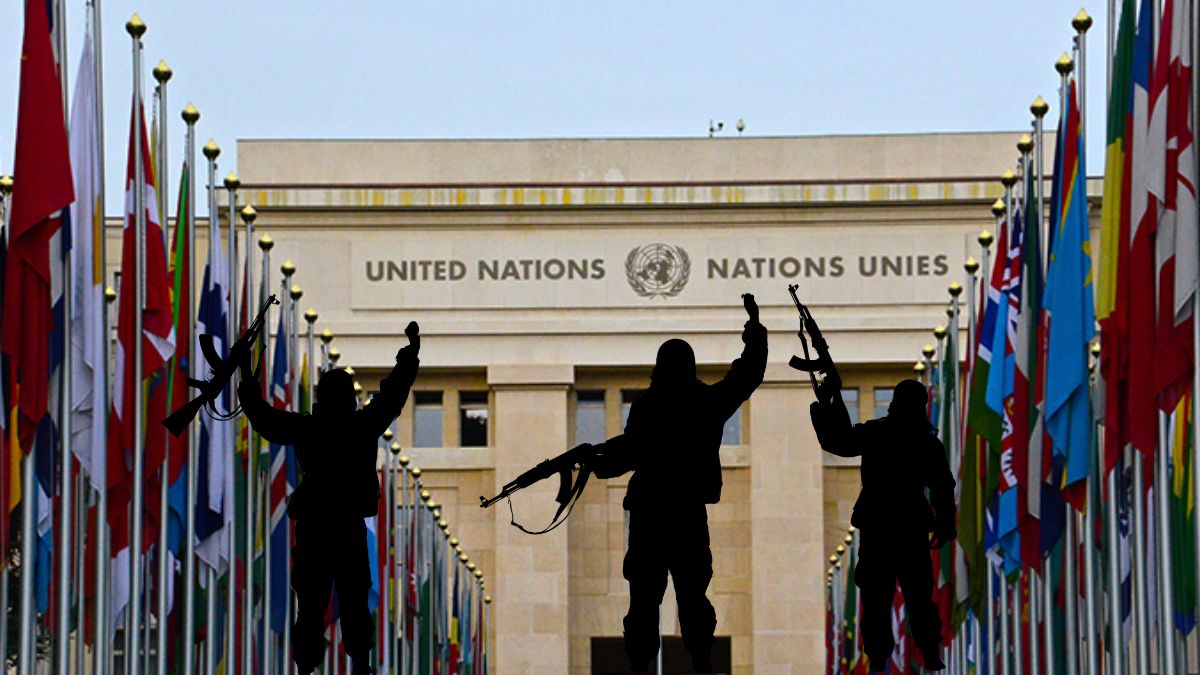
India has renewed its strong global call to combat terrorism, warning at the United Nations that extremist groups such as ISIS and Al-Qaeda continue to pose an “existential threat” to international peace and security. India underlined that terrorism is not limited to any borders, nationality or race.
Speaking at the United Nations Office of Counter-Terrorism (UNOCT) annual ambassadorial briefing, India’s First Secretary at the Permanent Mission to the UN, Raghoo Puri, urged countries to intensify cooperation against terrorist organisations and their global networks.
“Terrorism is an existential threat to international peace and security. It knows no borders, nationality or race, and is a challenge that the international community must combat collectively,” Puri said. The remarks reflect India’s consistent diplomatic push for stronger international action against terrorism.
How did India highlight its own experience with terror attacks?
Emphasising the urgency of the global fight against terror, India referred to the April 2025 terror attack in Pahalgam in Jammu and Kashmir, where 26 tourists were killed. The attack was carried out by The Resistance Front (TRF), which India says is a proxy of the Pakistan-based Lashkar-e-Taiba, a UN-designated terrorist organisation.
“As a country that has suffered from cross-border terrorism for nearly three decades, India is acutely aware of the socio-economic and human cost of terrorism, especially for its victims,” Puri told the UN gathering.
By citing the attack, India highlighted the continued threat posed by cross-border terrorism and the need for coordinated international responses.
What is India demanding from global community?
India urged nations to collectively act against ISIS, Al-Qaeda and their proxies, stressing that fragmented responses allow extremist networks to survive and expand. “We must act together against ISIS and Al Qaeda and their proxies,” Puri said. “India is acutely aware of the socio-economic and human cost of terrorism, especially for its victims.”
New Delhi has long maintained that terrorism cannot be justified under any circumstances, and has consistently pushed for stronger global mechanisms to counter terror financing, recruitment networks and cross-border operations.
India contribution to global counter-terror efforts?
India also highlighted its role in strengthening global counter-terrorism architecture at the United Nations. New Delhi emphasised the importance of the Global Counter Terrorism Strategy (GCTS) as the central framework for multilateral cooperation against terrorism.
India has pledged to actively participate in the 9th review of the strategy, while assuring full cooperation to Finland and Morocco, which are co-facilitating the review process.
What is the ‘Delhi Declaration’ on counter-terrorism?
India also pointed to its 2022 chairmanship of the UN Security Council Counter-Terrorism Committee (CTC) as a key moment in shaping international policy against modern terrorist threats. During that period, India hosted a special meeting of the committee in New Delhi and Mumbai, focusing on the growing challenge of terrorist use of emerging technologies.
The meeting resulted in the adoption of the ‘Delhi Declaration’, a landmark document aimed at countering the misuse of technologies such as drones, encrypted communications, social media and digital financing by terrorist groups.
India said the initiative demonstrates its continued commitment to strengthening the global fight against evolving terrorist threats.
Why is India pushing for stronger global action?
With extremist networks increasingly using advanced technology, online propaganda and transnational funding channels, India warned that the threat of terrorism continues to evolve. New Delhi has been urging the international community to close policy gaps, enhance intelligence cooperation and strengthen multilateral institutions.
India said it will continue working closely with UN bodies and international partners to build capacity and ensure countries are better prepared to tackle future terrorist threats.