


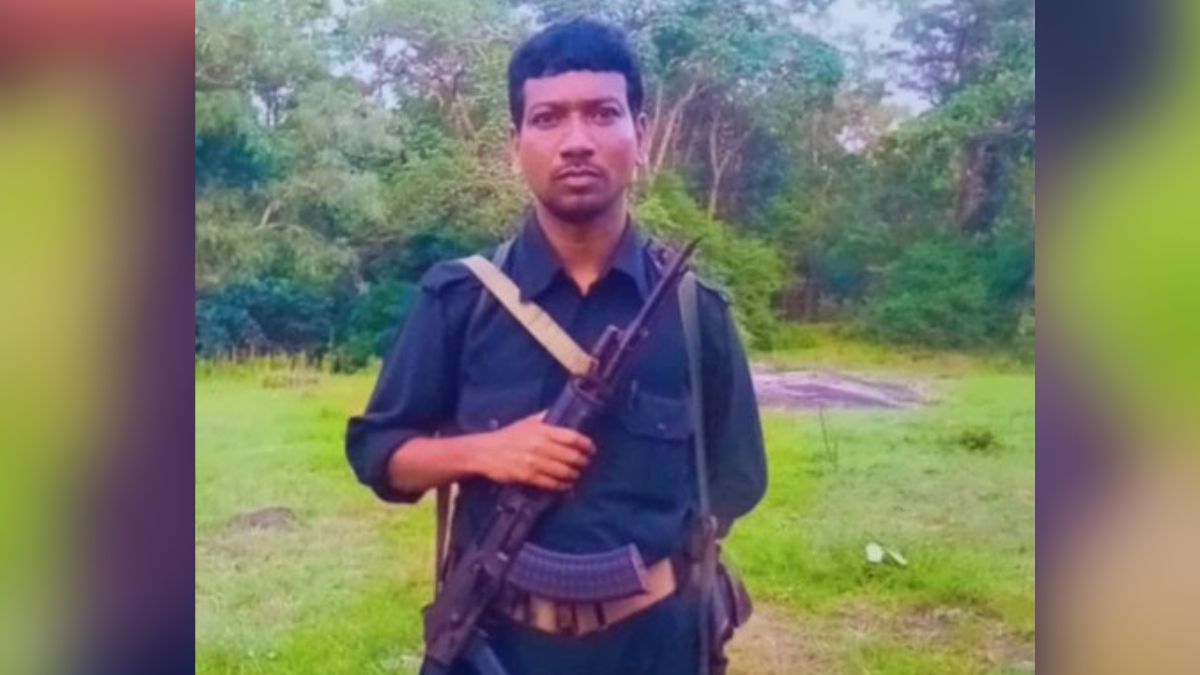
The killing of top Maoist commander Mandvi Hidma in an intense gunfight in Andhra Pradesh marks one of the most decisive moments in India’s decades-long counter-insurgency campaign.
For the security establishment, his death is not just the elimination of another rebel leader; it is the fall of the man long regarded as the most feared battlefield commander of the CPI (Maoist).
For the people of Bastar, it signals the possible end of an era defined by relentless fear, violence and disruption.
How did the political leaders, police react to Hidma’s elimination?
Chhattisgarh chief minister Vishnu Deo Sai summed up local sentiment when he declared that “Hidma’s terror has ended, peace is returning to Bastar.”
His statement reflects the profound psychological grip the 50-year-old guerrilla leader had over the region for nearly three decades. Inspector General of Police (Bastar Range) Sundarraj P called his elimination “one of the most decisive breakthroughs in the history of anti-Naxal operations.”
What is Hidma’s terror story?
Born in a remote tribal village on the Sukma-Bijapur border, Hidma joined the Maoists as a child worker in 1991 and rose through the ranks as the insurgency expanded across Dandakaranya (central India).
By the early 2000s, his tactical brilliance earned him command of PLGA Battalion No. 1, the Maoists’ most lethal fighting unit, comprising over 150 hand-picked cadres.
His battlefield methods, combining intimate terrain knowledge with layered security and ambush tactics along forest ridgelines, became the template for some of the deadliest attacks in the insurgency’s history.
What do the police record Hidma’s role in Maoist terror?
Police records link him to the 2010 Tadmetla massacre that killed 76 security personnel, the 2013 Darbha Valley ambush that wiped out state Congress leadership, the 2017 Burkapal attack, and the high-casualty 2021 encounter near Tarrem.
His ability to plan, execute and disperse forces with precision made him indispensable to the Maoist military structure. This is why he became the youngest-ever member of the CPI (Maoist) Central Committee.
What was Hidma’s role in the CPI (Maoist) military structure?
Hidma also played a central role in recruitment, weapons training and cadre indoctrination. Surrendered Maoists describe him as an inspiring but ruthless commander who “taught the organisation how to make rocket launchers, lay ambushes and lead from the front.”
This combination of operational acumen and charismatic leadership earned him near-mythical status within the insurgency.
Who was Hidma’s spouse and what was her role?
His wife, Madkam Raje, also killed in the encounter. was a long-time Maoist organiser involved in political instruction and cadre orientation. Together, they formed one of the most influential Maoist leadership pairs in south Bastar.
Is this the end of the Maoist ruthless violence?
For security agencies, Hidma’s death is the culmination of sustained pressure across the insurgency’s core areas. Increased joint operations by Chhattisgarh, Telangana and Andhra Pradesh forced his unit out of entrenched bases and pushed them into unfamiliar terrain.
With the Centre targeting March 2026 as the deadline to eliminate Left Wing Extremism, the removal of a commander of his calibre represents a strategic breakthrough.
What challenges remain after Hidma’s elimination?
Yet challenges remain. The Maoist movement has historically regenerated leadership after major losses. But officers admit that replacing a commander with Hidma’s territorial knowledge and combat experience will be difficult.
His death, coming after the neutralisation of former general secretary Basavaraju, strikes at both the “brain” and the “spine” of the organisation.
For now, the mood in Bastar’s villages, where news travelled through markets and weekly haats, reflects cautious relief. The fall of their most feared commander may not end the insurgency overnight, but it has undeniably altered the balance of power in India’s most volatile conflict zone.