
How Asim Munir’s Gaza Gamble Can Misfire: From Fortress of Faith to Broker of Peace

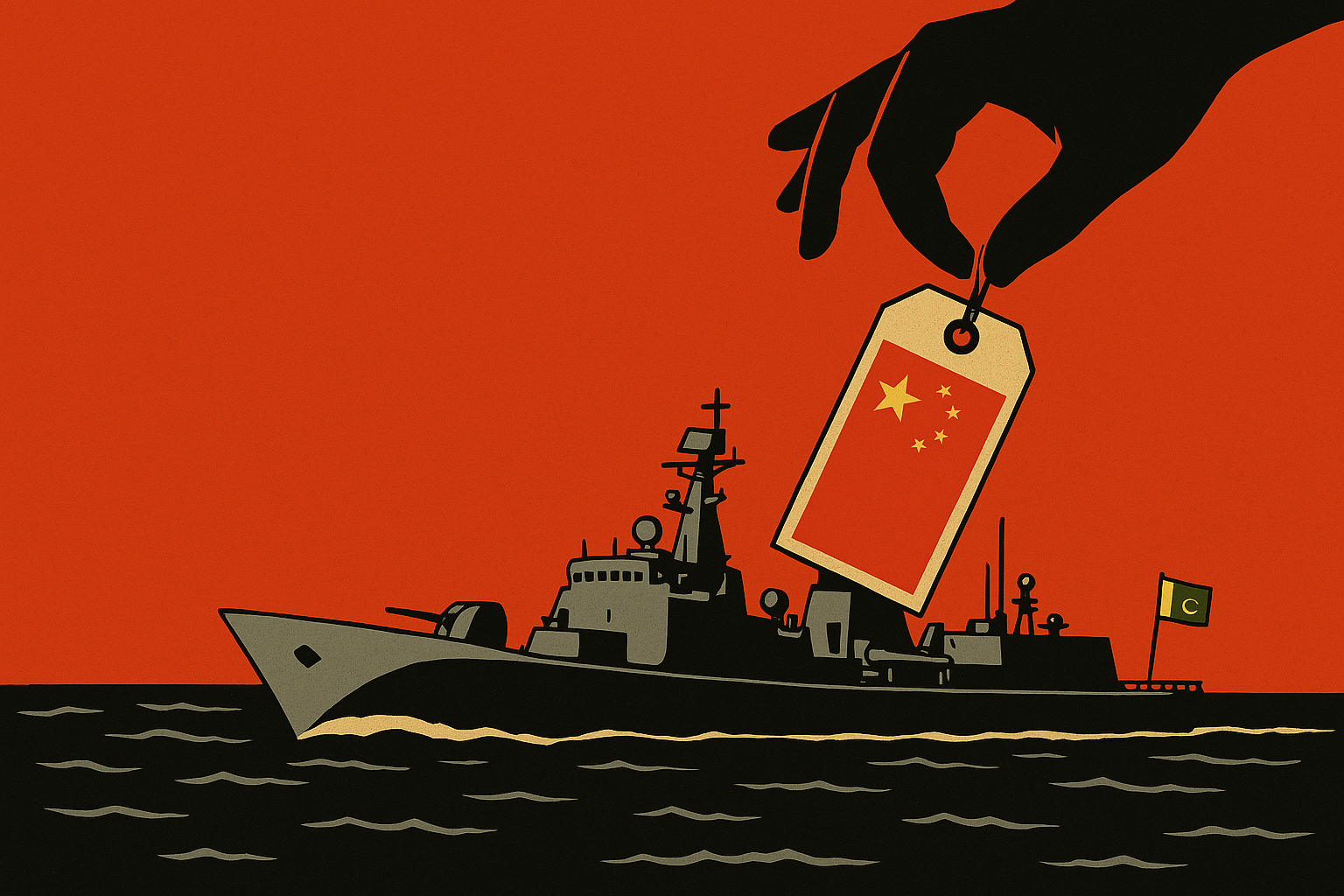
For decades, Pakistan has styled itself as the conscience of the Muslim world, the “fortress of Islam,” the state that speaks when others remain silent.
Yet this self-anointed guardianship has always been more about calculation than conviction.
The ‘ummah’ narrative offered Pakistan’s elite a convenient moral currency; it elevated domestic legitimacy, won external patronage, and cloaked failures of governance in the language of faith.
But Gaza exposes the limits of that illusion. The same establishment that once claimed to defend Palestine now courts Washington’s approval for a peacekeeping role conceived by its allies.
The rhetoric of solidarity, it turns out, was never a principle; it was policy camouflage.
The notion of Pakistan as Islam’s citadel, the so-called quaid-e-ummat (leader of the Muslim world), was always a myth sustained by propaganda and insecurity, not belief.
Nearly five decades after championing the Palestinian cause at the 1974 Lahore Islamic Summit, Pakistan now stands on the brink of a striking policy reversal.
Reports suggest that Islamabad may send up to 20,000 troops to Gaza as part of a US-backed International Stabilisation Force (ISF) tied to Donald Trump’s 20-point Gaza Peace Plan.
The move that, if confirmed, would mark Pakistan’s first indirect engagement with Israeli security interests and a sharp break from its long-proclaimed ideological stance.
Trump’s 20-Point Peace Plan and Pakistan’s Dilemma
On September 29, 2025, United States President Donald Trump unveiled his comprehensive 20-point Gaza Peace Plan, which outlined a proposal for a temporary ceasefire lasting 72 hours, with the return of hostages, and the establishment of a “New Gaza” under the aegis of international surveillance.
The plan proposed the deployment of an International Stabilisation Force (ISF), primarily consisting of personnel from Muslim-majority countries, to supervise the reconstruction of Gaza and to facilitate the incremental withdrawal of Israeli forces.
One week prior, Trump engaged in discussions with leaders from eight Muslim nations, including Pakistan, who collectively advocated for a complete withdrawal of Israeli forces and reaffirmed their commitment to the two-state solution.
However, the final reprise of Trump’s proposal disregarded these stipulations, linking the withdrawal to the disarmament of Hamas and placing the oversight responsibilities under a “Board of Peace” presided over by Trump himself and reportedly including figures such as former British Prime Minister Tony Blair.
Furthermore, in Islamabad, Prime Minister Shehbaz Sharif offered a measured endorsement of the plan, while reports from Politico and CNN-News18 indicated that Pakistan was being considered as a potential contributor of up to 20,000 troops to the envisioned International Stabilization Force (ISF).
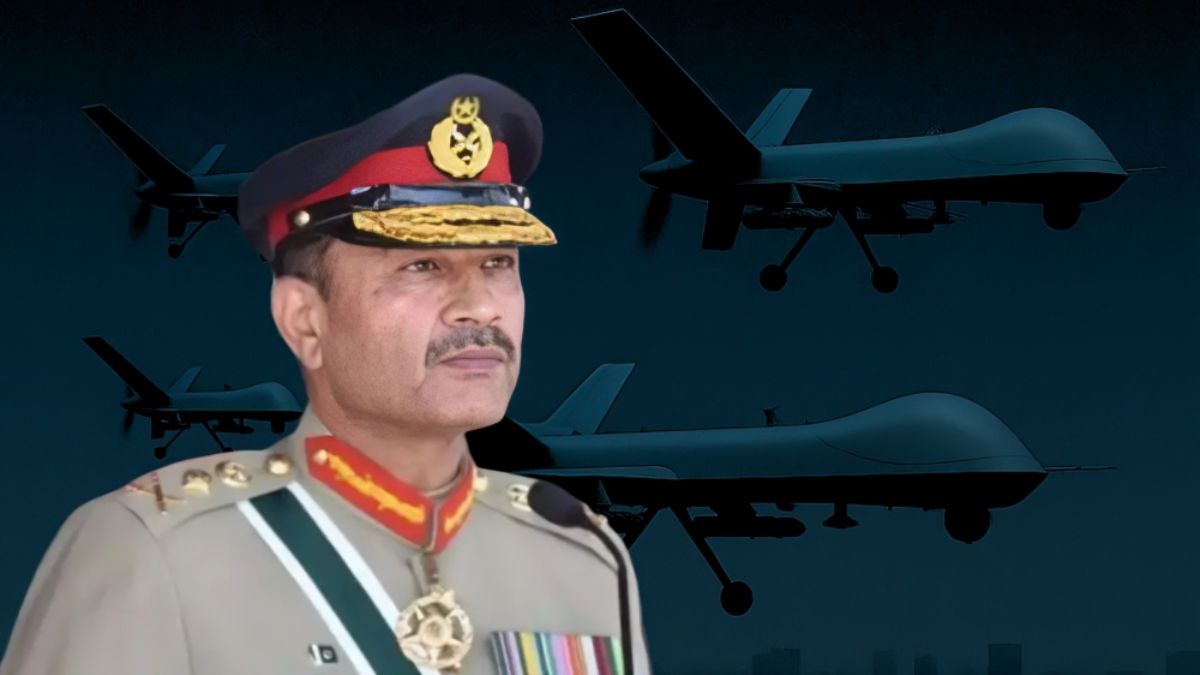
The purported meetings between Pakistan’s Army Chief, Field Marshal Asim Munir, and United States officials in Egypt underscore the delicate nature and possible volatility associated with Islamabad’s anticipated involvement in Gaza.
If confirmed, this development would signify Pakistan’s inaugural indirect collaboration with Israel, representing a notable deviation from decades of ideological opposition and serving as a revealing indicator of the extent to which Islamabad is prepared to compromise its principles in pursuit of national survival.
The Gaza Gamble: Pakistan’s Double Game
Gaza is the latest arena for Pakistan’s timeworn game of political contradiction.
For a nation teetering on the brink of economic collapse, Pakistan’s potential participation in Washington’s postwar Gaza framework represents not diplomacy but expediency, a bid for survival disguised as moral purpose.
By aligning with a US-designed peace plan shaped, indirectly, by shared interests, Pakistan’s military establishment appears willing to trade ideological fidelity for geopolitical relevance and financial reprieve.
With public sentiment overwhelmingly pro-Palestinian, this gambit is fraught with peril. Any visible cooperation with an American-or Israeli-led mission risks triggering mass unrest at home.
Moreover, Islamist groups like Tehreek-e-Labbaik Pakistan (TLP) have already declared that participation in such a venture would cross a “red line.”
For Field Marshal Asim Munir, already navigating political volatility and discontent within the ranks, the optics of Pakistani troops operating under Western oversight could fatally erode both his domestic credibility and the military’s moral authority.
For decades, Pakistan’s ruling elite have mastered the politics of leverage, extracting aid from Washington and legitimacy from religious sentiment.
Gaza follows the same script: moral symbolism traded for money, and ideological constancy exchanged for short-term relief.
The contradiction is glaring. Abroad, Pakistan preaches resistance; at home, it rents out its soldiers to enforce a peace designed elsewhere.
The self-proclaimed fortress of Islam has once again revealed itself not as the conscience of the Muslim world, but as its most practiced opportunist.
Pakistan’s Strategic Balancing and the Burden of Contradictions
Pakistan’s prospective troop deployment to Gaza encapsulates the contradictions that have long defined its foreign policy, a perpetual balancing act between ideology and expediency.
Officially, Islamabad frames its potential role as a humanitarian commitment aligned with the Palestinian cause.
However, in practice, it represents a strategic endeavor to reconstitute its image as a responsible actor amidst significant economic turmoil and escalating strategic isolation.
For Pakistan’s military establishment, Gaza offers an opportunity to recast its international image, transitioning from patron of proxies to partner in peacekeeping initiatives.
After years of being haunted by its own militant incubations, Islamabad now seeks to position itself as an enforcer of regional stability.
The recent trilateral agreement with Türkiye and Azerbaijan, aimed at mitigating the employment of militant proxies, a remarkable departure from previous policies, highlights this transformative narrative.
Yet the shadow of history lingers: the same state that nurtured non-state actors as tools of influence now invokes counterterrorism as a rationale for its involvement in Gaza’s post-conflict reconstruction.
Domestically, however, the potential risks are substantial. Public opinion in Pakistan is profoundly pro-Palestinian.
Any overt collaboration with a U.S.-led or Israeli-led initiative could provoke significant political and religious backlash.
For a regime already grappling with issues of legitimacy, this action risks being interpreted as ideological surrender rather than strategic acumen.
Externally, Pakistan’s stance reveals a recurrent pattern of dual alignment. It continues to assert solidarity with the Muslim ummah while subtly engaging with Western frameworks.
This duality, moral defiance in rhetoric coupled with pragmatic compliance in practice, has long been a defining feature of its diplomatic approach. The situation in Gaza merely amplifies this dichotomy.
Ultimately, Pakistan’s strategic considerations regarding Gaza are less about the Palestinian issue and more about its own national interests.
It reflects a state striving to project relevance in the face of crisis, exchanging conviction for convenience, and historical legacy.
Whether this new posture is perceived as a sign of maturity or as hypocrisy will ultimately depend not on the declarations emanating from Islamabad, but rather on the actions of its military personnel observed on Gaza territory.
The Death of the “Fortress of Islam”
Pakistan’s position regarding Gaza reveals not a revitalisation of principles but rather the exposure of duplicity.
What is presented as a humanitarian obligation is, in reality, an act of strategic desperation, survival masking as faith.
The nation that once professed to advocate for the ummah now contemplates the imposition of peace within a framework devised by Washington and endorsed by Tel Aviv, a paradigm that a significant portion of the Muslim world interprets as a perpetuation of oppression.
Domestically, Islamabad continues to articulate the rhetoric of resistance, yet internationally, it exchanges such rhetoric for financial relief and diplomatic advantages.
For the military elite, religion persists as an instrument of legitimacy; Gaza merely represents the most recent platform for moral theatrics conducted in the pursuit of power.
The juxtaposition of the year 1974 with the contemporary era signifies not merely a transformation in policy frameworks; it marks the collapse of conviction.
In Lahore, Bhutto mobilised the Islamic world under a doctrine characterized by resistance; in contrast, that doctrine has subsequently deteriorated into mere pragmatism.
Consequently, Pakistan’s invocation of the ummah has devolved into a hollow ritual, a slogan devoid of authenticity.
The so-called “Fortress of Islam” now appears barren, constructed not upon conviction but upon the semblance of it.
Should Islamabad advance in this manner, Gaza will not signify Pakistan’s ethical resurgence but rather its ultimate betrayal, a testament that the fortress did not succumb to external adversaries but rather imploded under the burden of its own hypocrisy.