
Taliban’s First Envoy Lands In Delhi: What The Quiet Takeover Of Afghanistan’s Embassy Means For India’s Afghan Policy
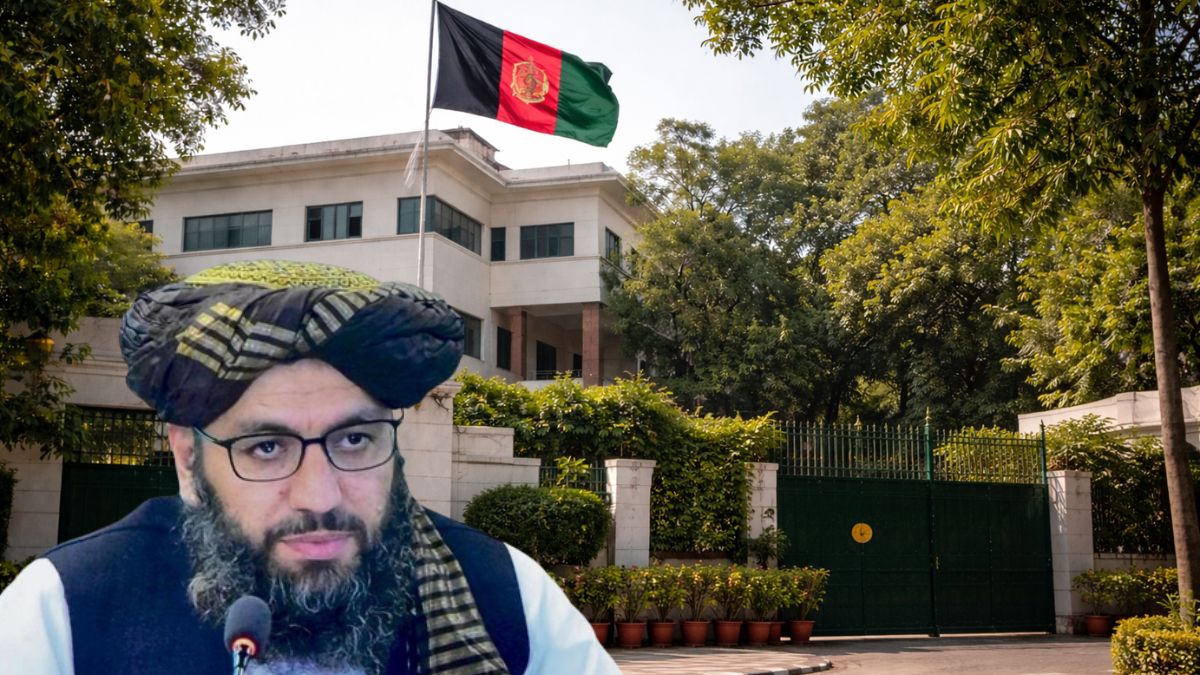
The arrival of the Taliban’s first envoy in Delhi marks a carefully calibrated shift in India’s engagement with Afghanistan without formal recognition. Image courtesy: RNA

Nearly five years after the Taliban seized Kabul, India has taken a significant, if carefully calibrated, step in its engagement with Afghanistan, with the arrival of the first Taliban-appointed diplomat to head the Afghan Embassy in New Delhi.
Mufti Noor Ahmad Noor, a senior official in the Taliban-run Ministry of Foreign Affairs, has reached Delhi and is expected to assume charge as the Embassy’s new Charge d’Affaires next week, sources confirmed.
How did Noor get appointed as the Afghan ambassador to India?
The move follows a mutual understanding reached during Taliban Acting Foreign Minister Amir Khan Mottaqi’s high-profile visit to India in October 2025, when he held talks with External Affairs Minister S. Jaishankar.
Noor, who accompanied Mottaqi throughout that visit, including a politically sensitive stop at the Darul Uloom madrassa in Deoband, is seen as a trusted figure within the Taliban’s diplomatic apparatus.
Who is Noor, the new Afghan ambassador to India?
Noor currently serves as Director General of the First Political Division at the Afghan Foreign Ministry in Kabul. While he has not yet formally presented his letters of appointment, officials say the transition has the backing of both sides.
His arrival marks a breakthrough after an earlier Taliban attempt to appoint a diplomat in Delhi failed in April 2023, when embassy staff loyal to the previous Ashraf Ghani government blocked the appointee from entering the premises.
How has the Taliban expanded its footprint in India?
Since then, the Taliban has gradually expanded its diplomatic footprint in India. It successfully placed its nominees at the Afghan Consulate in Mumbai and, more recently, in Hyderabad.
Ikramuddin Kamil heads the Mumbai mission, while Habibur Rahman Aftab has taken charge in Hyderabad. Mohammad Ebrahimkhil, a Ghani-era appointee who had been serving as Charge d’Affaires in Delhi, is expected to step aside, though officials in Hyderabad say no formal communication on personnel changes has been received so far.
Why has India yet to formally recognise the Taliban government?
India, like most of the international community, continues to withhold formal recognition of the Taliban regime, which ousted Afghanistan’s elected government by force in August 2021.
However, New Delhi has steadily rebuilt working ties, reopening a technical mission in Kabul in 2022 and upgrading it to full Embassy status in October 2025.
The decision aligned India with countries such as China, Russia, Pakistan, and several Gulf and Central Asian states that allow Taliban diplomats to operate on their soil.
Why is the Afghan embassy staff concerned?
The upgrade has raised concerns among Afghan embassy staff in Delhi appointed under the previous regime, many of whom fear reprisals if asked to return to Afghanistan.
For now, officials say existing employees and the red, green, and black tricolour flag of the former Afghan Republic will remain at the Shantipath embassy.
When did India and Afghanistan announce the embassy upgrade?
Announcing the embassy upgrade last year, the Ministry of External Affairs said the move reflected India’s resolve to “deepen its bilateral engagement with the Afghan side in all spheres of mutual interest.”
Noor’s arrival signals that New Delhi is translating that policy into action—balancing strategic interests, regional stability, and humanitarian considerations, without crossing the red line of formal recognition.