


Everything Didn’t Go Well For Them: CDS Reveals How Op Sindoor Triggered Constitutional Changes In Islamabad
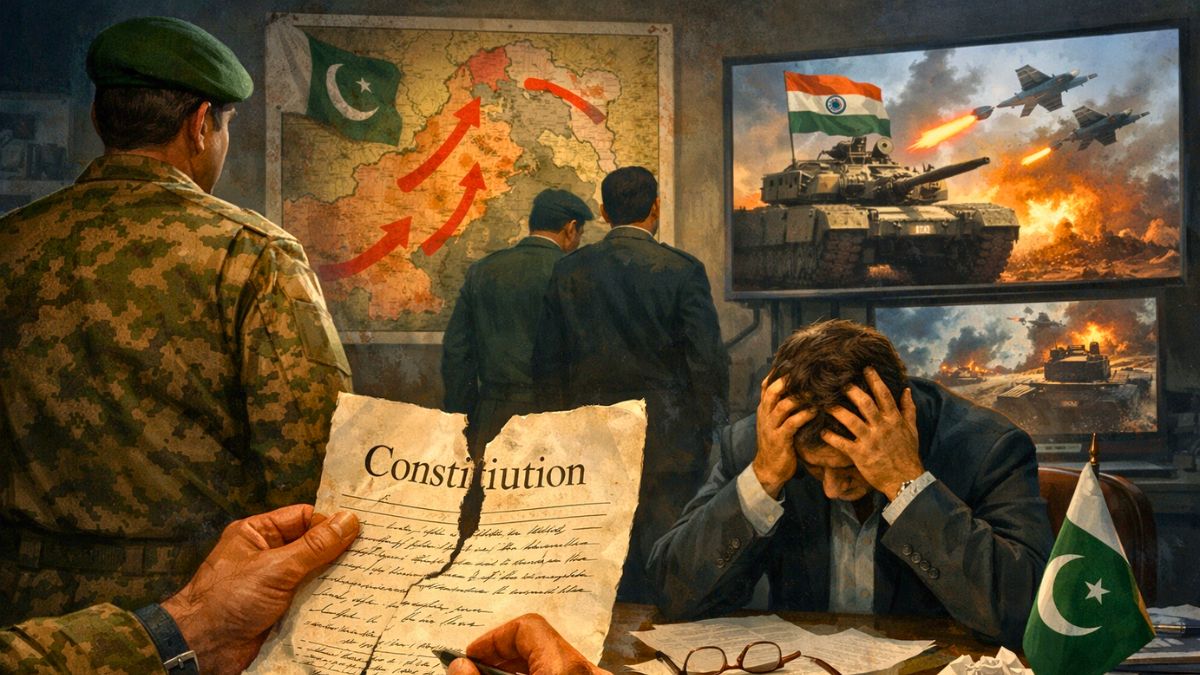
Pakistan had introduced a slew of policy changes in the weeks following Operation Sindoor, including a revamp of top military posts. Image courtesy: AI-generated picture via Sora

Remember how Pakistan had promoted its Army Chief Asim Munir despite taking a serious beating from India during Operation Sindoor in May 2025. It had also replaced top military posts, swaping the Chairman of the Joint Chiefs of Staff Committee with a newly created Chief of Defence Forces role.
Turns out, it was not a random but a rather strategic decision. India’s retaliatory Operation Sindoor inflicted such severe operational and institutional damage on Pakistan that Islamabad was forced into hurried constitutional and structural changes, Chief of Defence Staff General Anil Chauhan has revealed.
Offering a rare insight into the strategic impact of India’s military action launched in retaliation to the April 22 Pahalgam terror attack, CDS General Chauhan stated that Pakistan’s post-operation reforms were a tacit admission that the operation had exposed deep vulnerabilities within its military and governance framework.
How did Operation Sindoor expose Pakistan’s vulnerabilities?
India’s leadership has, in the recent past, often spoken about the heavy losses inflicted upon Pakistan during Operation Sindoor. CDS General Chauhan on Friday (January 9, 2025) stated that Pakistan’s decision to push through constitutional amendments following Op Sindoor was a direct acknowledgement that “everything didn’t go well” for them.
“The changes which have been brought about in Pakistan, including the constitutional amendment done hurriedly, are actually an acknowledgement of the fact that they found a lot of shortcomings and deficiencies during this operation,” the CDS said at Pune Public Policy Festival 2026.
He noted that the amendment primarily addressed the restructuring of federal customs courts, but the speed and context in which it was introduced reflected the wider shock Pakistan absorbed following India’s strikes.
What was Operation Sindoor and why did it matter?
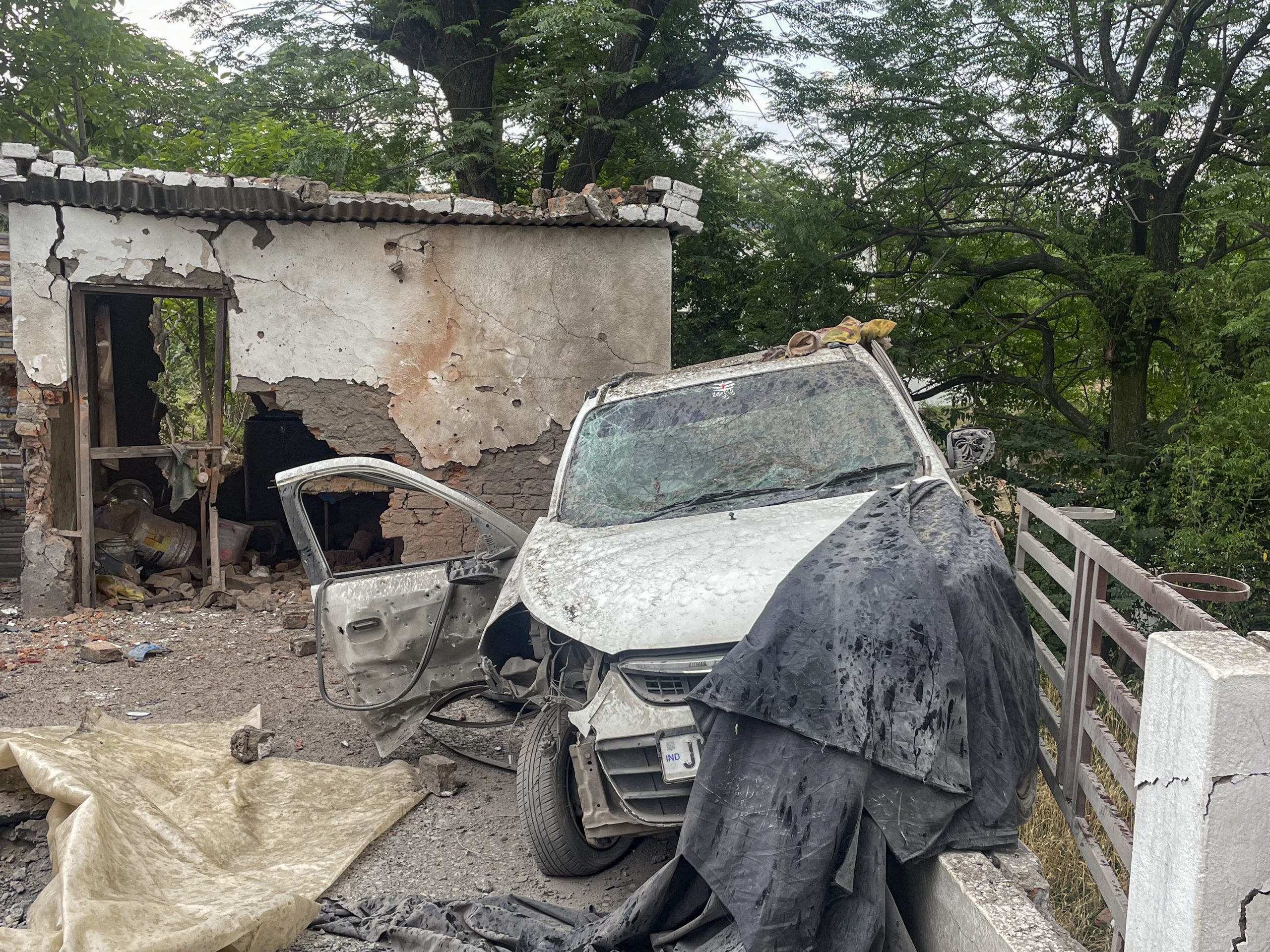
Operation Sindoor was launched in May 2025, days after the Pahalgam terror attack, in which civilians were killed. In a swift, 25-minute coordinated offensive, Indian armed forces targeted nine terror hubs across Pakistan and Pakistan-occupied Kashmir. The strikes crippled key infrastructure of terror outfits including Lashkar-e-Taiba (LeT), Jaish-e-Mohammed (JeM), Hizb-ul Mujahideen.
According to defence assessments, the precision strikes significantly degraded Pakistan-backed terror networks and disrupted their command-and-control structures.
Op Sindoor impact: Why did Pakistan overhaul Its military structure?
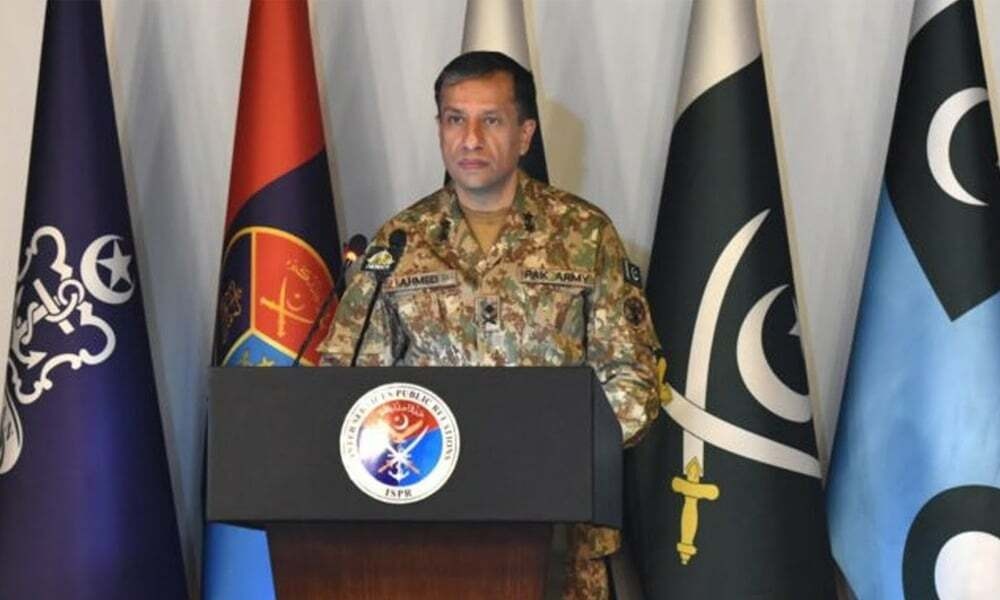
In the weeks following Operation Sindoor, Pakistan initiated a sweeping reorganisation of its military leadership. These included – the Chairman of the Joint Chiefs of Staff Committee was replaced with a newly created Chief of Defence Forces (CDF) post, authority was further centralised under the Army Chief, undermining the principle of jointness.
General Chauhan also pointed out that Pakistan has even stipulated that the CDF post can only be created by the Chief of Army Staff, a move he described as fundamentally flawed. “This goes against the basic concept of jointness,” he stated, highlighting Pakistan’s continued army-dominated, land-centric approach to warfare.
What new structures did Pakistan create?
The CDS also flagged Pakistan’s creation of a National Strategy Command and an Army Rocket Forces Command, moves that consolidate both conventional and nuclear decision-making under the Army Chief. While these steps may strengthen Pakistan’s internal control mechanisms, Chauhan noted they reflect an over-concentration of power like land operations, joint naval and air operations, strategic and nuclear oversight.
“All now effectively rest with the Army Chief,” he said, underscoring the risks of such centralisation.
Is a three-front threat real for India?
On the question of a potential three-front challenge involving Pakistan, China and Turkey, the CDS urged a nuanced assessment, noting that Turkey does not share a border with India and there is no formal military alliance binding the three. Each threat, he said, must be analysed independently rather than through alarmist lenses.
Meanwhile, beyond operations, General Chauhan also addressed the guns-versus-butter debate, arguing that smart defence spending can actively boost the economy. With most procurements now sourced domestically, he noted that 18% GST flows back into government revenues, defence manufacturing generates employment.