

Iran Chooses Mojtaba as Supreme Leader, US and Israel Warn He is a Target
Iran Chooses Mojtaba as Supreme Leader

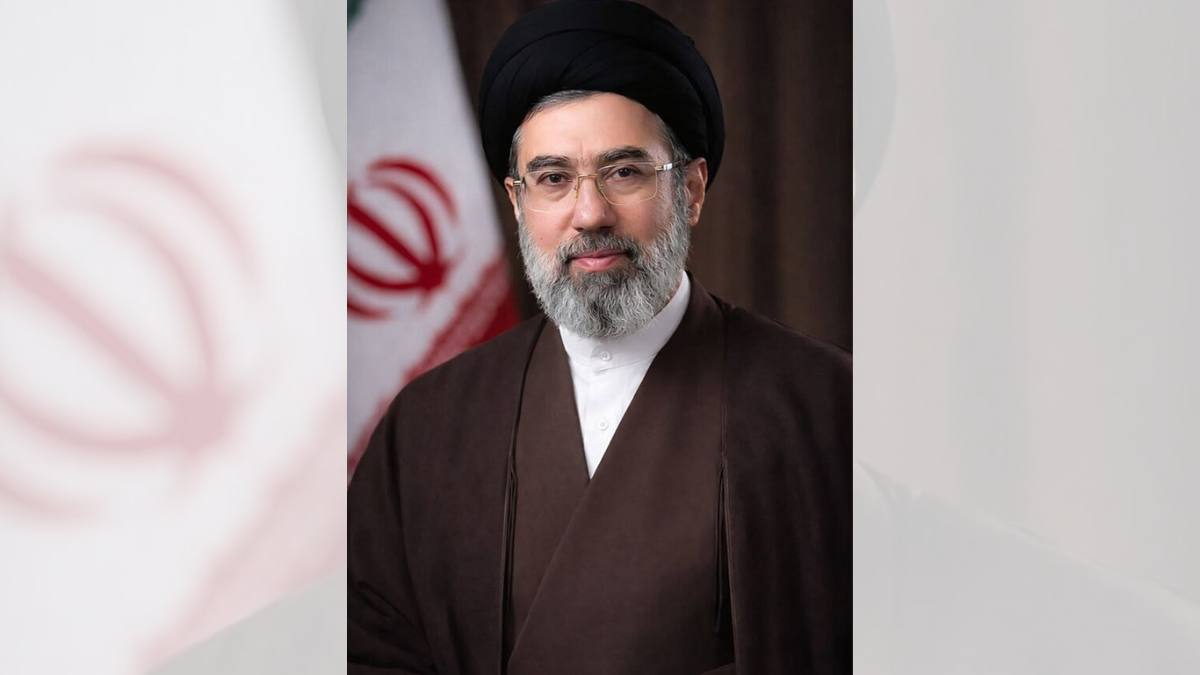
Iran on Sunday (March 8, 2026) named Mojtaba Khamenei as the Supreme Leader to succeed his father, Ayatollah Ali Khamenei, who was killed in a US-Israel air strike on Tehran on February 28, even as Washington and Tel Aviv warned that he would be a target for elimination.
Iran’s Assembly of Experts announced that Mojtaba, a mid-ranking cleric with close ties to the elite Islamic Revolutionary Guard Corps (IRGC), was chosen as the next Supreme Leader of the country, just about a week after his father, who held the post for three decades, was killed.
Iranian state media said that the announcement came after Iran International, an anti-Tehran media outlet, first reported that the 56-year-old had been appointed to the all-powerful post overseeing both religious and political affairs in Iran.
The reaction from both the US and Israel to the appointment of Mojtaba was quick: The new Supreme Leader of Iran under the continuing Islamic regime would be a target for elimination, calling him more hardline than his father.
US President Donald Trump’s sharp reaction was: “If he doesn’t get approval from us, he’s not going to last long.” As Mojtaba’s appointment became imminent last week, Israel said it would target anyone chosen as the next Supreme Leader.
Although Iran’s ruling system doesn’t endorse hereditary succession to power, the Assembly of Experts appears to have made an exception for Mojtaba’s elevation due to his powerful connections and mass following within the IRGC, as well as his influence over his late father’s office.
“By a decisive vote, the Assembly of Experts appointed Ayatollah Seyyed Mojtaba Hosseini Khamenei as the third Leader of the sacred system of the Islamic Republic of Iran,” the assembly said in a statement issued just after midnight Tehran time.
Just hours before, a member of the assembly, Ayatollah Mohsen Heidari Alekasir, said a candidate had been chosen based on Ayatollah Ali Khamenei’s guidance before he died in the US-Israel air strikes on February 28. He said, Iran’s top leader should be “hated by the enemy.”
“Even the Great Satan (US) has mentioned his name,” Heidari Alekasir said of the chosen successor. He was referring to Trump’s warning that Mojtaba was an “unacceptable” choice.
Born in 1969 in Mashhad, Iran’s holy Shia city, Mojtaba grew up as his father worked to overthrow the Shah, Iran’s then-king. As a youth, Mojtaba participated in the Iran-Iraq war and got militarily trained, as well as being educated at conservative seminaries of Qom, Iran’s Shia centre of Islamic theology.
Though he never held any official government position, he was spotted at loyalist rallies and rarely spoke in public. The US Treasury Department imposed a sanction on him in 2019, as he represented his father in “an official capacity despite never being elected or appointed to a government position” as the one managing the Supreme Leader’s office.
Since January 2026, protesters against Khamenei’s misgovernance had particularly criticised Mojtaba for the custodial death of a young woman, charged with breaching Iran’s strict dress codes.
In a warning ahead of Mojtaba’s appointment, Trump said the next Supreme Leader of Iran would not remain in power without the US approval.
“He’s going to have to get approval from us,” Trump told an American news channel. “If he doesn’t get approval from us, he’s not going to last long.”
Previously, Trump had criticised the possibility of Mojtaba succeeding his father and described him as “an unacceptable lightweight.”
Iran, however, rejected the US criticism, saying outside powers could not influence Iran’s choice of its next leader. Iran’s Foreign Minister Abbas Araghchi said the decision was entirely Iran’s internal matter. “We will allow nobody to interfere in our domestic affairs,” Araghchi said.
Israeli Defence Forces, on Sunday (March 8), warned that they would target the next successor. “We want to tell you that the hand of the State of Israel will continue to pursue every successor and every person who seeks to appoint a successor,” the IDF’s social media post in Farsi said.
It also said that anyone attending meetings to choose the next Supreme Leader would be a legitimate target. “We warn all those who intend to participate in the successor selection meeting that we will not hesitate to target you, either. This is a warning!” it added.
Meanwhile, the West Asia conflict escalated significantly over the last week, as the US-Israel combine and Iran rained missiles and drone attacks on each other in the region, taking the war to the Indian Ocean region when an Iranian frigate was sunk in international waters close to Sri Lanka, killing over half of the 180-member crew.