
India-China Ties Seem To Be Taking Off! Air China Resumes Beijing-Delhi Direct Flights After 6 Years
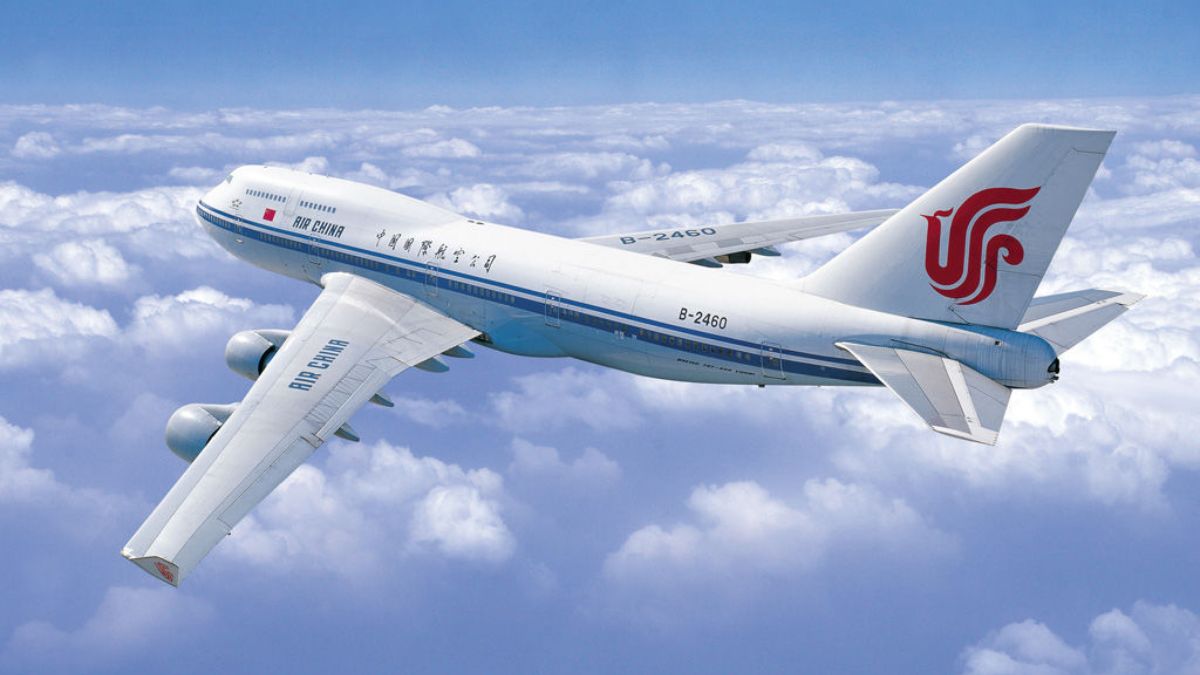
The bilateral ties between India and China have shown some progress since PM Modi’s visit to attend the SCO in Tianjin last year. Image courtesy: Air China website

In a significant development that underlines the gradual normalisation of India-China ties, Air China has resumed its direct Beijing-Delhi service after nearly six years, marking the latest step in restoring connectivity between the two Asian giants after relations were severely strained by the Galwan Valley clash in 2020.
According to a report by Chinese state-run publication Global Times, the airline restarted the route from Tuesday (April 21, 2026), making it the second Chinese carrier this month to resume flights to India. The resumption comes amid a broader diplomatic and economic reset between New Delhi and Beijing.
Air China’s Beijing-Delhi route will operate three times a week on Tuesdays, Fridays and Sundays, using an Airbus A330 aircraft. As per the report, economy class fares start from 3,570 yuan (around USD 523), with flights scheduled to depart Beijing at 3:15 pm and arrive in Delhi at 8:20 pm local time.
This is a major addition to the steadily expanding network of direct routes between the two countries.
Just days earlier, China Eastern Airlines resumed its direct Kunming-Kolkata service on April 18, adding six weekly flights.
The latest restoration follows a series of aviation milestones in recent months including IndiGo’s daily Kolkata-Shanghai nonstop service starting on March 30, 2026; Delhi-Guangzhou daily flights resuming in November 2025, Shanghai-Delhi route being restored in November 2025, and Kunming-Kolkata restarting in April 2026.
At present, India-China connectivity stands at around 20 direct flights per week, compared to over 40 weekly flights before 2020.
Why is this resumption significant after the Galwan clash?
The significance of the move extends far beyond civil aviation.
Direct flights between India and China were suspended in 2020 due to the Covid-19 pandemic, but the services remained halted even after global aviation recovered because of the sharp deterioration in bilateral ties following the June 2020 Galwan Valley clash, which led to casualties on both sides.
The military standoff had triggered a freeze across multiple sectors like aviation, tourism, business travel, investments, and even diplomatic exchanges. For nearly six years, the absence of direct connectivity had become a symbol of the diplomatic chill. The restoration of flights is therefore being seen as a visible and practical sign of thawing relations.
Chinese Embassy spokesperson Yu Jing described the move as a “strong start”, reinforcing Beijing’s messaging around improving ties.
Does this suggest a broader thaw in India-China relations?
The flight resumption comes against the backdrop of several high-level diplomatic engagements that have steadily improved the atmosphere.
A major turning point came in July 2025, when External Affairs Minister S Jaishankar visited China for the first time in five years to attend the Shanghai Cooperation Organisation Foreign Ministers’ Meeting in Tianjin. During the visit, issues including border management, resumption of direct flights, trade, and people-to-people ties were discussed.
This was followed by an even more significant development in August 2025, when Prime Minister Narendra Modi visited Tianjin for the SCO Summit, his first visit to China in more than seven years. During the same time, he had met with Chinese President Xi Jinping, which was widely viewed as a signal that both countries were attempting to stabilise ties.
Earlier this year, Chinese Foreign Minister Wang Yi said India-China relations had embarked on a “correct path” of improvement, adding that shared interests far outweigh differences.
What does it mean for trade and business ties?
The expansion in flights is expected to provide a major boost to business and trade. Despite diplomatic strains, India-China trade has continued to grow, touching $155 billion in 2025, according to Union commerce ministry data. However, the trade deficit has widened sharply to over $100 billion in FY26.
The restoration of direct routes is expected to ease business travel, cargo movement, corporate engagement, tourism, along with student mobility.
Industry estimates suggest that before 2020, India-China air routes handled 1.2 to 1.3 million passengers annually, or roughly 100,000 passengers a month. Experts, however, say it will take time to return to those levels, but traffic is expected to steadily rise as connectivity improves.
On the economic front, both sides have also taken steps toward deeper engagement.
Last month, Commerce Minister Piyush Goyal met Chinese counterpart Wang Wentao. Giving further momentum to bringing about a thaw in India-China ties, New Delhi moved to relax restrictions on Chinese investments in select sectors and FDI guidelines for border-sharing countries were revised with a clearer approval timeline.
This includes sectors such as electronics, capital goods, solar cells. These steps indicate that the reset is not limited to diplomacy alone.
Meanwhile, India and China had in August 2025 entered into a diplomatic agreement to reopen three designated Himalayan trade routes – Lipulekh, Shipki La, and Nathu La.