
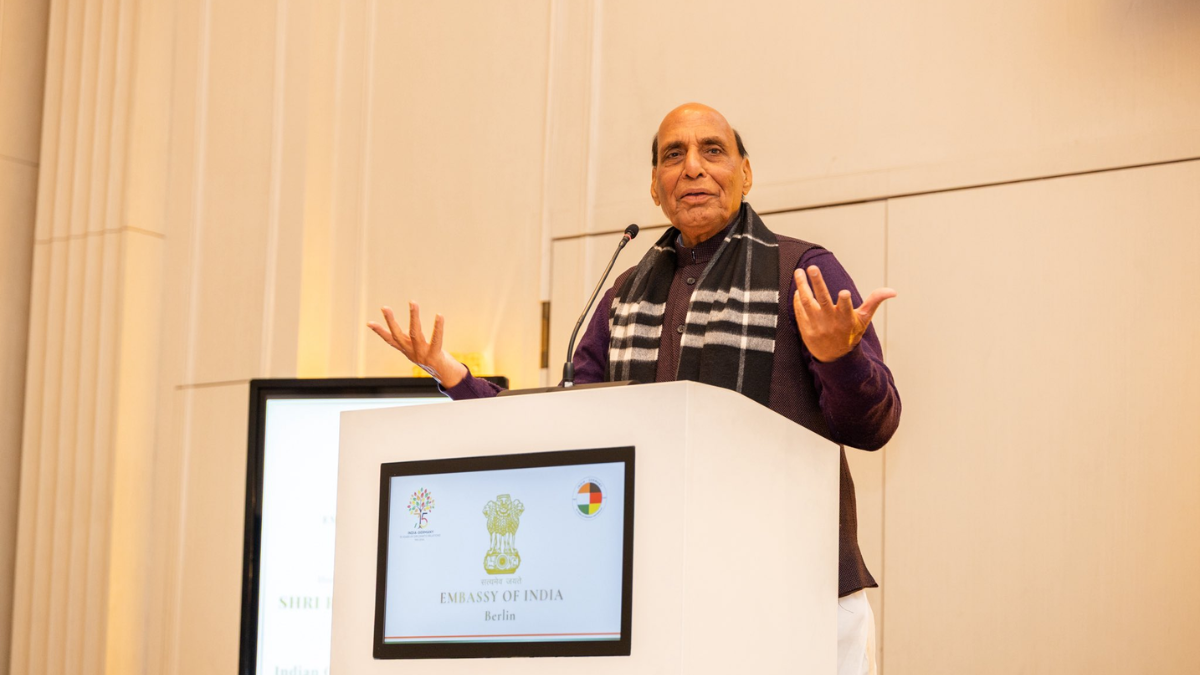
India Marks One Year of Pahalgam Attack with Exhibition on Human Cost of Terrorism at Capitol Hill
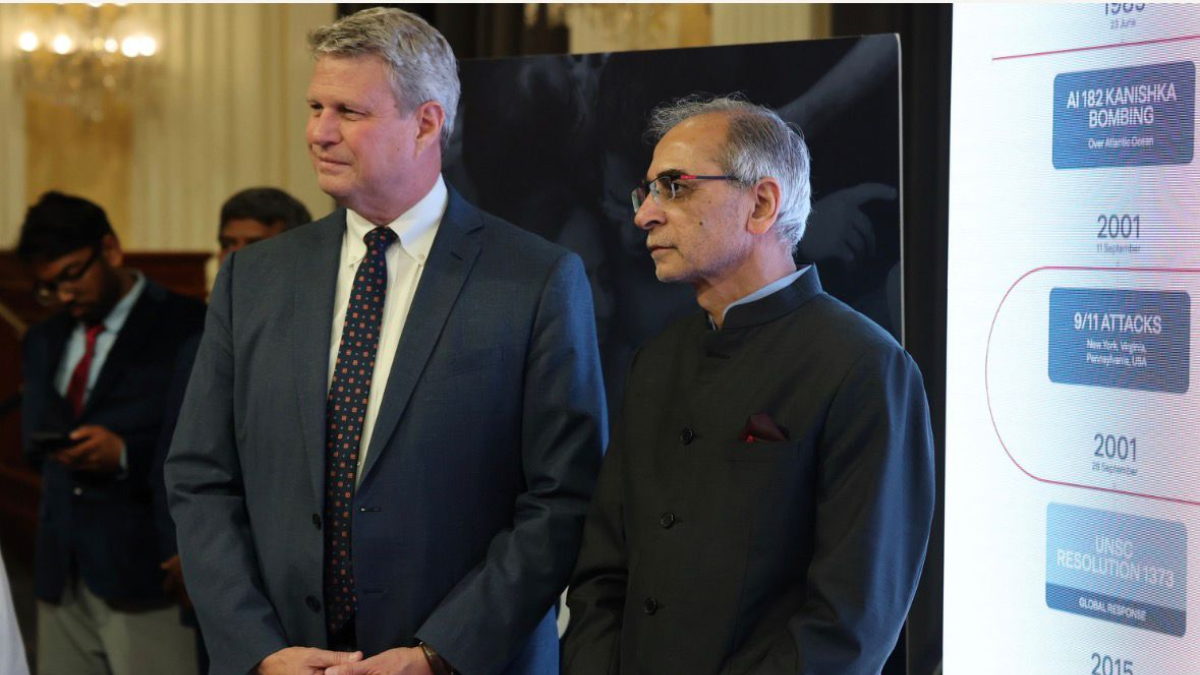
Rep Bill Heizenga, Chair Subcommittee for South and Central Asia, House Foreign Affairs Committee. Image courtesy: Embassy of India, Washington DC

Marking a year since the terror attack in Jammu and Kashmir, the Embassy of India hosted a Special Exhibition on the Human Cost of Terrorism in Washington on April 22, 2026.
The Pahalgam terror attack claimed the lives of 26 innocent civilians, who were visiting Kashmir with their families.
Among the 26 killed in the Pahalgam attack were recently married officers from the Indian Navy and Indian Air Force.
Lieutenant Vinay Narwal, of the Indian Navy, who was posted in Kochi, was on his honeymoon just six days after his wedding. IAF Corporal Tage Hailyang from Arunachal Pradesh was posted at the Srinagar air base and died trying to help civilians escape before being shot by the terrorists.
The Resistance Front (TRF)—a proxy of the Pakistan-based, UN-designated terrorist group Lashkar-e-Taiba—claimed responsibility for the attack.
The event was held by the Indian Embassy in the United States to spread awareness about the human cost of terrorism.
In a press release, the Indian Embassy termed it a “tragedy whose impact continues to be felt.”
The exhibition was held at the Cannon Caucus Room, Cannon House Office Building in Washington.
The Indian Embassy, in a press note, stated, “Through compelling interactive displays, videos, and personal testimonials, the exhibition highlighted the profound and far-reaching impact of terrorism on individuals, families, and communities worldwide.”
It added that the exhibition served as a tribute to the victims and their loved ones and that it was meant “as a call to action for the global community for a renewed collective resolve to eliminate terrorism in all its forms and manifestations”.
This exhibition was among the largest events hosted by the Embassy on Capitol Hill.
The press statement noted that the exhibition saw participation by 19 Members of the U.S. Congress from across the political spectrum and more than 60 Congressional offices.
Attendees represented key committees, including the House Foreign Affairs, Intelligence, Armed Services, Judiciary, and Homeland Security, the statement added.
“Senior officials from the U.S. Administration, members of the Indian diaspora, students, media representatives, and think tanks were also in attendance, united in condemning terrorism unequivocally.”
During the event, Ambassador Vinay Kwatra reaffirmed India’s steadfast commitment to combating terrorism and reiterated the message of Prime Minister Narendra Modi, “India will never bow to any form of terror.”
Members of Congress expressed strong solidarity and emphasised their commitment to strengthening the India–U.S. partnership in counterterrorism efforts, the Embassy said.
The India-US counter-terrorism partnership evolved from dialogue to a formal operational framework between 2009 and 2015, anchored by the Counter-Terrorism Cooperation Initiative of 2010.
Cooperation in counter terrorism is one of the pillars of the bilateral partnership between India and the US. It featured information exchange, capacity building, operational cooperation, and regular dialogue through the India-US Joint Working Group on Counter terrorism.
As part of their cooperation, India and the US also share best practices and information through training programmes and other interactions at the bilateral, regional, and global levels.
During the 2015 India-U.S. Joint Declaration on Combating Terrorism, India and the US reiterated the threat posed by entities such as Al-Qa’ida and its affiliates, Lashkar-e-Taiba, Jaish-e-Mohammad, D Company, and the Haqqani Network, and other regional groups that seek to undermine stability in South Asia.