
From Rapper to PM: Balen Shah’s Political Earthquake in Nepal Could Reset Nepal-India Ties
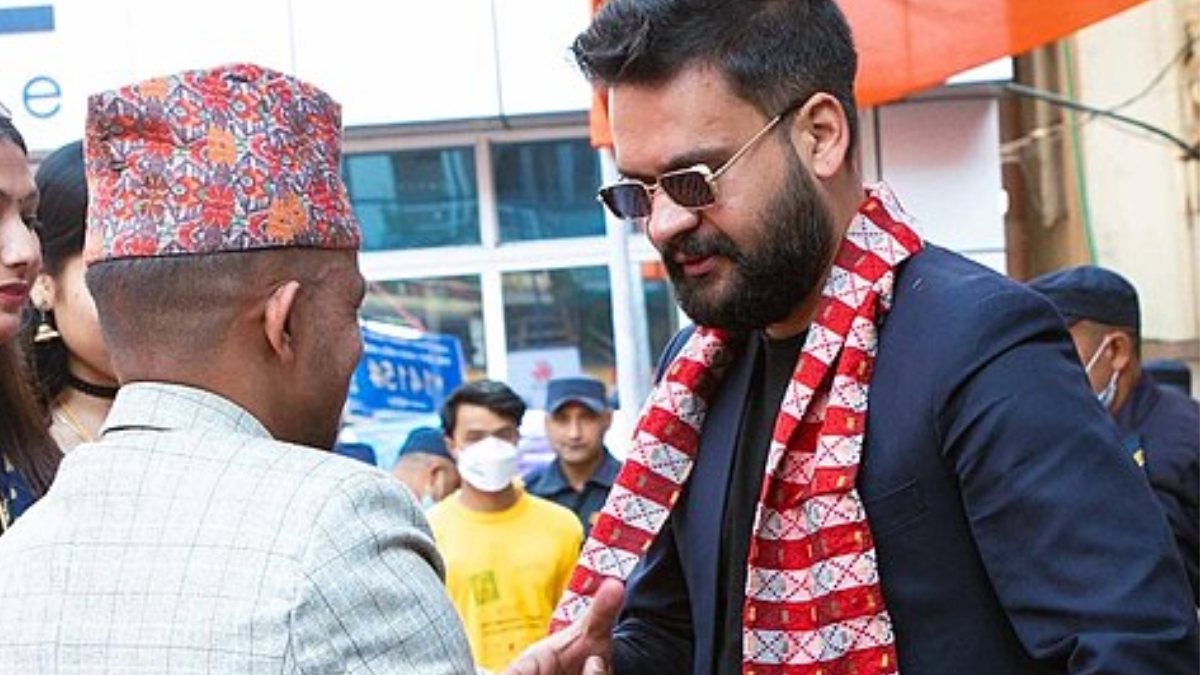
Balen Shah wins Nepal election

In one of the most unexpected political upsets, Nepal has elected a former rapper-turned-politician, Balendra ‘Balen’ Shah, as the Himalayan nation’s next prime minister.
His four-year-old political party, Rastriya Swatantra Party (RSP), made a clean sweep and stormed to power, belying all expectations on Sunday (March 8, 2026).
The RSP of Balen Shah won 125 of the 165 seats under direct voting, leaving behind all other political parties, effectively dismantling the decades-long dominance of traditional political forces of the country, such as the Nepali Congress and the various Communist factions.
This dramatic political upheaval in Nepal’s democratic history resulted in the RSP winning 125 of the 165 seats under the direct voting system in the House of Representatives.
The scale of RSP’s victory is an unprecedented performance in Nepal’s democratic journey since 1990.
This reflects a powerful anti-establishment voting wave in Nepal, powered by the 2025 Gen-Z protests, which toppled the previous government of then Prime Minister K. P. Sharma Oli.
The youth revolution was triggered by widespread frustration with corruption in the government, political stagnation of the country, and dominance of the elite in the Nepali polity.
Balen Shah was the face of the Gen-Z protests, as he symbolised a generational shift in Nepali politics.
He emerged as the protesting youth leader, driven by his popularity and unconventional politics as Kathmandu’s mayor.
Balen Shan built a political platform that focused on governance reforms, anti-graft measures, and improvements in governance, delivery of public services to Kathmandu’s residents, including healthcare and education.
He won the hearts of the people through his new style of politics that enamoured him to the voters, resulting in his party’s overwhelming victory in the national polls held last week.
Balen Shah’s rise in Nepali politics has resulted in the humiliating defeat of former heavyweights, including K. P. Sharma Oli, in a direct contest.
This victory of Balen Shah illustrated the electorate’s rejection of traditional politicians and their politics.
The electoral revolution achieved by Balen Shah and his supporters in Nepal would reshape his government’s immediate foreign policy posture, particularly towards India.
Oli and some of his predecessors have been blowing hot against India for a long time now, and this situation could change drastically for Nepal-India relations.
The previous regimes have historically oscillated between accommodating India and leveraging ties with China, as a balance over India’s influence inside Nepal.
Balen Shah’s rise in politics, pitting himself against the established political establishment, could recalibrate this Nepal-India dynamic.
The RSP government, in the short term, could attempt a reset in Nepal’s ties with India.
Balen Shah’s political party’s brute parliamentary majority would allow the new Prime Minister to pursue a more coherent foreign policy, potentially easing diplomatic tensions of the past years over border disputes and geopolitical mistrust.
Yet, Balan Shah’s political legitimacy, coming from his nationalist and reformist image, could mean he would likely continue to emphasise on Kathmandu’s sovereign decision-making, neutrality with India and China, and reduced foreign interference in Nepal.
He would play to the Nepali youth’s sentiments, which are shared by the electorate, as seen in his massive victory.
This positioning could mean some friction with India on matters such as border demarcation, hydropower cooperation, and trade transit routes.
For India, the main challenge it could face is understanding the new Nepali government and its inclinations, as Balen Shah and his party’s views on some of the key bilateral issues would be revealed in the days to come.
But the RSP government’s focus on the economic growth of Nepal and improvement in infrastructure, and public services could provide India an opening in cross-border electricity trade and connectivity projects.
If Nepal and India manage this transition in Kathmandu carefully, the electoral success of Balen Shah’s RSP could transform the bilateral ties from patronage-driven politics to a more transactional and institution-based cooperation