


Sea Dragon 2026 War Games Amid Iran War: India Deploys P-8I For US-Led Anti-Submarine Exercise
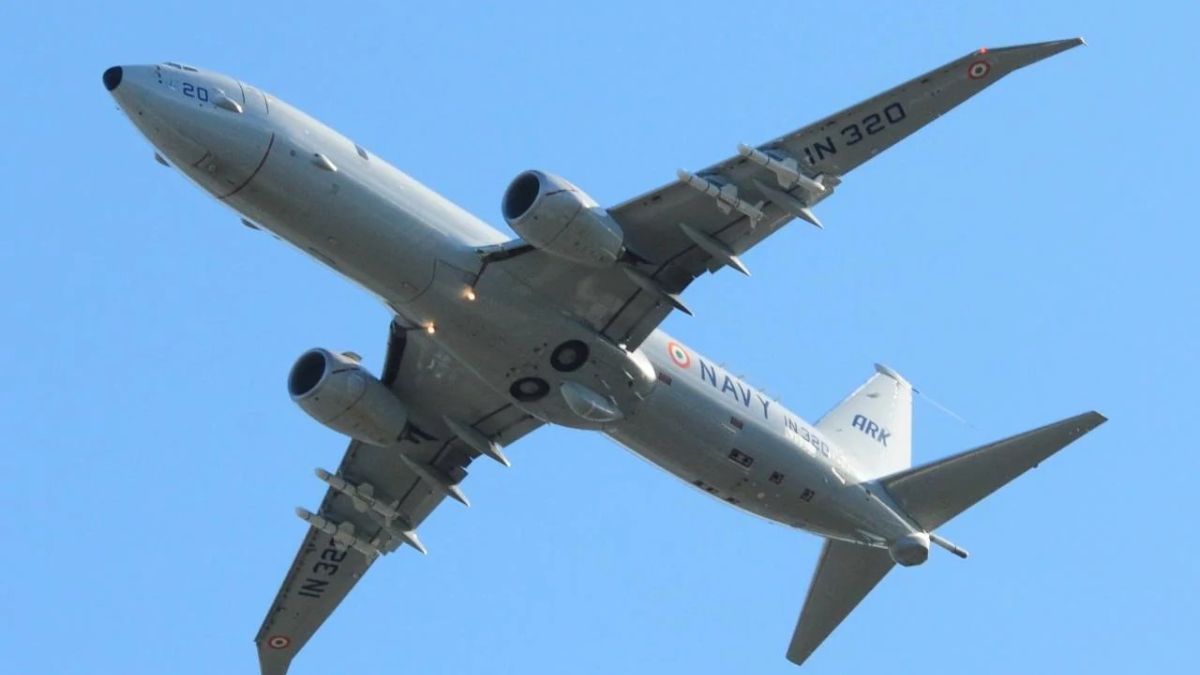
The training will focus on improving speed, precision and coordinated mission execution among participating forces. Image courtesy: X.com

At a time when the West Asia conflict and the war in Iran are threatening critical global sea lanes, the Indian Navy has joined Exercise Sea Dragon 2026, a high-end US Navy-led multinational anti-submarine warfare (ASW) drill underway in Guam. The exercise, being held throughout March at Andersen Air Force Base, brings together maritime forces from key Indo-Pacific partners.
The participants of the naval drills include United States Navy, Indian Navy, Royal Australian Air Force (RAAF), Japan Maritime Self-Defense Force (JMSDF), and Royal New Zealand Air Force (RNZAF). The focus of Exercise Sea Dragon 2026 would be detecting, tracking and neutralising submarine threats in increasingly contested waters.
Two US Navy P-8A Poseidon aircraft, one each from Patrol Squadron (VP) 4 and VP-45, were joined by one P-8I from the Indian Navy, one P-1 from the Japan Maritime Self-Defense Force, two P-8A from the Royal Australian Air Force, and one P-8A from the Royal New Zealand Air Force for the start of multinational exercise Sea Dragon 2026 at Andersen Air Force Base, on March 9.
Exercise Sea Dragon 2026: Why it matters more amid West Asia conflict
More than the naval drills, what’s more important is their timing, as Exercise Sea Dragon 2026 comes at a time when Iran is threatening to disrupt shipping through the Strait of Hormuz and rising naval deployments across West Asia. Because of all of this, maritime security has become a top global concern.
Submarines, in particular, are seen as a key tool in modern conflict, capable of covert surveillance, blockades and strategic strikes. Against this backdrop, drills like Sea Dragon take on added urgency protecting vital sea lanes that carry oil, gas and trade; preparing for sub-surface threats in chokepoints like Hormuz.
Further, the naval drills would also help in enhancing real-time coordination among allies, building deterrence against state and non-state maritime threats. While the exercise is geographically centred in the Indo-Pacific, its lessons are directly relevant to current tensions in the Gulf and wider West Asia.
Inside Exercise Sea Dragon: High-end submarine hunt scenarios
Exercise Sea Dragon involves over 200 cumulative hours of in-flight training. Over the course of the exercise, participating forces are engaged in complex, mission-oriented training scenarios, including detection of simulated and live submarine targets, coordinated tracking across air and naval platforms, rapid-response strike simulations.
They will also engage in intelligence-sharing and surveillance operations. Exercise Sea Dragon 2026 follows a competitive format, pushing crews to refine tactics while improving speed, precision and interoperability.
Australia, for instance, has deployed a P-8A Poseidon aircraft along with 50 personnel, highlighting the central role of advanced maritime patrol aircraft in modern ASW operations. The Indian Navy has sent one Boeing P8I maritime patrol and reconnaissance aircraft for Sea Dragon 2026.
Sea Dragon 2026 advances aircrew proficiency in anti-submarine warfare (ASW) by progressing from track-simulated targets to detecting and tracking a live submarine. The crews participate in over 200 cumulative hours of in-flight training. During classroom training sessions, pilots and aircrew from all countries build plans and discuss tactics incorporating the capabilities and equipment of their respective nations.
P-8 Poseidon: The backbone of modern maritime surveillance
A key asset in the exercise is the P-8A Poseidon, a multi-mission aircraft used extensively by India, the US and its allies. Equipped with advanced sensors, radar and communication systems, the aircraft can track submarines over vast ocean areas, Conduct intelligence, surveillance and reconnaissance (ISR) missions.
The naval aircraft is also capable of Supporting long-range strike operations, coordinate seamlessly with naval fleets. India’s own fleet of P-8I aircraft has been a critical force multiplier in the Indian Ocean Region, especially amid growing submarine activity.
India-US naval ties: A growing strategic partnership
India’s participation in Sea Dragon 2026 reflects the deepening maritime cooperation with the United States and its allies. Over the years, India has steadily expanded its naval engagement through exercises such as Malabar Naval Exercise (with US, Japan, Australia), RIMPAC (Rim of the Pacific Exercise), Tiger Triumph (India-US tri-services drill), VARUNA (India-France naval exercise).
These engagements have strengthened interoperability between navies, joint operational planning and execution, maritime domain awareness, strategic alignment in the Indo-Pacific.
Sea Dragon, in particular, focuses on anti-submarine warfare, an area gaining prominence amid China’s expanding submarine presence and rising global maritime tensions.
Strengthening Indo-Pacific security architecture
Exercise Sea Dragon is part of a broader effort to enhance security cooperation across the Indo-Pacific, a region that remains central to global trade and energy flows. Officials say such drills are crucial to ensuring freedom of navigation, maintaining stability in strategic waterways, building a coordinated response to emerging threats.
As conflicts like the one in Iran highlight the vulnerability of maritime chokepoints, joint military preparedness is increasingly seen as essential to global stability.