Direct Meeting Would Give Lebanon Chance To Secure Concrete Guarantees: US Pushes For Netanyahu-Aoun Talks
This is Lebanon’s moment to decide its own destiny, one which belongs to all its people, the US embassy said. Image courtesy: RNA

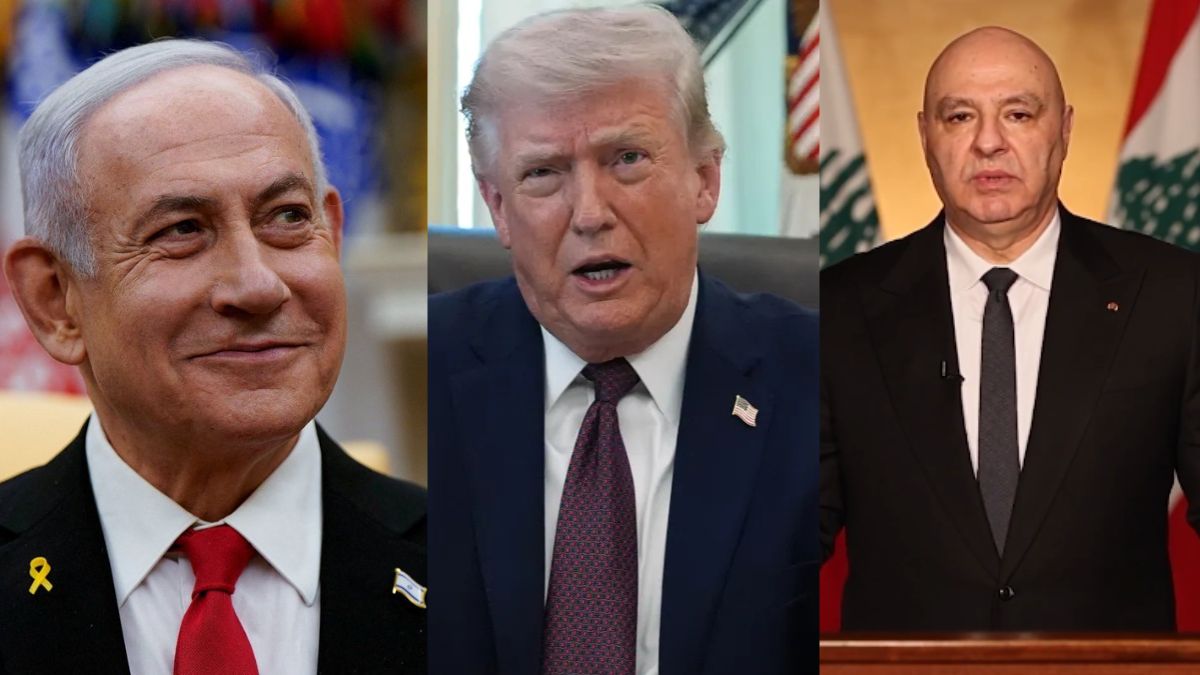
It is no secret that US President Donald Trump loves to pay the peacemaker, even as he himself fights a war in Iran. While its own talks with Tehran hang in the balance, the United States appears to be stepping up diplomatic efforts to arrange a high-stakes meeting between Lebanese President Joseph Aoun and Israeli Prime Minister Benjamin Netanyahu.
The country is pressing for direct talks between Netanyahu and Aoun, in a move that could mark a significant moment in the ongoing Israel–Lebanon conflict. The US says that this would give Lebanon an opportunity to get concrete guarantees on full sovereignty, territorial integrity, secure borders, etc.
“A direct meeting between President Aoun and Prime Minister Netanyahu, facilitated by President Trump, would give Lebanon the chance to secure concrete guarantees on full sovereignty, territorial integrity, secure borders, humanitarian and reconstruction support, and the complete restoration of Lebanese state authority over every inch of its territory—guaranteed by the United States,” the US Embassy in Lebanon said in a statement.
Netanyahu-Aoun meeting: Could direct talks lead to Israeli withdrawal from southern Lebanon?
Washington has been pushing for such direct engagement for weeks, aiming to build on a fragile, US-brokered ceasefire with Hezbollah.
The proposed talks are being framed as a potential pathway to Israeli forces withdrawing from southern Lebanon, where they currently occupy a buffer zone despite the ceasefire. The US has indicated that sustained dialogue could transform the temporary cessation of hostilities into a broader peace arrangement, though details remain uncertain.
Israel-Hezbollah ceasefire: What does the current state look like?
The ceasefire between Israel and Hezbollah remains shaky and has not fully halted hostilities on the ground. The ongoing conflict, which escalated last month on March 2, has led to significant casualties and displacement. Lebanese authorities say Israeli strikes have killed more than 2,500 people and displaced over 1.2 million.
The Israeli military, meanwhile, has said it has killed over 1,900 Hezbollah operatives, including members of its elite Radwan Force. Seventeen Israeli soldiers and one civilian contractor have been killed in southern Lebanon, along with civilian casualties on both sides.
Why is Lebanon divided over direct talks with Israel?
Despite US pressure, Lebanese leadership remains split on the idea of direct engagement with Israel. President Aoun has defended face-to-face talks in Washington and has said the ceasefire should be transformed into “permanent agreements.”
According to sources cited by Reuters, he has privately expressed readiness to normalise ties with Israel to stop the war. However, Speaker of Parliament Nabih Berri, a Hezbollah ally, opposes direct talks. He favours a non-aggression pact rather than a full peace deal, reflecting Hezbollah’s position against normalisation.
These divisions mirror broader fault lines within Lebanese society, where some view direct diplomacy as the only way to end decades of conflict, while others strongly oppose engagement with Israel.
How is regional diplomacy shaping the situation?
Saudi Arabia has also stepped in, attempting to help Lebanon’s leadership forge a unified position.
Saudi envoy Prince Yazid bin Farhan recently visited Beirut to encourage coordination between Aoun, Berri and Prime Minister Nawaf Salam. However, efforts to convene a joint meeting were derailed amid rising tensions, including public disagreements between Lebanese leaders.
Saudi Arabia has reportedly cautioned against moving too quickly toward peace with Israel, reiterating its own stance that normalisation is tied to progress on Palestinian statehood under the Abraham Accords framework.
What is the US argument for direct engagement?
The US has framed the moment as a critical opportunity for Lebanon. “Lebanon stands at a crossroads. Its people have a historic opportunity to reclaim their country and shape their future as a truly sovereign, independent nation,” the US Embassy statement said.
It went on to state that a direct engagement between Lebanon and Israel, two neighboring countries that should have never been at war, can mark the beginning of a national revival.
The statement emphasised that the cessation of hostilities “achieved at the personal request of President Trump” has created space for negotiations with US backing.
What challenges could derail the proposed talks?
Multiple factors complicate the path to direct negotiations: ongoing Israeli military presence in southern Lebanon, internal political divisions in Beirut, Hezbollah’s opposition, and regional sensitivities involving countries like Saudi Arabia. Aoun also faces domestic pressure, including threats from Hezbollah, raising questions about whether such a meeting can take place under current conditions.
The push for direct Israel–Lebanon talks comes at a time when the conflict risks widening further, especially as it coincides with the ongoing West Asia tensions, triggered after US-Israel strikes on Iran, which led to the killing of the country’s Supreme Leader Ayatollah Khamenei.