
Israel Hits Iran’s Naval Missiles Facility, Tehran Vows “Heavy Price” Or Tel Aviv
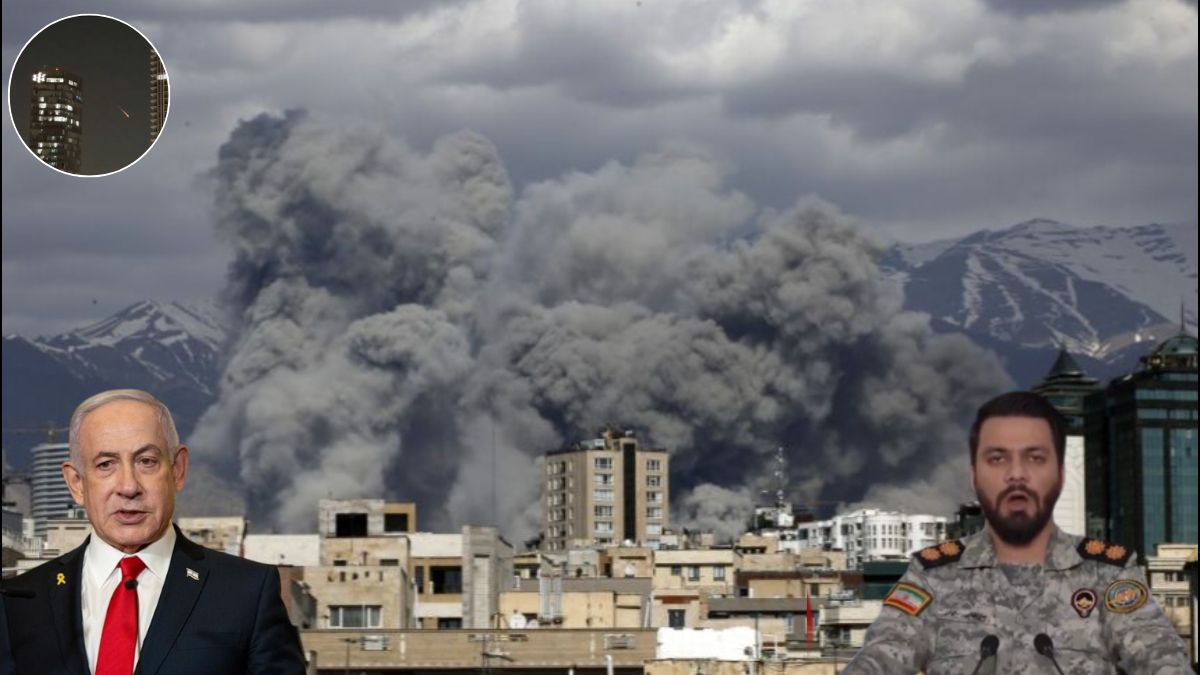
Israel targets a key Iranian naval missile facility as Tehran warns of a strong response, pushing the already tense West Asia conflict into a sharper phase of escalation. Image courtesy: RNA

Israel on Friday (March 27, 2026) claimed it hit Iran’s naval missiles and mines production facility, even as Tehran vowed to inflict a “heavy price” on Tel Aviv, and its military claimed missile strikes on American refuelling vehicles and logistic support fleet.
The Israeli Air Force said it had bombed Iran’s “most central site for production of naval missiles and mines at the Yazd facility, according to media outlets in Tel Aviv.
It said Tehran used the facility to plan, develop, assemble, and store “advanced missiles intended for launch from cruise vessels, submarines, and helicopters toward mobile and stationary maritime targets.”
The Israeli strikes came after inputs from its military intelligence directorate’s naval division. The Israeli Air force claimed the strike “constitutes a significant blow to the production capabilities of the (Iranian) naval forces.”
Only a day earlier, Israel had hit and killed Iran’s Islamic Revolutionary Guards Corps’ (IRGC) naval commander Alireza Tangsiri at Bandar Abbas near the Strait of Hormuz, which was taken control of by the IRGC on February 28 to impose a naval blockade.
Meanwhile, Iran’s Foreign Minister Abbas Araghchi said Tehran would exact a “HEAVY price for Israeli crimes” after Israeli attacks on two of the country’s largest steel factories and nuclear sites.
“Israel has hit 2 of Iran’s largest steel factories, a power plant, and civilian nuclear sites, among other infrastructure. Israel claims it acted in coordination with the US,” Araghchi posted on his social media handle.
IRGC also warned employees of industrial sites in the region “that have American shareholders as well as heavy industries allied with the Zionist regime… to leave their workplaces immediately” as they vowed to carry out retaliatory attacks.
The IRGC also claimed that it destroyed US refuelling vehicles and logistics support fleet during attacks carried out as part of the “84th wave of Operation True Promise 4.”
In a statement, IRGC said the mission was launched in response to “hostile exploitation of regional airbases by the terrorist US regime,” describing it as a “special joint missile and drone operations” by its aerospace force with naval assistance.
It said the military operation “destroyed anti-missile defence systems and successfully penetrated the Al-Kharj base with solid- and liquid-fueled missiles.”
The IRGC specifically aimed at the “stationed refuelling and air support fleet with a barrage of missile and drone fire” located at the facility.
Characterising the mission as an “impact-driven” operation, the IRGC asserted that the strikes led to the destruction or severe damage of multiple wide-body and heavy support aircraft belonging to US forces.
The latest military strikes by both Israel and Iran are a significant escalation of the West Asian conflict that began with the US-Israel airstrikes over Tehran on February 28 that killed the Iranian Supreme Leader Ayatollah Ali Khamenei in his office compound.