India Slams Pakistan For Sponsoring Terrorism, Attacks On Minorities, Bangladesh Genocide
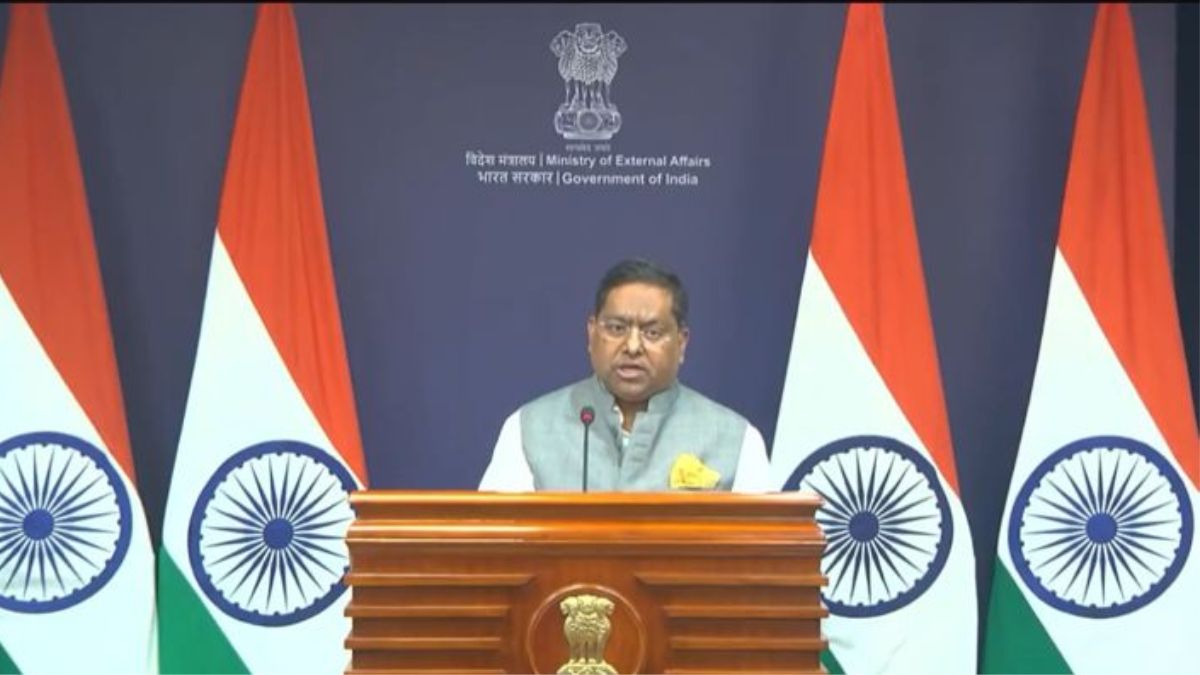
India sharpens its diplomatic stance as the MEA calls out Pakistan on terrorism, minority rights concerns and its historical record on the 1971 atrocities.Image courtesy: Screen grabs via X.com/@MattooShashank

India, on Friday (March 27, 2026), hit out at Pakistan for its approach towards global conflicts and military tensions, reminding it of its Defence Minister’s remarks of carrying out “dirty work” for the West.
“As regards Pakistan’s longstanding approach to global conflicts and tensions, you may care to listen to criticisms by Defence Minister Khwaja Asif, National Assembly member Bilawal Bhutto Zardari, and former prime minister Imran Khan,” MEA spokesperson Randhir Jaiswal said at his weekly media briefing.
Jaiswal was asked by reporters regarding the all-party meeting on the West Asian war, where India’s External Affairs Minister Dr. S. Jaishankar had remarked that India was “not a dalaal (broker),” while responding to queries on Pakistan’s mediation role between the US and Iran.
“As you are aware, an all-party meeting was held on the ongoing conflict in West Asia. It was a closed-door meeting, and I have no comments,” the MEA spokesperson added.
Asked about Pakistan’s treatment of its minority population, Jaiswal answered: “We have seen reports on the issue. Such comments are not isolated incidents but part of Pakistan’s systemic victimisation of minorities, including the Shia community.”
He said, “The shrinking numbers of minorities in Pakistan reflect decades of fear, marginalisation, oppression, and neglect at the hands of the state. Pakistan’s record on protection of minority rights is well documented.”
Jaiswal also slammed Pakistan for remaining in denial over atrocities during ‘Operation Searchlight’ in 1971, including the systematic killing of millions of Bangladeshis and widespread sexual violence, which forced millions to flee to India.
“We are all aware of the atrocities committed during ‘Operation Searchlight’ in 1971. The genocide involved the systematic killing of millions of innocent Bangladeshis and mass sexual violence against women,” he said.
“It forced millions to seek refuge in India. These atrocities shook the conscience of the world. Pakistan, however, remains in denial to this day,” he said.
“We support Bangladesh in its pursuit of justice,” he said, replying to a question on Bangladesh Prime Minister Tarique Rahman’s post marking the 1971 genocide day.
The newly elected Bangladesh Prime Minister, who is also the Bangladesh Nationalist Party leader, posted the message on 1971 Genocide Day, including archival footage depicting attacks on unarmed civilians, intellectuals, and students at Dhaka University, Pilkhana, and Rajarbagh Police Lines.
Rahman described the events as among the most heinous genocides in modern history, recalibrating the previous BNP position that downplayed the 1971 atrocities.