

Army Eyeing AI-Driven Simulators To Train T-90 Tank Gunners; Executes First-Ever GeM Capital Procurement Contract
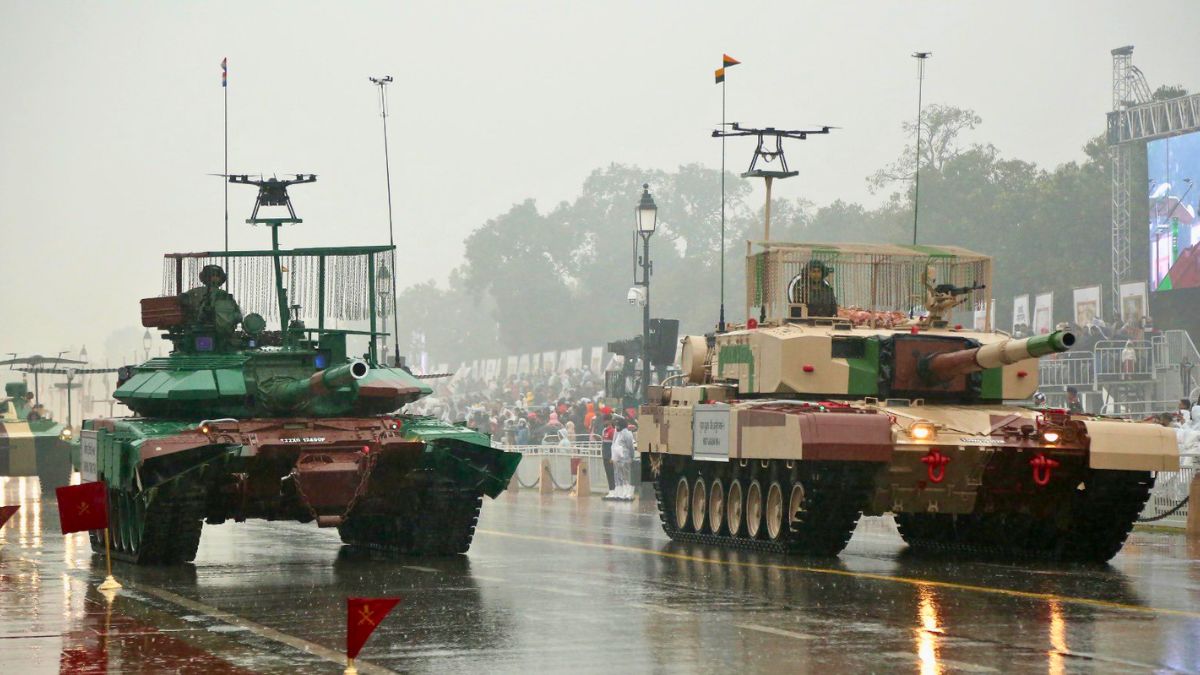
The RFI puts artificial intelligence (AI) at the centre of the training design. Image courtesy: X.com

In a major step towards modernising combat training, the Indian Army has initiated the procurement of around 50 advanced Basic Gunnery Simulators (BGS) for its T-90 tank fleet. These high-fidelity simulators are designed to replicate real battlefield conditions, allowing gunners to train extensively without the need for live ammunition or field deployment.
For the same, the Ministry of Defence has floated a request for information (RFI). The simulators will train T-90 gunners without putting them on a live range, and will recreate the entire firing cycle, from target acquisition and tracking to engagement, within a realistic digital environment.
They will simulate the use of the T-90’s 125mm main gun, co-axial machine gun, INVAR missile system, and smoke grenade launchers, all from a replica gunner’s station. The RFI states that the equipment should be robust enough to meet military grade ruggedness in design to withstand terrain, climatic variations.
Further, the simulators for the T-90 fleet should be capable of replicating live firing conditions, including AI-generated enemy threats of escalating difficulty.
What makes these simulators a game-changer?
What sets this system apart is the integration of artificial intelligence. Enemy targets will dynamically evolve in complexity, forcing trainees to adapt in real time. The AI will also assess performance, identify errors, and provide automated feedback, significantly enhancing training efficiency and reducing reliance on manual evaluation.
The BGS is not just a training tool but a combat multiplier. By offering immersive, repeatable, and high-intensity training scenarios, the system ensures that tank crews are battle-ready at all times. Features such as realistic recoil simulation, battlefield soundscapes, and fire control system emulation bring unprecedented realism.
Additionally, the ability to simulate operations across terrains resembling India’s western borders, Line of Control, and Line of Actual Control adds strategic depth. This means crews can train for specific operational environments without physically being deployed there.
Army’s first-ever procurement contract on GeM
Parallel to training modernisation, the Indian Army has taken a landmark step in defence acquisition by executing its first-ever capital procurement contract through the Government e-Marketplace (GeM).
The contract, signed with JCB India Ltd for 93 telescopic handlers worth ₹25.90 crore, marks a shift towards faster, more transparent, and technology-driven procurement processes. This move is expected to significantly cut down acquisition timelines while maintaining procedural integrity.
The adoption of GeM for capital procurement is a breakthrough in defence logistics, opening the door for quicker induction of critical equipment and greater participation of domestic industry under the ‘Aatmanirbhar Bharat’ initiative.
Why are telescopic handlers critical for battlefield logistics?
Telescopic handlers may not be frontline weapons, but they are vital to sustaining combat operations. These machines are used for material handling in difficult terrains, enabling rapid loading, unloading, and movement of supplies.
In high-altitude areas, forward posts, and conflict zones, where manual handling is both risky and inefficient, such equipment significantly boosts operational efficiency. By reducing physical strain on troops and speeding up logistics chains, these handlers enhance the Army’s overall combat sustainability.
This procurement also aligns with a broader push, including earlier contracts for over 1,800 rough terrain forklift trucks, signalling a comprehensive upgrade of the Army’s engineering and logistics backbone.