Justice for Bangladesh: Why Pakistan Must Acknowledge What Happened in 1971
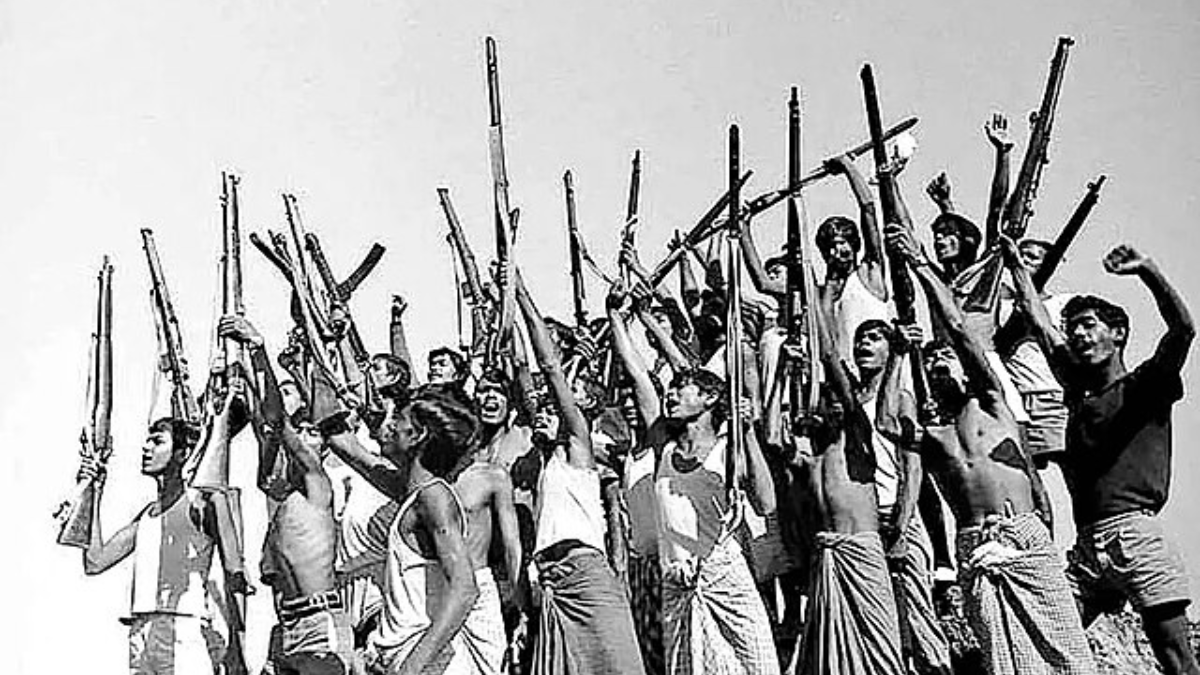
Bangladesh Liberation War. Image courtesy: Wikimedia

In 1971, the land that would become Bangladesh witnessed some of the most horrifying violence South Asia has ever seen. What the Pakistani military called an “operation” was, in reality, a systematic campaign of slaughter against ordinary Bengali people — farmers, students, mothers, shopkeepers. The killing didn’t happen all at once. It built slowly, methodically, like a machine learning its own cruelty. By the time it was over, an estimated three million people were dead, and between 200,000 to 400,000 women had survived sexual violence that no one should ever have to survive.
These aren’t contested numbers pulled from thin air. They were reported at the time by The New York Times, Time Magazine, and The Guardian. They are cited by the Government of Bangladesh. They are as documented as history gets.
Jinjira: Where Refugees Were Slaughtered
On the morning of 2 April 1971, before most people were awake, Pakistani forces crossed the Buriganga River and descended on the settlements of Jinjira, Kalindi and Shubhadya. The people there weren’t fighters — they were civilians who had already fled earlier violence, hoping the river between them and Dhaka meant safety. It didn’t.
Heavy shelling, automatic gunfire and arson tore through the settlements. Eyewitnesses described bodies floating in the river. Survivors ran under continuous fire with nowhere to go. Hundreds died — some estimates put it in the thousands. The message was unmistakable: there was no safe place, and no one was off limits.
Jathibhanga: Killing Made Organised
Three weeks later, on 23 April, Pakistani forces arrived in Jathibhanga in what is now Thakurgaon — this time with Razakar collaborators alongside them. They rounded up approximately 3,000 Bengali men and shot them in groups.
There was nothing chaotic about it. It was coordinated. Methodical. The kind of killing that requires planning, not passion. These weren’t soldiers being killed in battle. They were civilians, gathered and executed because someone in a uniform decided they were a threat worth eliminating.
May 1971: When the Killing Reached Its Peak
If there is a single date that captures the full horror of what happened in 1971, it might be 20 May, at a place called Chuknagar in Khulna. Thousands of civilians had gathered there, desperate to cross into India and escape the violence sweeping their country. Pakistani forces opened fire on them.
Within hours, an estimated 10,000 to 12,000 people were dead. In a single day. At one location.
The same week, at least 70 to 80 civilians were executed at Burunga in Sylhet on 26 May, and more than 200 were killed at Bagbati in Sirajganj the very next day. Reports from the period indicate sexual violence was occurring alongside these massacres, though precise figures for each location were never fully recorded — itself a reflection of how overwhelming the scale of suffering was.
Meanwhile, approximately 10 million people were flooding across the border into India, one of the largest refugee crises of the 20th century.
June: The Violence Gets Personal
By June, the nature of the killing shifted. Large massacres gave way to something quieter, but no less brutal — targeted arrests, disappearances and selective executions. In Saidpur, specific communities were being hunted out, including Marwari business families. The violence was becoming about identity, not just geography.
This phase eventually led to the Golahat Massacre on 12 September, when over 400 civilians were executed in Saidpur in a single operation.
The Question That Still Hasn’t Been Answered
Looking at everything from April through to the end of the war, what emerges is not a picture of wartime confusion or collateral damage. It is a documented pattern — massacre after massacre, community after community, month after month.
What makes this harder to sit with is that Pakistan has, in its own way, already acknowledged some of this. The Hamoodur Rahman Commission, an internal Pakistani inquiry published in 1974, admitted to misconduct and excesses by Pakistani military forces. The evidence has never seriously been in dispute.
And yet, there has never been a full, formal apology.
Why the Apology Still Matters
Some might ask why an apology is still being sought more than fifty years later. The answer is straightforward: because what happened has been documented, and that documentation has never been met with accountability.
Three million people killed. Hundreds of thousands of women are subjected to sexual violence. Entire communities erased. These are not allegations waiting to be proven. They are recorded history, supported by survivor testimony, academic research, and international journalism from the time.
An official apology from Pakistan would not rewrite history or undo the suffering. But its absence does something too — it tells the survivors and their descendants that the state which carried out these acts still hasn’t found it necessary to say that it was wrong.