Ex Dweep Shakti 2026: India’s Only Tri-Service Command ANC Sharpens Its Warfighting Edge With Joint Military Drills
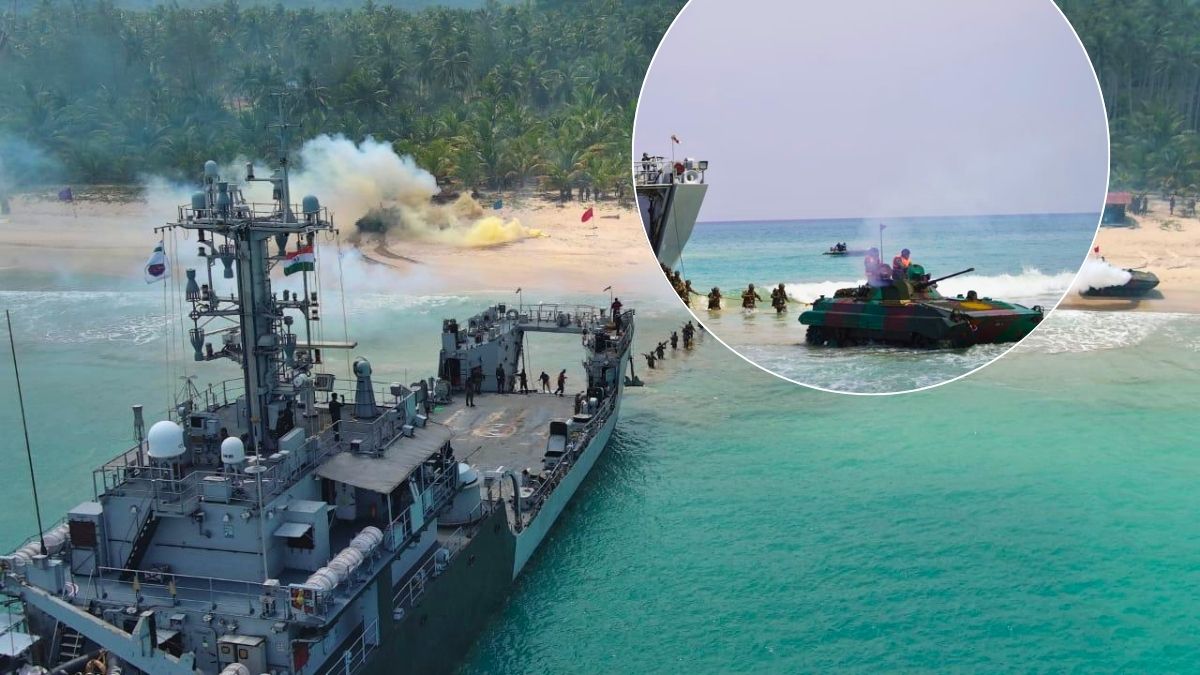
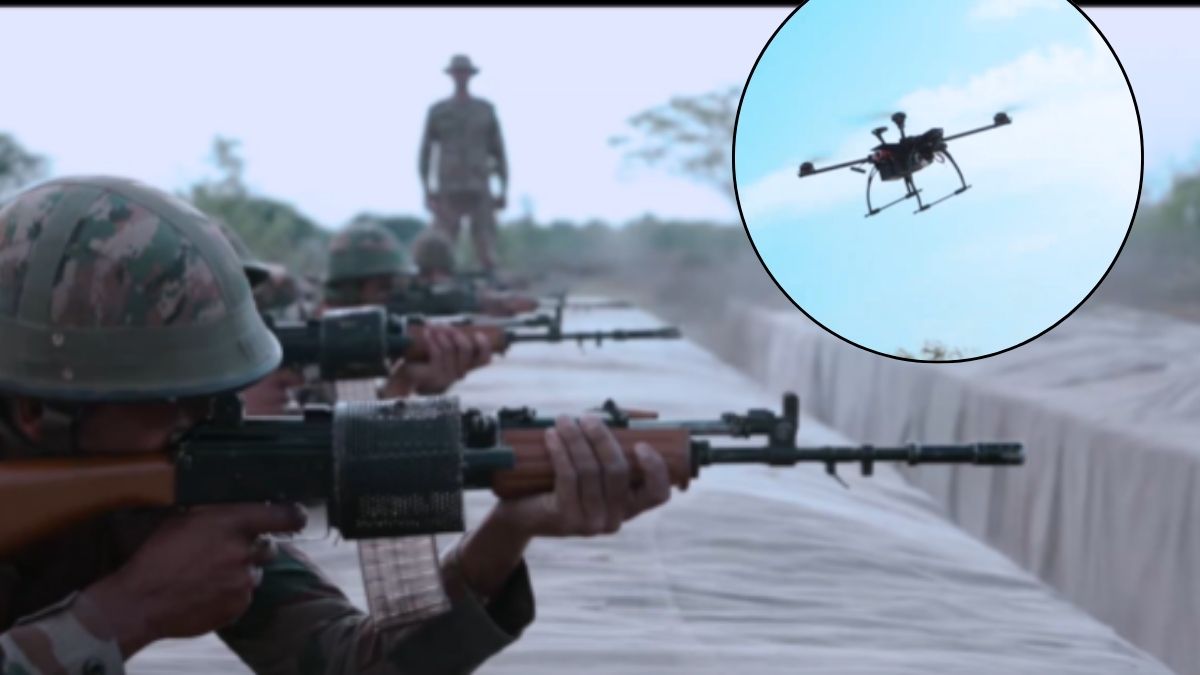
Indian Army, Navy and IAF executed coordinated amphibious assaults, maritime dominance operations and complex beach landing drills. Image courtesy: RNA

At a time when the Indian Ocean Region is witnessing heightened strategic competition and evolving security challenges, India’s Andaman and Nicobar Command (ANC) has sent a clear signal of readiness. The successful execution of Exercise Dweep Shakti 2026 underscores the country’s growing focus on integrated, multi-domain warfare and rapid response capabilities.
As India’s only operational tri-service theatre command, ANC sits at a strategically critical location overlooking key sea lanes, including routes linked to the Strait of Malacca. The exercise, therefore, was not just routine training but a demonstration of Indian Armed Forces’ ability to secure its maritime frontiers and respond to emerging threats.
Exercise Dweep Shakti 2026: What happened during the joint exercise?
Ex Dweep Shakti 2026 brought together the Indian Army, Navy, Air Force and Coast Guard in a large-scale, synchronised military drill across the Andaman and Nicobar Islands. Troops and assets from across the country were deployed to simulate real-world operational scenarios in a dynamic environment.
The exercise spanned land, sea and air domains, with Special Forces and frontline units conducting coordinated operations. Military assets were strategically positioned across the island chain, while operational and logistical frameworks were activated in tandem with civil administration, reflecting real crisis conditions.
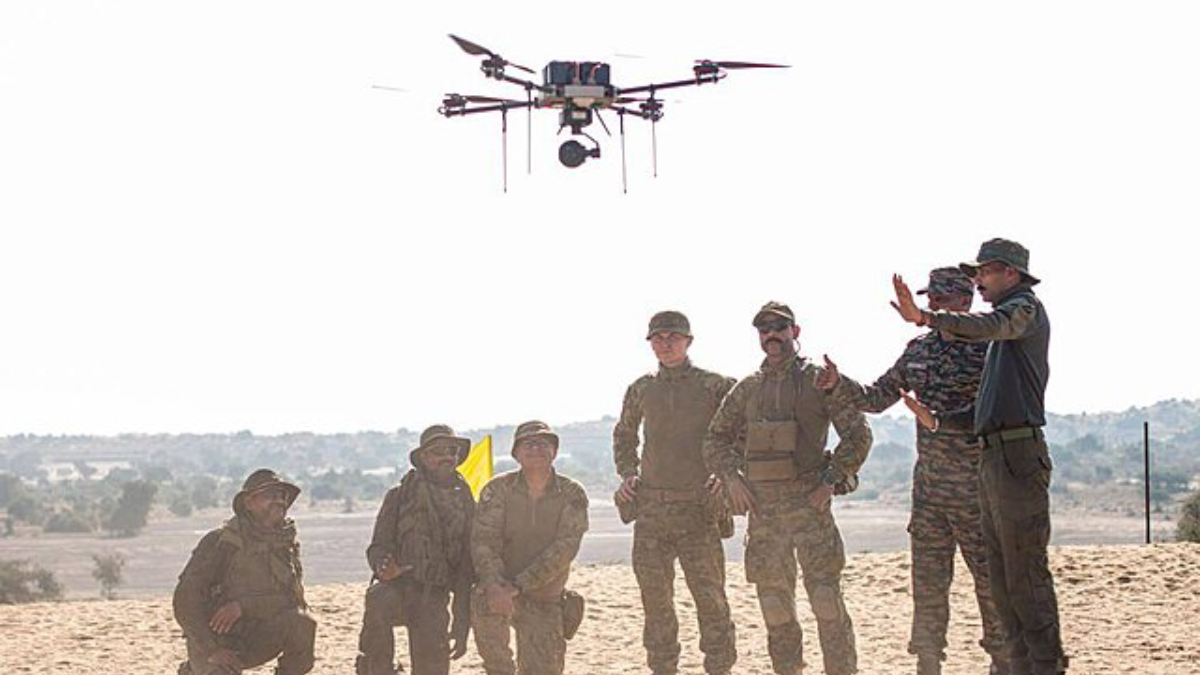
Conducted from March 24 to 28, 2026, Indian Army, Navy, and Air Force “executed coordinated amphibious assaults, maritime dominance operations and complex beach landing drills employing Next-Generation Equipment and drones, reaffirming precision, jointness and mission-ready interoperability,” the Army said in a statement.
How does it strengthen jointness and interoperability?
One of the core objectives of the exercise was to refine joint operational procedures and strengthen Standard Operating Procedures. In modern warfare, seamless coordination between services is critical and Exercise Dweep Shakti served as a live testbed for exactly that.
By integrating surveillance, mobility, strike capabilities and logistics across domains, the exercise enhanced interoperability among the forces. It demonstrated how different arms of the military can function as a single, cohesive unit, reducing response time and improving mission effectiveness in high-pressure scenarios.
Worth noting here is that for the Indian Army and other services, exercises like Dweep Shakti are essential to staying combat-ready in an unpredictable security environment. These drills replicate real battlefield conditions, allowing forces to test strategies, identify gaps and fine-tune responses without actual conflict.
What does this mean for India’s maritime security?
It goes without saying that the Andaman and Nicobar Islands are a crucial outpost for India, acting as a gateway to Southeast Asia and a vantage point over vital global shipping lanes. By demonstrating robust multi-domain capabilities here, India is reinforcing its role as a net security provider in the region.
The exercise highlights not just military strength but also India’s commitment to maintaining stability and security in the Indo-Pacific.
Meanwhile, Vice Admiral Ajay Kochhar, Commander-in-Chief of the Andaman and Nicobar Command, reviewed the exercise and commended the forces for their professionalism and precision. The successful execution reflected high levels of coordination, discipline and operational synergy among all participating units.