


India’s C-130J Fleet Gets A Shot Arm As Tata–Lockheed Martin Launch New MRO Hub In Bengaluru
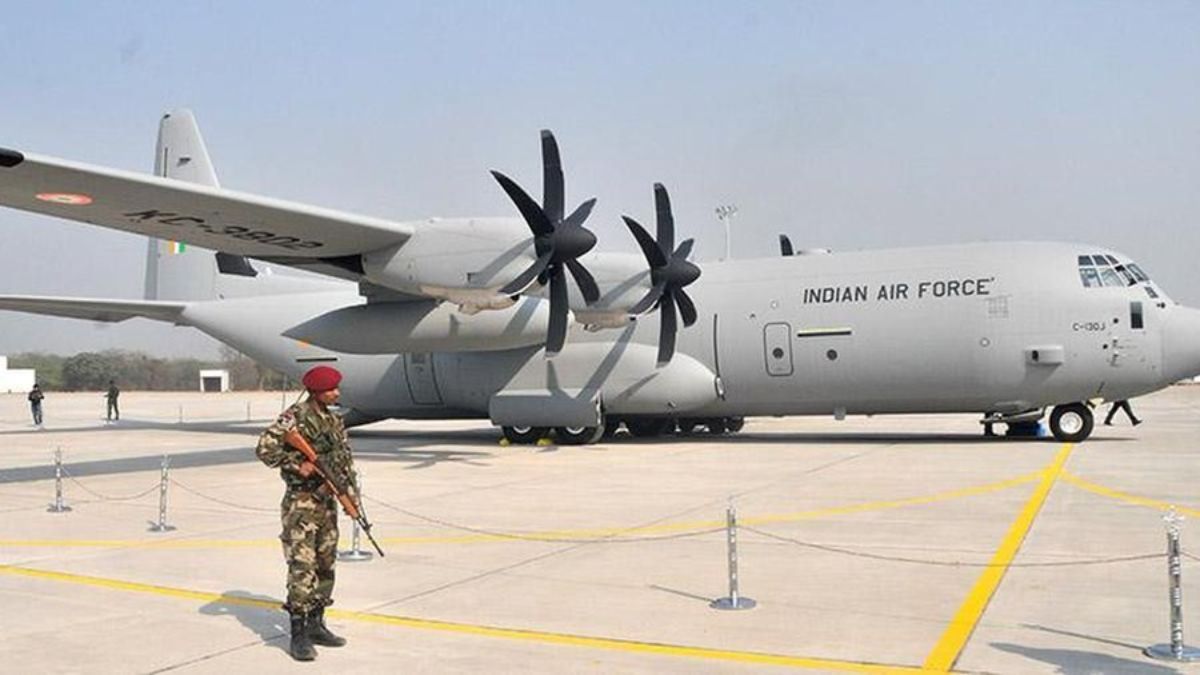
It brings world-class sustainment capability into India, improves readiness for the Indian Air Force. Image courtesy: Lockheed Martin

India’s defence aviation ecosystem is set for a transformational upgrade with Tata Advanced Systems Limited (TASL) and US aerospace major Lockheed Martin breaking ground on a dedicated Maintenance, Repair and Overhaul (MRO) facility for the Indian Air Force’s C-130J Super Hercules transport aircraft.
Coming just a few days after Tata Lockheed Martin Aerostructures Limited (TLMAL) delivered its 250th C-130J tail, the new complex, to be set up in Bengaluru, marks a strategic leap toward self-reliance, faster operational turnaround, and deeper India–US industrial cooperation.
This facility will boost in‑country sustainment for Indian Air Force’s C-130J Super Hercules fleet and open new avenues for regional and global support.
How would the new MRO facility strengthen India’s air mobility power?
The C-130J Super Hercules is the IAF’s backbone for tactical airlift, special operations, humanitarian missions, and high-altitude logistics. A domestic MRO hub means India no longer needs to send these aircraft abroad for depot-level maintenance, massively reducing downtime and costs.
The facility will provide heavy maintenance & deep structural checks, component repair and replacement, avionics upgrades & testing, structural restoration, along with training programs for Indian engineers and technicians. For the armed forces, this directly translates to higher aircraft availability, faster repairs, and sustained long-term operational readiness.
Tata–Lockheed Martin defence MRO facility: How significant is it?
Lockheed Martin COO Frank St. John said the project represents how far the India–TASL partnership has evolved over decades. Tata Advanced Systems already manufactures empennages and major aerostructure assemblies for the C-130J. The new MRO centre elevates this relationship to a full-spectrum sustainment ecosystem.
TASL MD Sukaran Singh noted the facility signals India’s growing confidence and capability in shaping its own aerospace future, boosting make in India defence manufacturing, high-value skill development, a global supply-chain presence.
Once operational, India will not only service its own fleet but could become a regional MRO hub for Asia, supporting C-130J, KC-130J and even legacy C-130 B–H variants used worldwide.
How will the facility impact India-US defence cooperation?
The MRO hub arrives at a time when India–US defence ties are expanding rapidly across aviation, space, joint R&D, and critical technologies. This project enhances interoperability between Indian and US forces, boosts logistics and sustainment frameworks under the Indo-Pacific strategy, and reinforces long-term industrial cooperation.
It is planned to become part of Lockheed Martin’s global Certified Service Center network, integrating India into a high-value international logistics chain. The construction is expected to be completed by the end of 2026, with the first C-130J could be inducted for maintenance by early 2027.
With over 560 C-130Js operating in 23 nations, India could eventually become a preferred MRO destination in the Indo-Pacific.