
India, Maldives Discuss Ways To Deepen Strategic Partnership Across Defence And Development
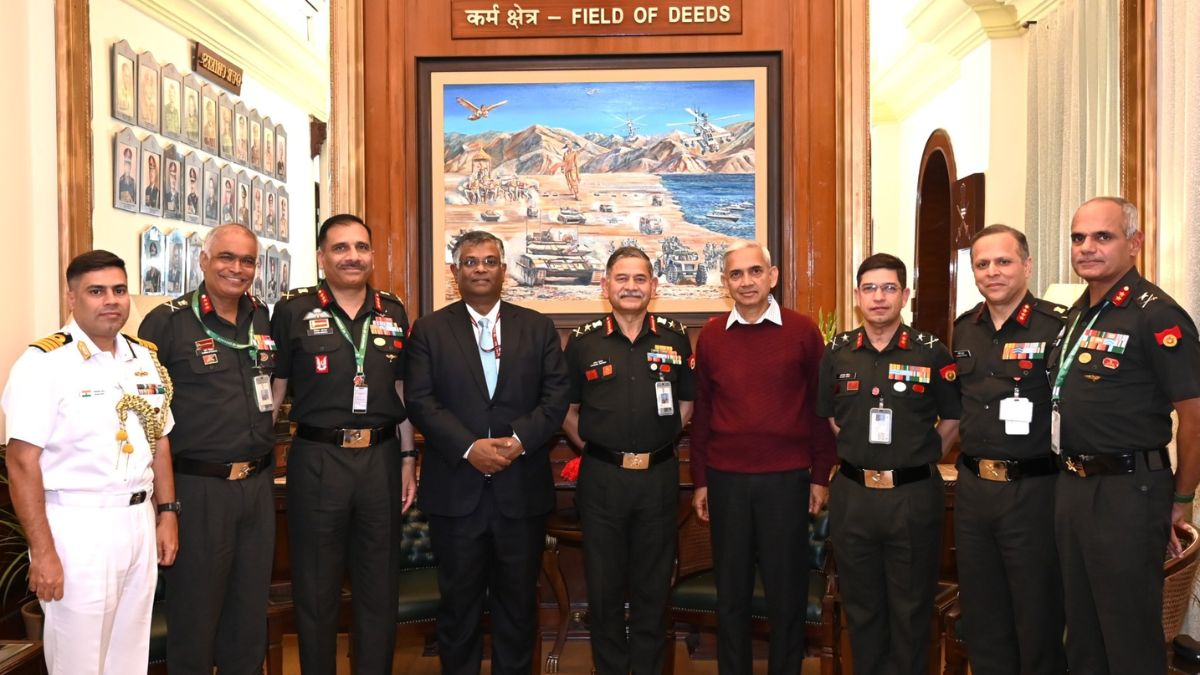
Both sides reviewed current security dynamics in the Indian Ocean region and explored avenues to enhance defence collaboration. Image courtesy: X.com/@adgpi

In a clear signal that India-Maldives ties are regaining strategic momentum, high-level military engagements and ministerial outreach this week underscored a broad-based partnership spanning maritime security, defence cooperation and climate resilience in the Indian Ocean Region (IOR).
As India sharpens its maritime posture across the Indo-Pacific, Maldives appears equally committed to reinforcing defence interoperability while expanding cooperation in sustainable development, a dual-track engagement that reflects the evolving nature of regional security.
Last year, India had announced a $565 million (approx Rs 4,850 crore) line of credit for the Maldives during Prime Minister Narendra Modi’s visit to the country in July 2025. The LoC is aimed at strengthening infrastructure, while reducing the Maldives’ annual debt repayment burden.
India-Maldives Army-to-Army engagement
India’s High Commissioner to the Maldives, G. Balasubramanian, recently called on Chief of the Army Staff General Upendra Dwivedi to discuss ways to further strengthen the India-Maldives strategic partnership. According to the Additional Directorate General of Public Information (ADG PI), the meeting reviewed the evolving regional security landscape.
They also explored avenues to deepen defence and diplomatic cooperation. Notably, the interaction comes at a time when security dynamics in the Indian Ocean are increasingly shaped by maritime competition, grey-zone challenges and the need for coordinated coastal defence frameworks.
Both sides assessed current developments and reaffirmed their commitment to sustained military engagement. For India, which views the Maldives as a key maritime neighbour astride critical sea lanes of communication, defence ties remain central to regional stability.
Maritime convergence: Navy and coast guard step up
Reinforcing this strategic alignment, Deputy Chief of Naval Staff Vice Admiral Tarun Sobti held bilateral talks with Brigadier General Mohamed Saleem, Commandant of the Maldives National Defence Force (MNDF) Coast Guard, a few days back.
The Indian Navy described the interaction as underscoring the “strategic importance of the Indian Ocean Region” and highlighting the strong maritime partnership between the two countries.
Engagements during MILAN 2026 further strengthened interoperability, with the MNDF Coast Guard Ship Huravee participating in the multilateral exercise. For both nations, maritime domain awareness, joint training and coordinated patrol mechanisms remain critical pillars in countering piracy, trafficking and emerging non-traditional security threats across the IOR.
Security and sustainability
While defence ties advance, Male is also signalling that strategic cooperation with India extends beyond hard security. Maldives Minister of State for Tourism and Environment, Muaviyath Mohamed, reiterated that India remains a “reliable partner” in environmental sustainability, renewable energy and capacity-building initiatives.
“India and the Maldives have had very good relations from the very beginning. We are the closest neighbours. That fact will remain,” Mohamed said, emphasising collaboration on sustainable development and global challenges.
For the Maldives, a low-lying island nation acutely vulnerable to sea-level rise and coral bleaching, climate security is inseparable from national security. Tourism, its economic backbone, is directly linked to environmental preservation.
Renewable energy and strategic resilience
India and the Maldives are working together on renewable energy initiatives, including a 100-megawatt solar installation currently under construction.
Male has set a target of generating 33 per cent of its electricity from renewable sources by 2028, with nearly 10 per cent already achieved. Cooperation under solar and clean energy frameworks, including capacity-building workshops and technology transfer, is expected to accelerate progress.
Such initiatives align with the Paris Agreement goals and the 2030 Sustainable Development Agenda, while also strengthening energy security.