
Indian Army Fast-Tracks Integrated Battle Group, Strengthen China-Focused Mountain Strike Capabilities
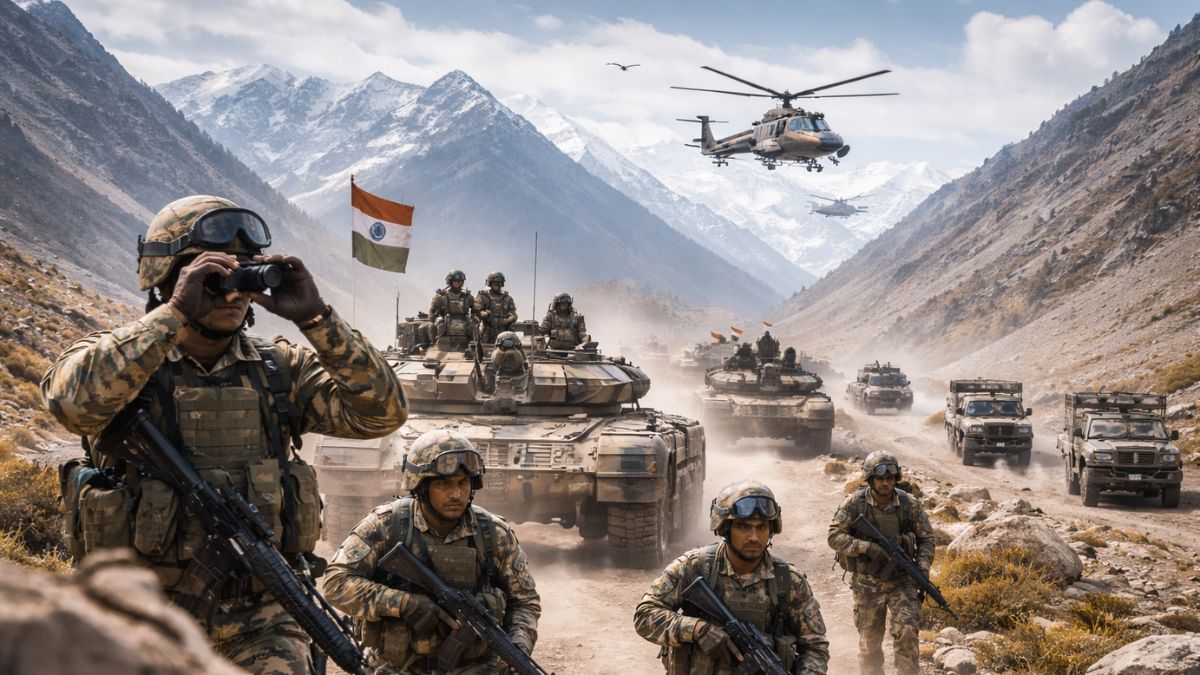
The Indian Army fast-tracks Integrated Battle Groups within the 17 Mountain Strike Corps to strengthen offensive capabilities and rapid deployment along the China-facing northern borders. Image courtesy: AI generated picture via DALL-E

India is strengthening its army’s offensive capabilities against China and has initiated structural changes to its fighting formations, beginning with the northern border-focused 17 Mountain Strike Corps based at Panagarh in the eastern sector, by launching its first Integrated Battle Groups (IBGs), a compact, self-sustaining, and highly mobile combat force.
Indian Army Chief General Upendra Dwivedi confirmed at his annual press conference on Tuesday (January 13, 2026), ahead of the Army Day 2026, that the Indian government had approved the proposals for raising the IBGs, which would have around 15 units under its command.
The IBGs, General Dwivedi said, would be headed by a Major General rank, and these formations would be part of the transformation that the Indian Army force structures were going through, including the raising of Bhairav battalions, Shaktibaan troops, Divyastra batteries, and Rudra brigades.
What are the Indian Army’s IBG plans for China?
Other defence officers, providing details, said the 17 Corps, the first to have raised an IBG, would have at least four IBGs under two military formations: the 59 and 23 Divisions. A Division is an army’s fighting formation headed by a Major General, having around 9,000 to 10,000 troops under at least three brigades or nine battalions under its command.
The IBGs would have around 5,000 troops in them, which is more than a Brigade’s strength. Brigades in the Indian Army, headed by Brigadiers, usually have around 3,000 troops or three battalions under their command.
IBGs would be “a major departure” from the Brigades and the command and control structures between Brigades and Divisions, the officers said. Thus, the IBGs wouldn’t come under a Brigade Commander, thus flattening the command and control chain, so that quicker decisions on deployments could be achieved, they said.
What is the Indian Army’s 17 Corps, and why is it important?
The 17 Corps is the only Mountain Strike Corps in the Indian Army focusing on the China front, and is just one of the four Corps, three of which are for taking the battle into Pakistan, if a war breaks out on the western borders.
The Indian Army had raised the 17 Corps in Panagarh in West Bengal a decade or so ago, with just one Division-sized force level, but was strengthened post 2021 against the backdrop of the 2020-2024 Ladakh military conflict imposed by China.
One more Division was transferred to the 17 Corps with specialised mountain warfare equipment to aid its thrust and take the battle across the northern border, if push comes to shove, say in Arunachal Pradesh too.
What are the IBGs, and how do they fit into the Army transformation?
The IBGs, under the current plans, would integrate infantry, artillery, and other combat and support elements to be largely self-sufficient in their operations, the officers said.
However, it will retain the flexibility to draw additional combat and support units to build on its firepower from the Corps’ assets, including from other formations, if required.
What were the IBG plans firmed up by the Indian Army?
The plan for raising the IBGs as an idea was floated during four restructuring studies carried out by the Indian Army under then Chief General Bipin Rawat, who went on to become India’s first Chief of Defence Staff, leading the three armed forces’ transformation and instilling jointness in 2020. He passed away in an unfortunate helicopter crash in the Ooty hills in Tamil Nadu in December 2021.
After the study and discussion for over seven years, the IBGs today have become a reality, and the transformation has been driven by the concept of capability-based planning rather than a threat-based approach to force structures, the officers said.
The IBGs would take up both offensive and defensive operations, including mountain warfare, which requires speed, flexibility, mobility, and firepower. Unlike a full strike corps, which takes time to mobilise and deploy, the IBGs would rapidly get into operations with just a short notice, enabling effective counter-response to the enemy during future conflicts.