
Indian Army Unveils ‘Rachnalaya’: First Additive Manufacturing Centre To Boost Self-Reliance
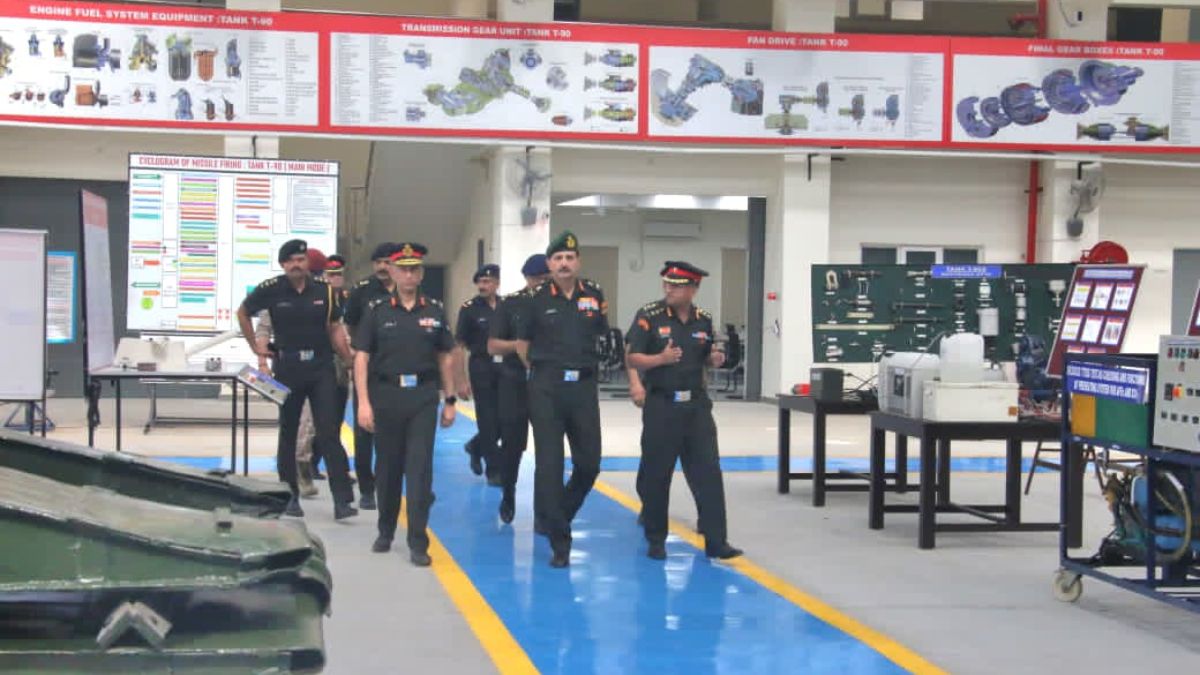
The state-of-the-art facility enables advanced metal and polymer 3D printing of critical spares. Image courtesy: X.com/@artrac_ia

The Indian Army on Thursday (December 18, 2025) launched its first Additive Manufacturing Centre of Excellence, ‘Rachnalaya’, marking a major technological milestone in military logistics and sustainment. This marks a major leap in next-generation sustainment by enhancing self-reliance, lifecycle support, and operational preparedness.
The facility was inaugurated by Lt General Devendra Sharma, General Officer Commanding-in-Chief, Army Training Command (ARTRAC), at the Military College of Electronics and Mechanical Engineering (MCEME), Secunderabad.
Equipped with state-of-the-art metal and polymer 3D printing technologies, Rachnalaya enables the on-demand manufacture of critical spares across a wide spectrum of Army equipment. This capability is expected to dramatically reduce dependence on external supply chains, especially during high-tempo operations or in forward areas.
Indian Army Rachnalaya: How additive manufacturing strengthens operational preparedness
The introduction of additive manufacturing represents a shift from traditional inventory-heavy logistics to agile, digital and decentralised sustainment. By producing parts locally and rapidly, the Army can cut down equipment downtime, extend platform life cycles and ensure faster repairs in operational environments.
This development directly supports the Army’s push for Atmanirbharta (self-reliance) in defence, while also improving resilience against supply disruptions during conflict or crisis situations.
MCEME’s role in the Army’s decade of transformation
During his visit, Lt General Sharma was briefed on MCEME’s key initiatives aligned with the Indian Army’s ongoing decade of transformation. The college has emerged as a hub for innovation and technical excellence, with sustained focus on indigenisation in niche and emerging technologies.
The briefing underscored MCEME’s contributions in building skilled technical manpower capable of sustaining the Army’s increasingly complex and technology-driven force structure.
Focus on AI, drones and next-generation military technologies
The Army Commander reviewed various faculties and training infrastructure at MCEME, where he was apprised of contemporary training methodologies and research and development efforts. These span cutting-edge domains like AI, ML, drones, additive manufacturing, electronic warfare, aviation systems and advanced communications.
Such initiatives are critical to ensuring that the Army’s personnel remain proficient in operating and maintaining modern weapon systems and platforms in an evolving battlefield environment.
As part of the visit, Lt General Sharma also felicitated veterans and serving soldiers for their contributions to the organisation. Five on-the-spot commendation cards were awarded in recognition of exceptional performance, reinforcing the Army’s emphasis on professional excellence and motivation.