HAL Knocked Out Of AMCA Race As Private Consortia Advance In India’s Stealth Fighter Programme
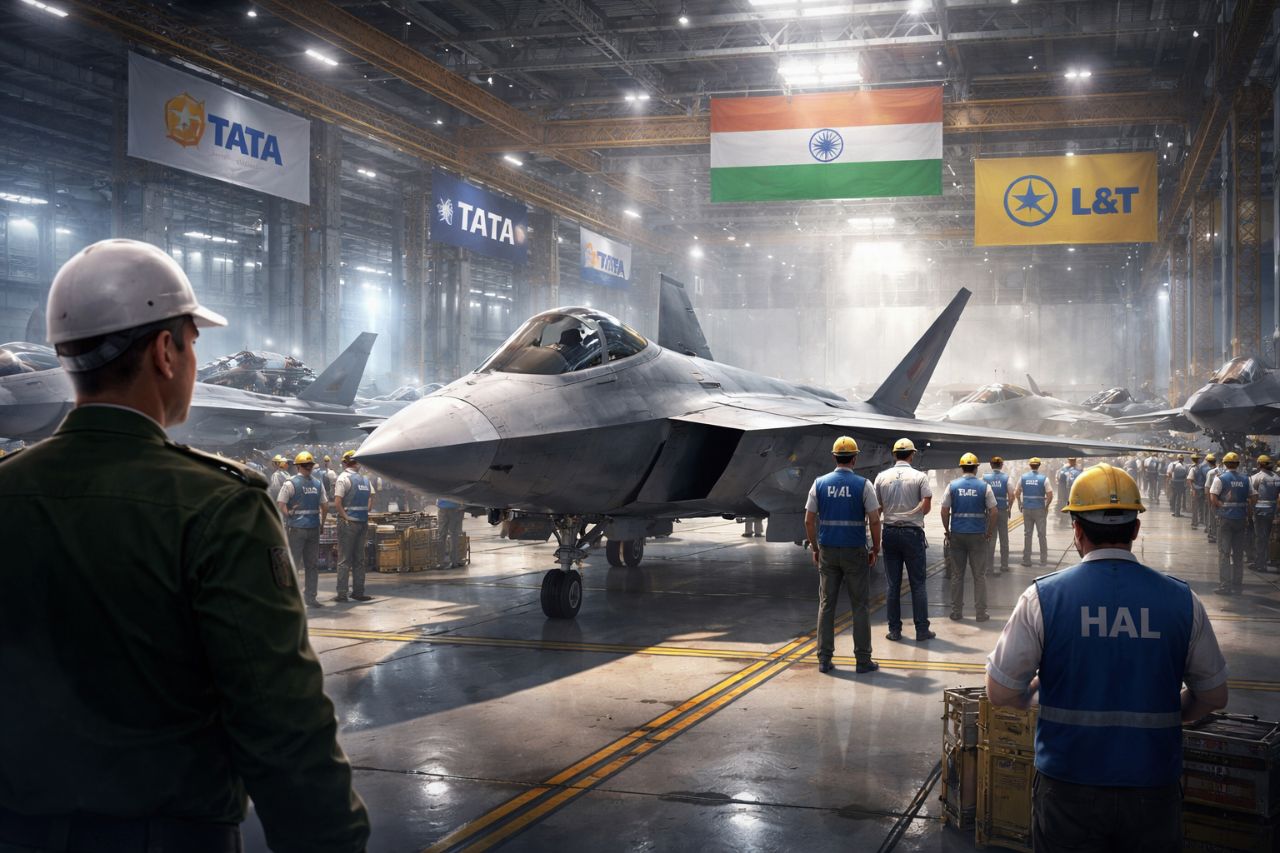
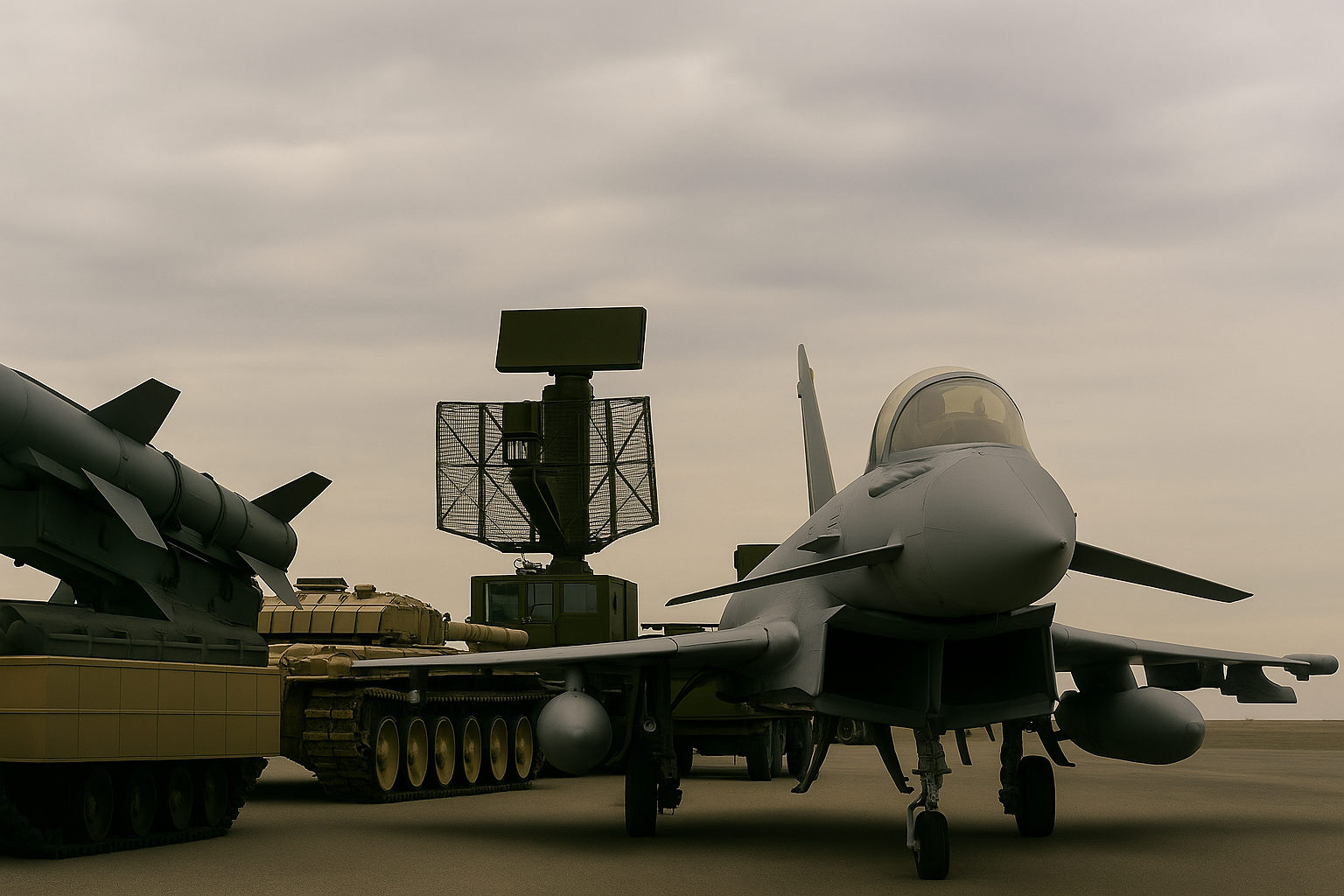
India’s fifth-generation stealth fighter programme enters a decisive phase as private industry steps forward in the AMCA project, signalling a major shift in how the country’s most advanced combat aircraft will be developed and built. Image courtesy: AI generated picture via DALL-E

India’s state-run Hindustan Aeronautics Limited (HAL) has been eliminated from the Rs 15,000 crore fifth-generation Advanced Medium Combat Aircraft (AMCA) project, marking this first time the aircraft maker will not be manufacturing the country’s most critical combat jet programme.
Of the seven consortia comprising public and private sector firms that submitted bids in 2025, only three met the mandatory criteria. These three consortia qualified for the next stage of the evaluation process, according to government officials aware of the matter.
The next phase involves the submission of cost bids for the construction of five AMCA prototypes and one structural test specimen, they said, requesting anonymity as the process was still progressing.
HAL, which has a huge order book at present, too had submitted its bid, partnering with two smaller companies. But it failed to meet the mandatory eligibility criteria, the officials indicated.
According to a senior Defence Ministry official, the contract would be awarded to the lowest bidder within three months from among the three companies that qualified the Expression of Interest process with their technical bids.
These companies would be issued the tender, or Request for Proposals (RfP) in official parlance, to submit their commercial bids, it is learned.
The other companies in the contest to bag one of the biggest fighter jets contract for supplying the fifth-generation fighter jets to the Indian Air Force included Adani Defence and Aerospace, Goodluck India along with BrahMos Aerospace Thiruvananthapuram Ltd and Axiscades Technologies, which too failed to qualify.
One Indian media report said, the EOI stage qualified bidders were Tata Advanced Systems Limited, L&T in partnership with Bharat Electronics Limited (BEL), and Bharat Forge Limited in collaboration with BEML Ltd and Data Patterns.
The Defence Research and Development Organisation’s (DRDO) research lab, Aeronautical Development Agency (ADA), had issued the EOI in June 2025, to select the Indian companies to develop the AMCA prototypes.
As Development-cum-Production Partner, the selected company from among the EOI-qualified firms, would also support flight testing and certification of the indigenous stealth fighter.
The EOI was issued after Defence Minister Rajnath Singh approved an execution plan to provide a level-playing field to the private sector in the development and manufacturing of India’s indigenous fifth-generation fighter aircraft.
The execution plan had, in effect, enabled the HAL monopoly in producing fighter aircraft in India to be ended, though till then it was the frontrunner for the project, and it had unveiled a full-scale mock-up of AMCA at the Aero India show in February 2025.
Reacting to media reports, HAL said it hadn’t received any official communication on its AMCA project elimination, and, therefore, was “not in a position” to comment at this stage. “HAL is committed to keeping all stakeholders fully informed of all developments,” an HAL official statement said.
Reiterating its robust confirmed order book, HAL said this provided it strong revenue visibility, and a healthy production and execution pipeline extending up to 2032.
The state-run company said it was “simultaneously advancing multiple strategic programmes,” including the Indian Multi Role Helicopter (IMRH), LCA Mk2, and Combat Air Teaming System (CATS), which will further strengthen its technological capabilities and long-term growth prospects. “These programmes are expected to enter production post-2032.”
HAL mentioned that it was also diversifying its portfolio in the civil aviation segment with platforms such as the Dhruv NG, Hindustan 228 and the SJ 100, which will enhance revenue and provide sustainable growth in the future.
“HAL has strong fundamentals and is committed to delivering sustained year-on-year growth through consistent performance,” it added.
A Defence Ministry panel headed by Defence Secretary Rajesh Kumar Singh, along with DRDO officials, had evaluated the seven companies that responded to the ADA EOI.
Under the execution model evolved by the Defence Ministry, the three shortlisted companies in the EOI would have to demonstrate their industrial capability to set up the AMCA manufacturing facility for awarding the contract for the aircraft’s series production.
The timeline proposed for the selected firm was eight years to execute the entire contract for development prototyping, flight testing, and certification, under the EOI.
The first AMCA prototype is expected to go for maiden flight in 2029, and the full development of the aircraft to be completed by 2034, with series production to begin in 2035.
India would have to accelerate the AMCA project in view of the serious threat posed by China, which has already developed two fifth-generation fighters in J-20, which is already in PLA service, and J-35, for which testing is currently in progress.
India’s other recalcitrant neighbour, Pakistan, is said to be interested in buying the export variant of the J-35. China is also developing two more fifth-generation fighter jets, coded as J-36 and J-50, with far advanced aviation technologies.