



Pentagon Watchdog Flags F-35 Readiness Crisis As India Emerges As Key Battleground Market
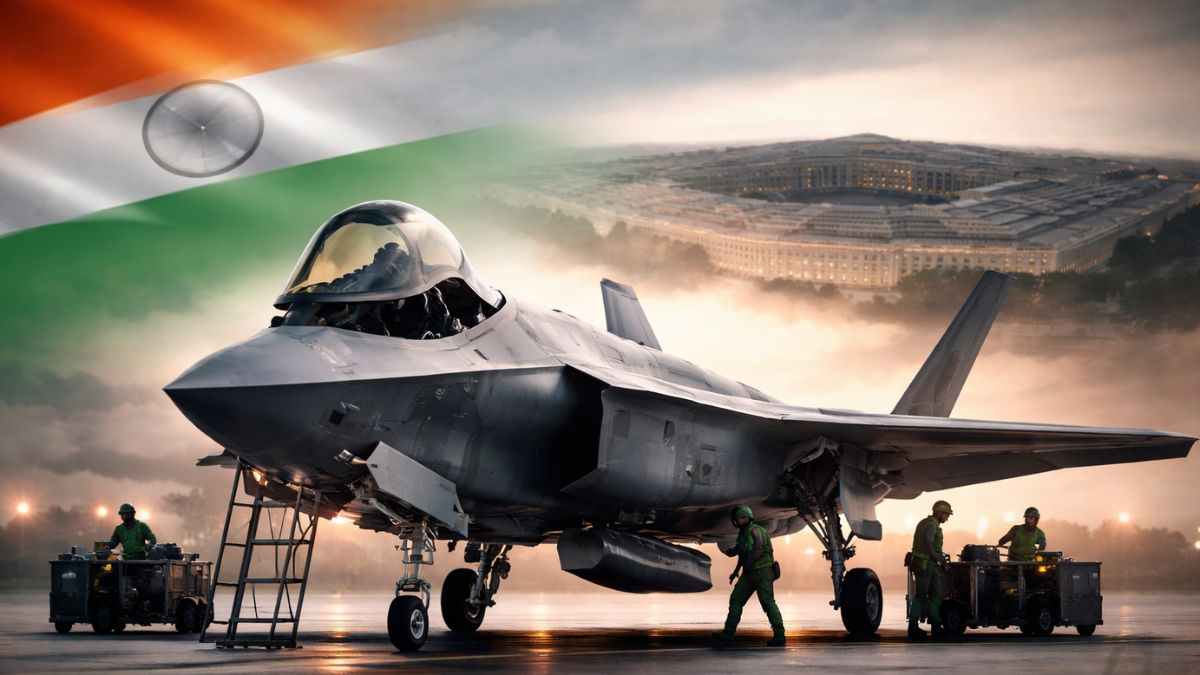
A US defence watchdog report has put the spotlight on fighter readiness and sustainment at a time when advanced combat aircraft are being actively discussed as part of India’s future air power plans. Image courtesy: AI generated picture via DALL-E

US-made F-35 fighter jets were mission-ready only about 50% of the time in 2024 due to persistent maintenance and sustainment issues, according to a critical new report by the Pentagon’s Office of the Inspector General (OIG).
The report has raised questions about the aircraft’s operational reliability even as the stealth jet is increasingly pitched to India as a future combat aircraft option.
What did the US report on F-35 say?
In a report issued on December 19, 2025, the OIG said the US Defense Department failed to adequately oversee Lockheed Martin’s performance under a June 2024 air vehicle sustainment contract.
While the F-35 Joint Program Office (JPO) monitored the contractor, it did not consistently hold Lockheed Martin accountable for poor sustainment outcomes, the report found.
What were the problems in F-35 that were raised?
The watchdog noted that the sustainment contract lacked enforceable aircraft readiness benchmarks and measurable performance requirements. It also cited failures to enforce material inspection and government property reporting rules.
As a result, the Pentagon paid Lockheed Martin about $1.7 billion without any economic adjustment, even though the aircraft did not meet the minimum readiness requirements of US military services.
The findings add to longstanding concerns about the F-35 programme, the Pentagon’s largest-ever acquisition effort, with an estimated lifetime cost exceeding $2 trillion to procure, operate and sustain the stealth fighter fleet.
How has the US pitched F-35 as a fifth-generation jet to India?
The timing of the report is significant as India is increasingly seen as a potential future market for the F-35, particularly as New Delhi seeks advanced fifth-generation fighters to counter China’s growing air power.
The F-35 would compete with Russia’s Su-57, which Moscow has offered to India, and India’s own Advanced Medium Combat Aircraft (AMCA) programme, which is still under development.
Could the US report on F-35 impact India’s choice?
However, questions around sustainment costs, availability rates and operational autonomy could weigh heavily on India’s calculus.
India has traditionally prioritised maintainability, lifecycle costs and strategic independence in defence acquisitions, areas where the F-35’s global supply-chain dependence and maintenance challenges may prove contentious.
As competition intensifies in the high-end fighter market, the Pentagon watchdog’s findings underscore that readiness and sustainment, not just stealth and sensors, will be decisive factors shaping future deals.