



Pak Air Force Successfully Tests Indigenous Taimoor Missile, Signalling Push For Stand-Off Strike Capability
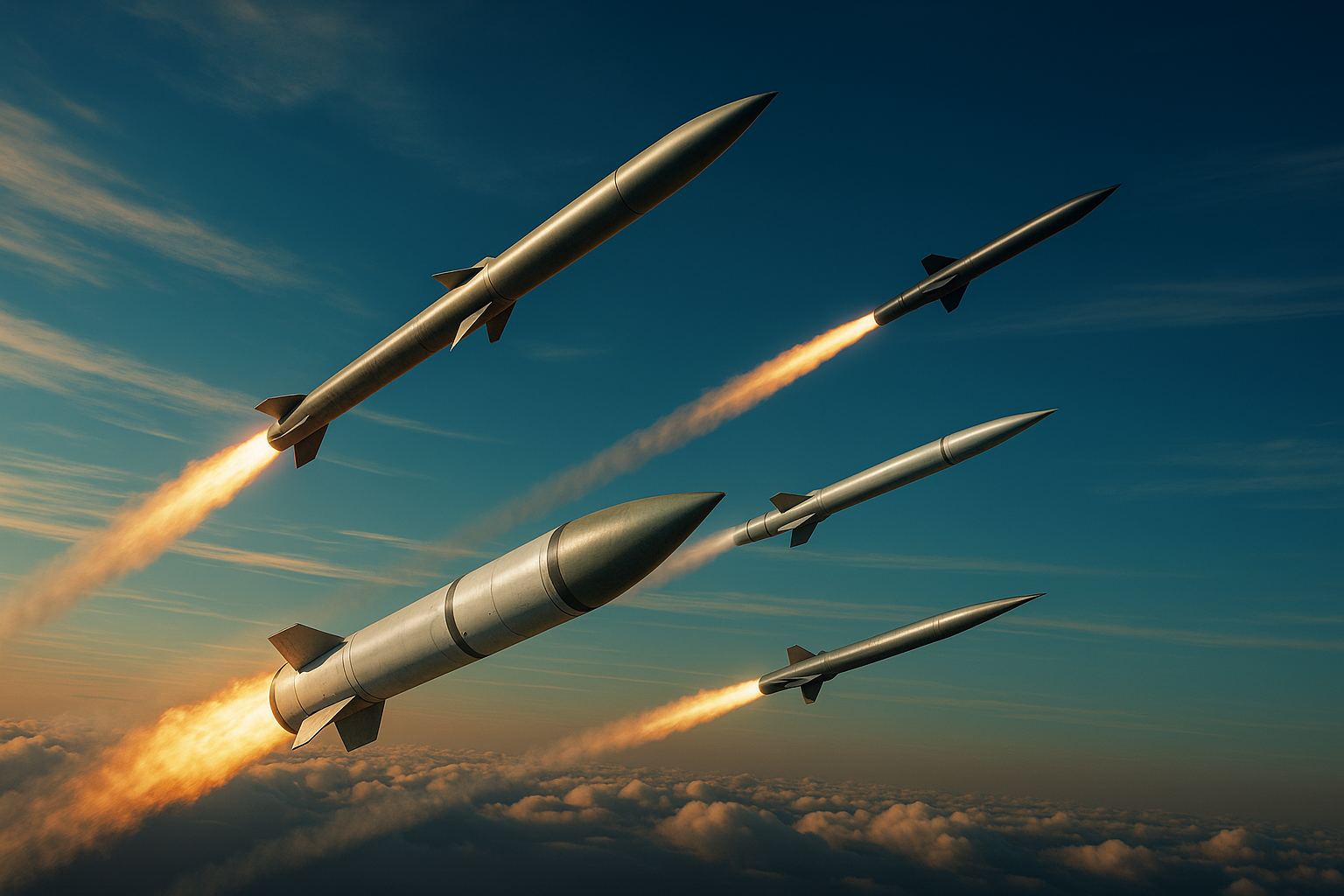
A successful missile test underlines the Pakistan Air Force’s drive to expand precision stand off strike options through indigenous capability development. Image courtesy: AI generated picture via DALL-E

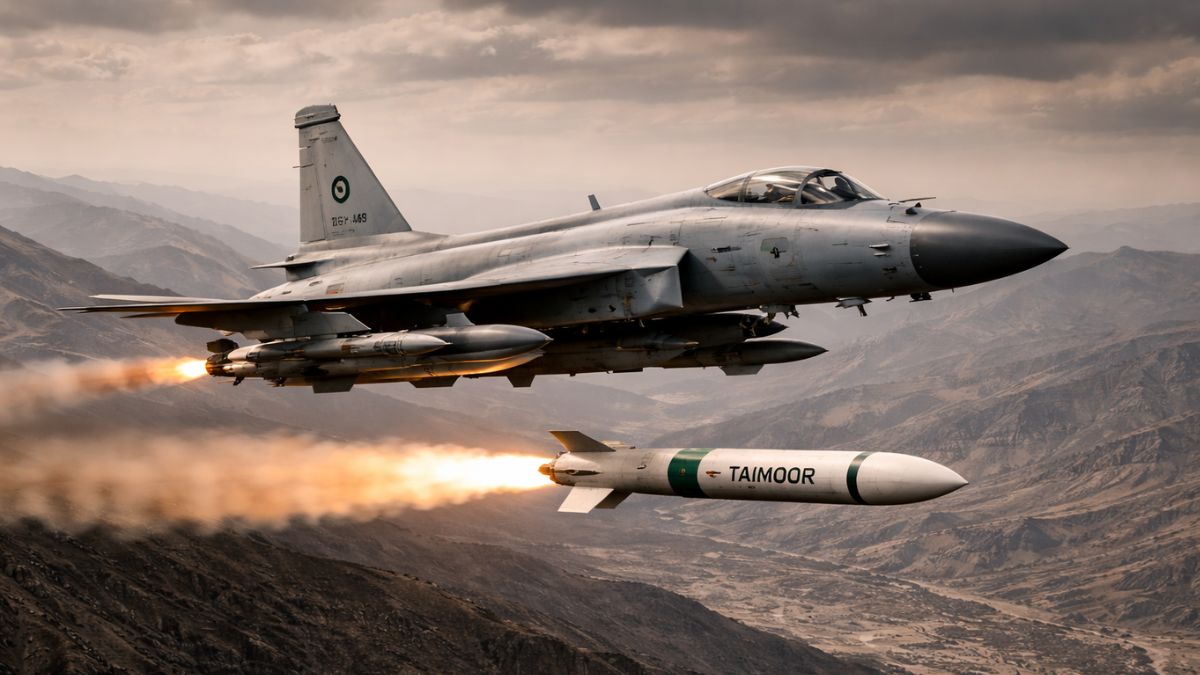
The Pakistan Air Force (PAF) has successfully conducted a flight test of the indigenously developed Taimoor air-launched cruise missile (ALCM), underlining Islamabad’s renewed focus on enhancing precision stand-off strike capabilities amid evolving regional security dynamics.
According to official statements, the test validated the missile’s advanced navigation system, accuracy, and integration with PAF fighter aircraft.
What is the Taimoor missile of the PAF?
The Taimoor missile, believed to have a range of around 290 kilometres, is designed to strike high-value targets from outside hostile air defence envelopes, significantly boosting the PAF’s conventional deterrence posture.
Defence officials described the test as a key milestone in Pakistan’s efforts to strengthen self-reliance in advanced weapons development.
How does Taimoor reduce PAF’s foreign dependency?
The Taimoor ALCM is part of Pakistan’s broader strategy to modernise its air combat capabilities while reducing dependence on foreign suppliers.
It complements existing systems such as the Ra’ad and Ra’ad-II cruise missiles and is expected to be compatible with platforms like the JF-17 Thunder and potentially the J-10C fleet.
Analysts note that stand-off weapons like Taimoor allow air forces to conduct deep-penetration strikes without exposing pilots and aircraft to dense air defence networks.
How does the Taimoor missile test cause a strategic imbalance?
From a strategic perspective, the test comes at a time when South Asia is witnessing rapid advancements in air power, missile defence, and precision-guided munitions.
Pakistan has repeatedly argued that indigenous missile development is essential to maintain a “credible minimum deterrence” and to offset what it sees as widening conventional asymmetries in the region.
How is Pakistan investing in defence R&D?
The successful test also highlights the growing role of Pakistan’s defence research and development ecosystem, particularly organisations linked to the country’s missile and aerospace programmes.
Over the past decade, Islamabad has invested heavily in local design, guidance systems, and propulsion technologies to achieve greater autonomy.
While the PAF has not disclosed a timeline for the missile’s induction into operational service, defence watchers believe the Taimoor could be fielded in the near term, further strengthening Pakistan’s ability to conduct precision strikes and reinforcing its evolving air power doctrine.