

China Chose Politics Over Public, Its Control Over Speech Made Covid-19 A Pandemic
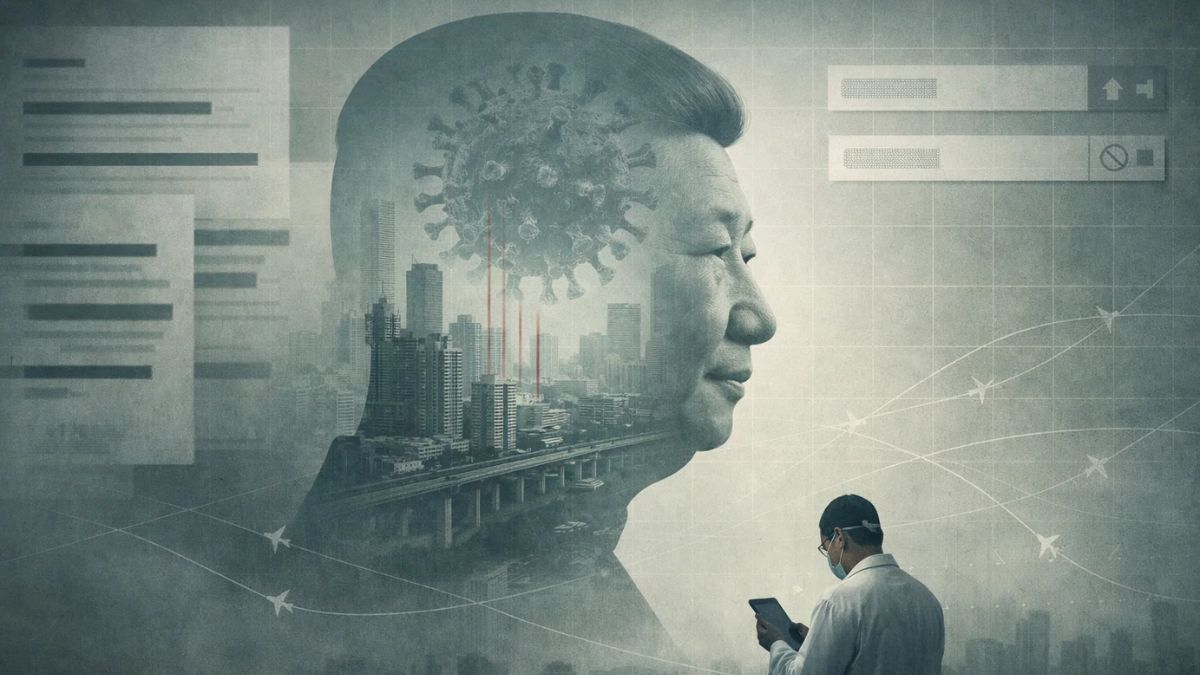

The Covid-19 pandemic began as a local health emergency in central China, yet its evolution into a global crisis was shaped by political decisions rather than medical uncertainty. The early handling of the outbreak reflected a governance system in which information control, political discipline and leadership image were treated as priorities during crises.
Those features had become more pronounced in the years leading up to the outbreak, as Xi Jinping consolidated authority within the Chinese Communist Party. Political centralisation, tighter controls on media and civil society, and an emphasis on loyalty over professional autonomy altered how risks were reported and managed across the bureaucracy.
Why did early warnings fail to reach the public?
Unusual pneumonia cases emerged in Wuhan in late 2019, yet information moved cautiously through internal political channels rather than being shared openly with health professionals or the public. Local officials, operating within incentive systems that reward stability and discourage bad news, limited disclosure while awaiting direction from higher authorities.
Doctors identified warning signs and shared concerns within medical circles. Among them was Li Wenliang, who warned colleagues of a SARS-like illness. He and other medical professionals were later reprimanded by police for spreading what authorities described as unverified information, illustrating the risks faced by those raising early alarms.
Scientific institutions encountered similar constraints. Laboratories that sequenced the virus were required to obtain official approval before publishing findings. During the early phase, key data on transmission and diagnostics remained restricted. Online discussion was narrowed as references to the outbreak were filtered or removed from digital platforms.
China notified the World Health Organization on December 31, 2019 about unexplained pneumonia cases. Public confirmation of sustained human-to-human transmission came weeks later, even as healthcare workers became infected. During that period, large-scale travel linked to the Lunar New Year continued, enabling domestic and international spread.
How did political control shape the later response?
When the outbreak could no longer be contained quietly, authorities imposed sweeping lockdowns and movement controls. These measures later became central to official narratives of decisive governance. However, their scale reflected the costs of earlier delays rather than evidence of early success.
Independent reporting during the initial outbreak faced suppression. Citizens documenting hospital conditions or shortages were detained under public order provisions, and online expressions of grief and criticism following the deaths of medical professionals were curtailed. Official accounts focused on eventual containment, while discussion of early missteps remained limited.
Years on, accountability at the senior political level remains minimal. No public responsibility has been accepted for the early suppression of information, and independent investigations inside China continue to face restrictions.
Covid-19 reshaped societies worldwide, driven by global mobility and uneven preparedness. Yet the political environment in which the virus first emerged played a decisive role. A system that treated crisis communication as a political task constrained early response options at a critical moment.
The pandemic illustrates how governance choices can carry global consequences. When political authority and narrative control take precedence over professional judgment during a health emergency, the effects extend far beyond national borders.