
Greenland Flashpoint: Why Trump’s Arctic Push Pits US Security Ambitions Against NATO’s Red Lines

The United States’ renewed push under President Donald Trump to acquire Greenland, explicitly leaving military force “always an option,” has escalated into a major geopolitical crisis that now threatens NATO unity, transatlantic trust, and the postwar rules-based order.
What Washington frames as a national security imperative in the Arctic is being read in Europe as an unprecedented challenge to sovereignty, alliance norms, and collective defence itself.
Why is the US pushing for Greenland control?
The White House confirmed this week that Trump and his advisers are actively discussing ways to bring Greenland under US control, arguing that the vast Arctic island is essential to “deter adversaries” such as Russia and China.
Options under consideration reportedly range from an outright purchase to a Compact of Free Association (COFA), stopping short of formal annexation.
Greenland’s leadership, however, has repeatedly and unequivocally rejected any such move, insisting the island is “not for sale” and that only Greenlanders can decide their future.
Why are the US claims over Greenland a geopolitical minefield?
The controversy has been supercharged by timing. Trump’s comments came days after US forces captured Venezuelan President Nicolás Maduro in a surprise military operation, reviving global fears that Washington is prepared to use force beyond its borders to achieve strategic goals.
Against that backdrop, Trump’s assertion that the US “needs Greenland from the standpoint of national security” and that Denmark “is not going to be able to do it” set off alarm bells across Europe.
Why have the US claims set off a full crisis in Denmark?
Denmark, which retains responsibility for Greenland’s defence under NATO, has entered what analysts describe as “full crisis mode.”
Prime Minister Mette Frederiksen issued an unusually blunt warning that any US attack or—including Greenland would effectively spell the end of NATO as it currently exists.
European heavyweights—including Britain, France, Germany, Italy, Poland, and Spain—lined up behind Copenhagen, stressing the “universal principles” of sovereignty, territorial integrity, and the inviolability of borders.
For Greenlandic Prime Minister Jens-Frederik Nielsen, the statements were welcome but necessary: Trump’s rhetoric, he said, was “very rude and disrespectful.”
Why is Greenland considered valuable by both the US and Europe?
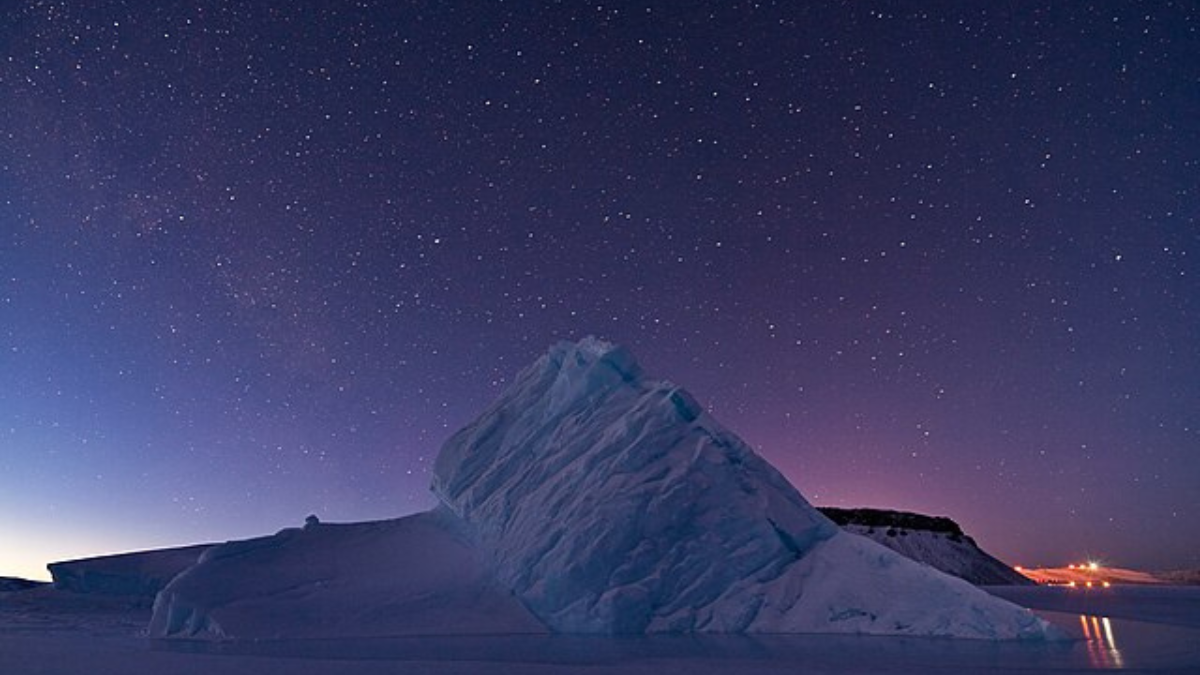
At the heart of the dispute lies Greenland’s growing strategic value. The world’s largest island sits astride key sea lanes between North America and Europe, hosts critical US early-warning and missile-defence infrastructure, and lies close to Russia’s expanding Arctic military footprint.
Climate change is rapidly melting Arctic ice, opening new shipping routes and intensifying competition over resources.
Greenland’s vast, largely untapped reserves of rare earths and other critical minerals, vital for advanced weapons systems, clean energy, and high-tech manufacturing, have become central to US security calculations.
What is the US argument on Greenland?
Washington argues that Denmark lacks the capacity to fully secure or develop the island in an era of great-power competition.
European leaders counter that Greenland is already covered by NATO’s collective defence guarantee and by longstanding US–Denmark defence agreements that give American forces broad access without violating sovereignty.
Frederiksen has urged Washington to stop threatening “a historically close ally and another people who have said very clearly that they are not for sale.”
How has this conflict pitted the US against NATO?
The standoff also exposes a deeper NATO dilemma–what happens when the alliance’s strongest member openly challenges the territorial integrity of another?
Analysts warn that this “Greenland risk” could be more destabilising for transatlantic unity than Russia’s war in Ukraine.
Trump’s refusal to rule out military or economic coercion, coupled with the appointment of a pro-takeover envoy and hardline messaging from the White House, has only deepened European unease.
How have Greenlanders responded to US ambitions?
Public opinion in Greenland further complicates US ambitions. Polls consistently show overwhelming opposition to US control, even as many Greenlanders favour eventual independence from Denmark.
Copenhagen has sought to reinforce ties with Nuuk through increased spending on infrastructure and healthcare, while also boosting Arctic defence investments, including additional F-35 fighter jets, partly to reassure Washington.
As Arctic competition intensifies, Greenland has become more than a strategic prize. It is now a stress test for NATO itself.
Whether Trump’s Arctic gambit ends in diplomacy, deadlock, or deeper rupture may determine not just Greenland’s future, but the credibility of the Western alliance in an era of accelerating great-power rivalry.