Islamic State Claims Deadly Islamabad Mosque Blast As Pakistan Blames Afghanistan
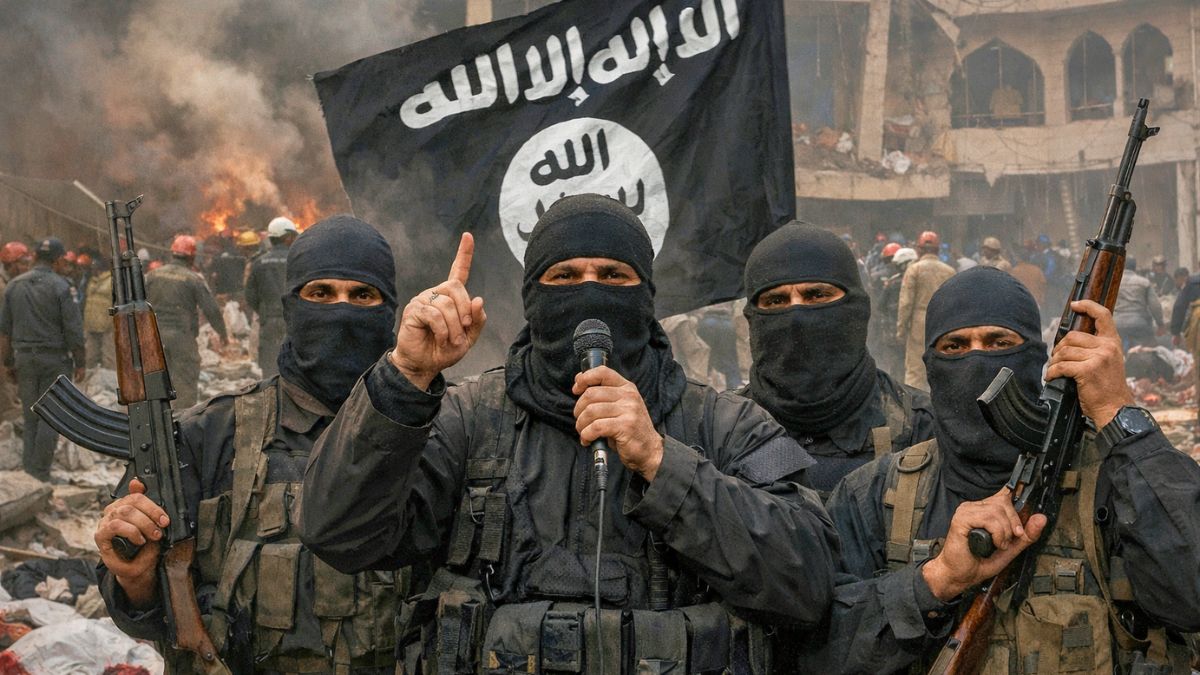
The powerful explosion struck the Khadija Tul Kubra Shia mosque in the Tarlai Kalan area on the outskirts of Islamabad. Image courtesy: AI-generated picture via Sora

A suicide bomber struck a Shiite mosque on the outskirts of Pakistan’s capital Islamabad on Friday (February 6, 2026), killing at least 31 people and injuring 169 others, in one of the deadliest attacks in the city in more than a decade. The intensity and gravity of the attack could be understood from the fact that it was deadliest in Islamabad since September 2008, when a suicide truck bomb killed more than 60 people.
Notably, this is the second such attack in three months, occuring as worshippers gathered for prayers, triggering panic and drawing an immediate security lockdown across the area. Despite tight security, the attacker managed to breach the mosque perimeter and detonate an explosive vest near the inner gate.
Islamabad suicide bombing: Who claimed responsibility for attack?
The regional affiliate of the Islamic State group, known as Islamic State in Pakistan, claimed responsibility for the bombing in a statement released via its propaganda outlet, Amaq News Agency. The group said the attacker first opened fire on security personnel at the mosque’s main entrance before carrying out the suicide attack.
In its statement, the Islamic State justified the attack by portraying Pakistan’s Shiite minority as legitimate targets, accusing them of supporting Shiite militias fighting IS in Syria. Analysts say such rhetoric reflects the group’s long-standing strategy of inflaming sectarian tensions in Pakistan, a predominantly Sunni country.
How severe is the attack compared to past incidents?
The bombing is the deadliest attack in Islamabad since 2008, when a suicide bomber struck the Marriott Hotel, killing 63 people. It also follows a November attack in which a suicide bomber killed 12 people outside a court in the capital, underscoring a worrying escalation of militant violence even in heavily guarded areas.
Pakistani authorities said the bomber was a Pakistani national who had recently travelled to Afghanistan. Security forces identified the attacker, traced his facilitators, and arrested what officials described as the mastermind of the attack. Overnight raids in Islamabad and northwestern Pakistan led to the arrest of several suspects, including the bomber’s brother, mother and other relatives.
A police officer was killed during one of the operations, authorities confirmed.
Was the suicide bombing planned from Afghanistan?
State-run Pakistan Television reported a major breakthrough, claiming the arrest of an alleged Afghan national linked to Islamic State who is accused of planning the bombing. The report said the attack was orchestrated by IS elements based in Afghanistan, warning that such networks pose a threat not only to Pakistan but to regional and global security.
There was no immediate response from Kabul to the allegations.
How has the Taliban-led Afghan government responded?
Pakistan’s Defence Minister Khawaja Mohammad Asif said the attack demonstrated that militants operating from Afghanistan could strike even in Pakistan’s capital. His comments prompted a sharp reaction from Afghanistan’s Taliban government.
While condemning the mosque bombing, Afghanistan’s Defence Ministry accused the Pakistani minister of “irresponsibly” linking the attack to Afghanistan. Kabul has repeatedly denied Pakistan’s claims that it harbours militants, including the Pakistani Taliban.
Meanwhile, more than 2,000 mourners gathered under heavy security at the mosque for funeral prayers for about a dozen victims on Saturday (February 7, 2026). Shiite community leaders and senior government officials attended the ceremonies, while funerals for other victims were held in their home towns across the country.
How has the international community reacted?
The attack drew widespread condemnation from the United States, Russia and the European Union, among others. PM Shehbaz Sharif said Pakistan had received messages of sympathy and support “from across the globe” following what he described as a “heart-wrenching suicide attack.”
Sharif reaffirmed his government’s commitment to bring those responsible to justice and stressed the importance of international cooperation in Pakistan’s counterterrorism efforts.