Jaishankar, Indonesian Counterpart Exchange Perspectives On West Asia Conflict, Agree To Stay Coordinated
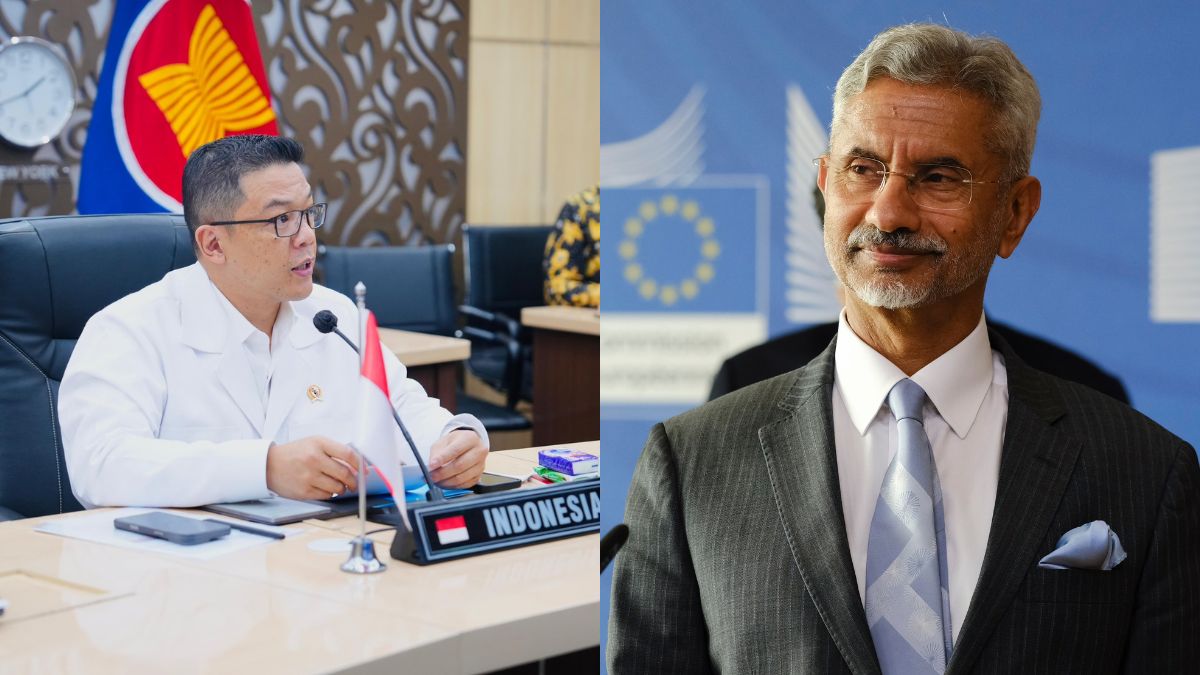
Both the leaders agreed to enhance India-Indonesia bilateral cooperation in the next Joint Commission Meeting. Image courtesy: RNA

After a “detailed conversation” with his Iranian counterpart Abbas Araghchi, External Affairs Minister S Jaishankar spoke to Indonesian Foreign Minister Sugiono to discuss the evolving crisis in West Asia. Over the past few days, India has intensified diplomatic engagement with key global partners as the Iran war continues to disrupt global energy flows.
EAM Jaishankar’s latest conversation is part of India’s broader diplomatic push to assess the geopolitical and economic consequences of the conflict, which has already triggered sharp fluctuations in global oil prices and disrupted shipping in the strategically vital Strait of Hormuz.
Jaishankar and Indonesia’s FM discuss West Asia conflict
EAM Jaishankar confirmed the call with his Indonesian counterpart on social media, describing the discussion as part of ongoing consultations on the crisis.
“Pleased to talk to FM Sugiono of Indonesia. Exchanged perspectives on the West Asia conflict. Discussed bilateral ties and agreed to hold the Joint Commission meeting at an early date,” Jaishankar said.
Sugiono also described the conversation as “productive,” noting that both sides agreed to strengthen bilateral cooperation and coordinate closely on regional and global developments. The ministers also discussed plans to convene the India–Indonesia Joint Commission Meeting soon, aimed at advancing cooperation in areas such as trade, security and regional stability.
India’s diplomatic push amid escalating conflict
The conversation with Indonesia comes as Jaishankar held multiple phone calls this week with foreign ministers from Iran, Russia, Germany and South Korea, reflecting India’s growing diplomatic engagement on the crisis. India has been actively consulting global partners as tensions escalate between Iran and the US-Israel alliance.
New Delhi has consistently called for dialogue and diplomacy, warning that prolonged instability in West Asia could have serious implications for global trade, energy security and regional stability.
The current crisis escalated dramatically after a joint US–Israel military operation on February 28 killed Iran’s Supreme Leader Ayatollah Ali Khamenei. The strike triggered a rapid escalation in hostilities across the region. Iran responded by targeting US and Israeli assets across several Gulf countries, including military installations and infrastructure, raising fears of a wider regional war.
Strait of Hormuz crisis shakes energy markets
One of the most significant global consequences of the conflict has been the disruption around the Strait of Hormuz, one of the world’s most critical energy chokepoints. The narrow waterway between Iran and Oman handles roughly 20% of global oil and liquefied natural gas (LNG) shipments.
Iran has effectively restricted shipping through the strait, triggering fears of supply shortages and sending oil and gas prices sharply higher.
For energy-importing economies like India, the crisis has become a major strategic concern.
India raises shipping and energy security concerns with Iran
Earlier this week, Jaishankar also held discussions with Iranian Foreign Minister Abbas Araghchi, focusing on the safety of maritime shipping and energy security. According to the Ministry of External Affairs, the two leaders have spoken three times in recent days.
MEA spokesperson Randhir Jaiswal said the conversations centred on ensuring safe passage for commercial vessels and maintaining stable energy supplies through the region. “EAM and FM of Iran have had three conversations in the last few days. The last one discussed issues pertaining to safety of shipping and India’s energy security,” Jaiswal said.