Maritime Security Belt 2026: Iran Plans Naval Drills With China, Russia This Month As Tensions with US Mount
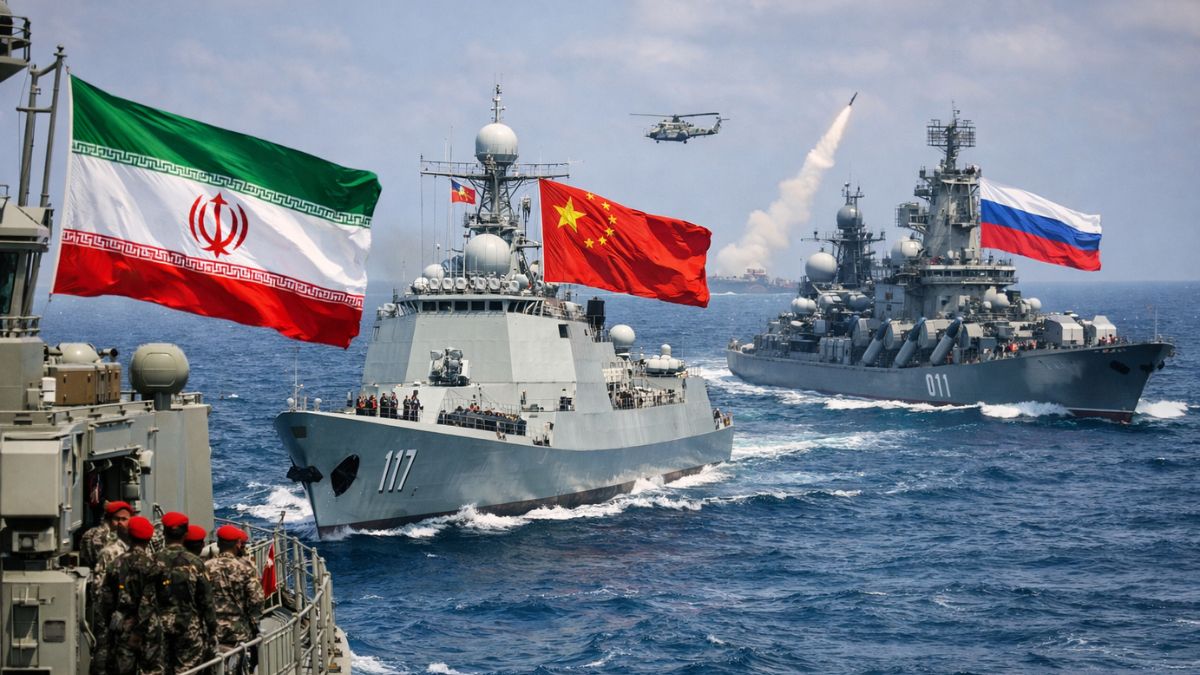
A notice to mariners sent by radio warned that Iran planned to conduct “naval shooting” in the Strait of Hormuz. Image courtesy: AI-generated picture via Sora

Iran is set to conduct joint naval exercises with China and Russia in the northern Indian Ocean in mid-February, a move that underscores deepening military coordination among the three countries at a time of heightened geopolitical strain. Notably, the drills come at a time when Tehran is seeing escalated tensions with the US.
According to Iran’s semi-official Tasnim News Agency, the drills, titled ‘Maritime Security Belt’, will mark the eighth edition of the exercise series since its launch in 2019. The upcoming exercises will involve units from Iran’s regular navy as well as the naval wing of the Islamic Revolutionary Guard Corps (IRGC).
These forces will operate alongside naval units from China and Russia, reinforcing a trilateral framework that Tehran has increasingly highlighted as a counterweight to Western military presence in the region. Iran’s joint naval drills are scheduled to take place in the northern Indian Ocean, a strategically sensitive stretch of waters.
Iran, China, Russia naval exercise: Why do these drills matter now?
The timing of the drills is politically charged. Relations between Tehran and Washington have deteriorated sharply in recent weeks, following statements by US President Donald Trump that a “massive armada” was moving toward Iran, coupled with renewed calls for Tehran to return to the negotiating table.
Against this backdrop, the joint exercises serve as a signal of deterrence, showcasing Iran’s ability to coordinate militarily with two major global powers even as it faces mounting pressure from the United States.
How do China and Russia fit into Iran’s strategy?
For Iran, naval cooperation with Beijing and Moscow reflects a broader effort to break out of diplomatic and economic isolation. China and Russia have both maintained working ties with Tehran despite Western sanctions, and their participation in the drills highlights an emerging security alignment among countries challenging US dominance in key maritime regions.
For China and Russia, the exercises reinforce their growing footprint in the Indian Ocean and underline opposition to what they describe as unilateral Western security frameworks.
What is happening inside Iran?
The announcement comes amid widespread protests inside Iran, driven by economic hardship, political repression and public anger over governance. The domestic unrest has added pressure on Iranian authorities, who are simultaneously confronting tougher US sanctions and diplomatic isolation.
By projecting military readiness abroad, analysts say Tehran may be seeking to shore up its image of strength at home while signalling resolve to external adversaries.
Despite the confrontational rhetoric, Iranian officials have maintained that Tehran remains open to negotiations, but only on what it calls “fair, balanced and non-coercive terms.” They have warned, however, that any US military action would trigger a “swift and comprehensive” response.
Meanwhile, the US military’s Central Command early Saturday (January 31, 2026) warned Iran that any “unsafe and unprofessional behavior near US forces, regional partners or commercial vessels increases risks of collision, escalation and destabilisation.” This came after a notice to mariners on Thursday (January 29, 2026) warned Iran planned to conduct “naval shooting” in the Strait of Hormuz on Sunday and Monday.