



North Korea Tests Long-Range Cruise Missiles As Kim Jong Un Pushes Expanded Nuclear Deterrence
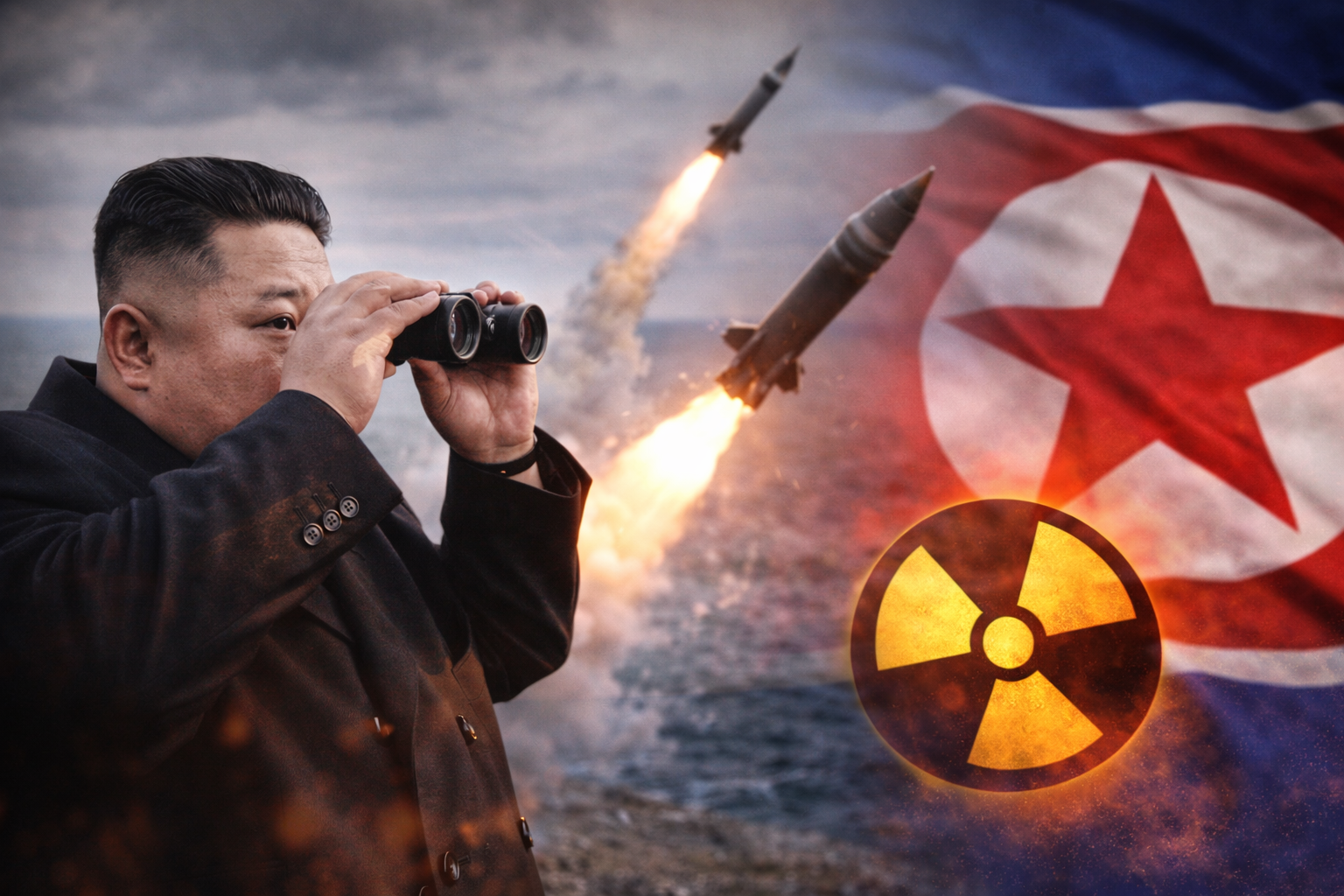
North Korean leader Kim Jong Un observes a missile launch during a weapons test, as Pyongyang signals continued development of long-range cruise missiles amid rising regional tensions. AI-generated Image via DALL·E

North Korea has conducted a test of long-range strategic cruise missiles, with leader Kim Jong Un personally overseeing the launch drill and calling for sustained development of the country’s nuclear weapons forces, state media reported.
The missile test, which took place on December 28, adds to a series of recent weapons activities by Pyongyang, including progress on a nuclear-powered submarine and new air defence missile tests, further heightening regional tensions.
What did North Korea test and where did it take place?
According to the Korean Central News Agency (KCNA), North Korea launched long-range strategic cruise missiles from its west coast, with the missiles flying above the sea west of the Korean Peninsula before accurately hitting their designated targets.
South Korea’s Joint Chiefs of Staff said it detected several cruise missile launches from areas around North Korea’s capital on Sunday morning, adding that Seoul remains prepared to respond through its security alliance with the United States.
What did Kim Jong Un say about the missile tests?
KCNA reported that Kim Jong Un expressed “great satisfaction” with the launch and described regular checks of the reliability and rapid response capability of North Korea’s nuclear deterrent as a “responsible exercise”.
Kim said the tests were justified given what he described as multiple external security threats, and reaffirmed that Pyongyang would continue devoting all its efforts to the development of its nuclear combat force.
How do cruise missile tests fit within international restrictions?
United Nations Security Council resolutions prohibit North Korea from testing ballistic missiles, but cruise missile tests are not explicitly banned. Analysts cited by AP have noted that cruise missiles nevertheless pose a significant threat because they can fly at low altitudes and are highly manoeuvrable.
Experts say such weapons could be used to target US warships and aircraft carriers in the event of a conflict.
How does this relate to North Korea’s broader weapons programme?
The cruise missile test follows the recent release of images by North Korean state media showing what appears to be a largely completed hull of an 8,700-ton nuclear-powered submarine under construction. Kim Jong Un has said such a vessel would form part of North Korea’s nuclear deterrent.
Last week, Pyongyang also tested new anti-air missiles off its east coast, underlining a continued focus on expanding both offensive and defensive capabilities.
A nuclear-powered submarine was among a list of advanced weapons systems Kim announced in 2021, alongside solid-fuel intercontinental ballistic missiles, hypersonic weapons, spy satellites, and multi-warhead missiles.
What is the regional response to the latest developments?
The missile test coincides with preparations for South Korean President Lee Jae-myung’s planned visit to China in early January, during which he is expected to seek Beijing’s cooperation on addressing North Korea’s nuclear ambitions.
Japan, South Korea, and the United States have conducted expanded joint air drills in recent weeks, including flights involving US B-52 bombers and Japanese fighter jets. Pyongyang has accused such activities of undermining regional stability.
What is the diplomatic context?
North Korea’s weapons development has accelerated since nuclear talks with the United States collapsed in 2019. US President Donald Trump has said he is open to renewed engagement, urging Pyongyang to return to dialogue with Washington and regional partners.
Kim has previously said he could consider talks if the United States abandoned what he described as its “obsession with denuclearisation”. Analysts say Pyongyang may view an expanded nuclear arsenal as a way to strengthen its negotiating position ahead of a planned Workers’ Party congress early next year.