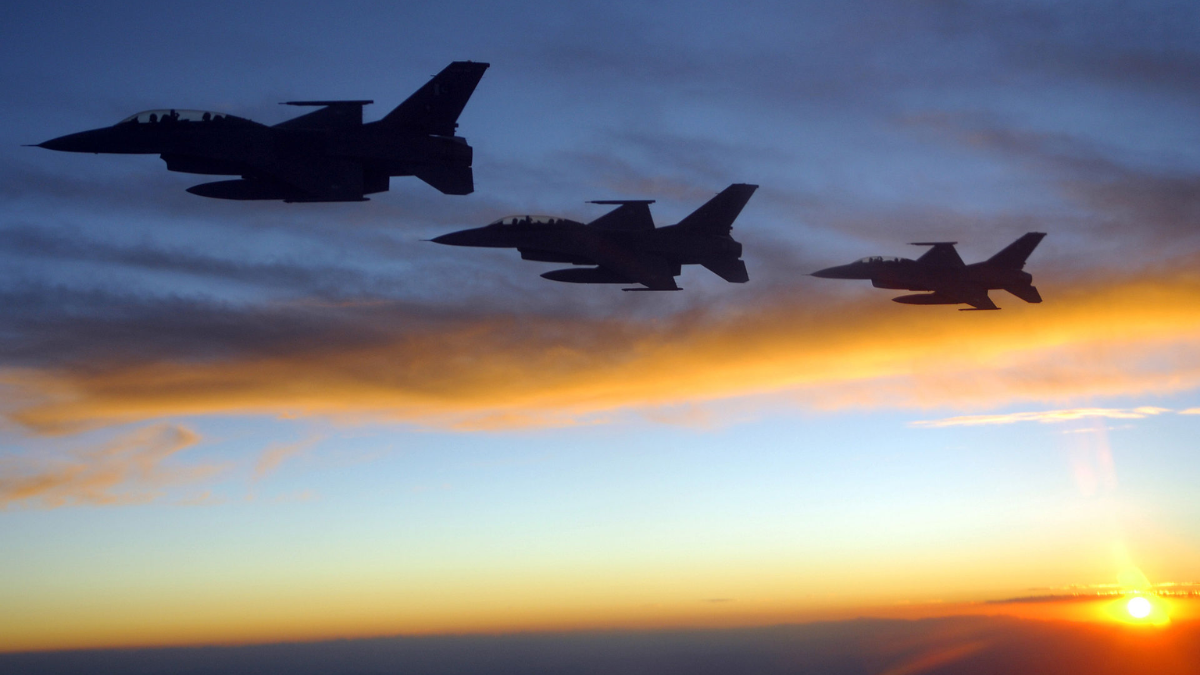

Pakistan–Bangladesh Air Force Talks Signal Emerging Eastern Axis, Forcing India to Prepare for a Three-Front Challenge with China
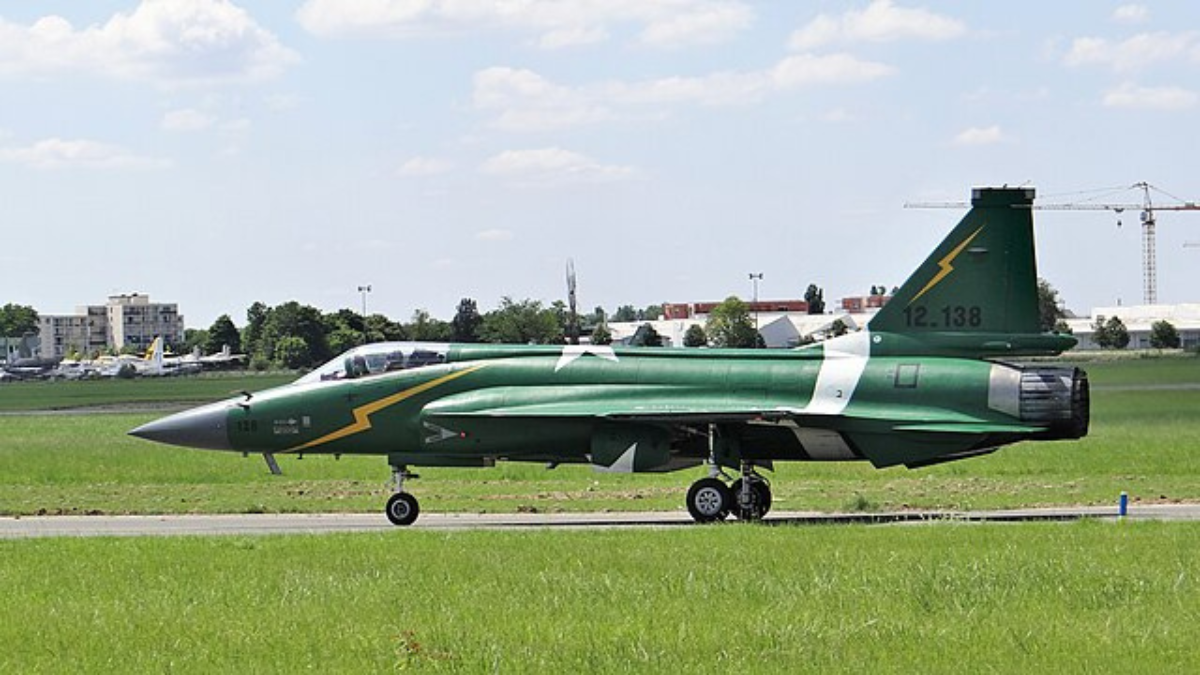
JF017 Thunder. Picture Courtesy: Wikimedia Commons

India’s strategic planners are facing a new and potentially destabilising reality as Pakistan and Bangladesh move closer on defence cooperation, raising the spectre of a coordinated China–Pakistan–Bangladesh alignment that could stretch Indian military resources across three fronts.
The latest trigger is high-level talks in Islamabad between Pakistan Air Force (PAF) chief Air Chief Marshal Zaheer Ahmed Baber Sidhu and a Bangladeshi defence delegation led by Bangladesh Air Force (BAF) chief Air Chief Marshal Hasan Mahmood Khan, where the possible sale of JF-17 Thunder fighter jets featured prominently.
What did the Pakistan-Bangladesh meeting focus on?
According to Pakistan military’s media wing, the Inter-Services Public Relations (ISPR), the meeting focused on strengthening operational cooperation, training, capacity building, and aerospace collaboration.
Crucially, detailed discussions were also held on the potential procurement of the Chinese-origin, Pakistan-assembled JF-17 Thunder, a multi-role fighter that now forms the backbone of the PAF. For India, the implications go well beyond a routine arms sale.
What is the JF-17 aircraft?
The JF-17, jointly developed by Pakistan and China, has been extensively used in combat, including counterterrorism operations, cross-border strikes, and during the 2019 aerial confrontation with India under Operation Swift Retort.
Pakistan has continued to deploy the aircraft in regional conflicts, most recently during the May 2025 India–Pakistan crisis, claims from which New Delhi firmly rejected.
What could BAF’s potential induction of JF-17 mean?
Its prospective induction into the BAF would significantly upgrade Bangladesh’s air combat capability and deepen Dhaka’s operational dependence on Islamabad, and by extension, Beijing.
Beyond fighters, Sidhu offered Bangladesh a comprehensive training ecosystem, ranging from basic flying to advanced and specialised courses, along with fast-tracked delivery of Super Mushshak trainer aircraft.
How is Pakistan wading into Bangladesh’s military upkeep?
Discussions also reportedly covered maintenance support for Bangladesh’s ageing fleet and the integration of air defence radar systems to enhance joint air surveillance.
The Bangladeshi delegation’s visits to Pakistan’s National ISR & Integrated Air Operations Center, Cyber Command, and National Aerospace Science & Technology Park underline the growing breadth of this engagement.
What is the significance of the Pakistan-Bangladesh meeting?
This defence convergence is unfolding against a sharp downturn in India–Bangladesh relations following the ouster of former prime minister Sheikh Hasina in 2024.
Hasina’s flight to India after violent protests, and New Delhi’s refusal to extradite her, have strained ties with Dhaka, creating space for Pakistan and China to expand influence in India’s eastern neighbourhood.
How do these developments impact India?
For India, the timing is particularly concerning. Already facing sustained military pressure from China along the Line of Actual Control and a persistent threat from Pakistan on the western front, a militarily emboldened Bangladesh aligned with Islamabad could complicate India’s eastern security calculus.
Even without overt hostility, enhanced air power, radar integration and ISR cooperation between Pakistan and Bangladesh would force India to allocate additional assets to the east, diluting focus from its northern and western theatres.
Why is the China-Pakistan-Bangladesh trilateral engagement a serious threat?
The emerging picture reinforces the urgency for India to prepare for a credible three-front contingency.
This includes accelerating air force modernisation, strengthening integrated air and missile defence networks, enhancing tri-service jointness, and deepening strategic engagement with neighbours to prevent further geopolitical drift.
Diplomatic outreach to Dhaka, combined with hard-nosed military preparedness, will be critical.
What should India do about these developments?
As Pakistan openly courts Bangladesh and China continues to underpin both, New Delhi can no longer treat these developments in isolation.
The evolving alignment is a warning shot—India’s future security planning must assume collusion, not coincidence, across its western, northern and eastern fronts.