
Tariff At 19%, Exemption On Certain Clothing Goods: Decoding Bangladesh-US Reciprocal Tariff Deal
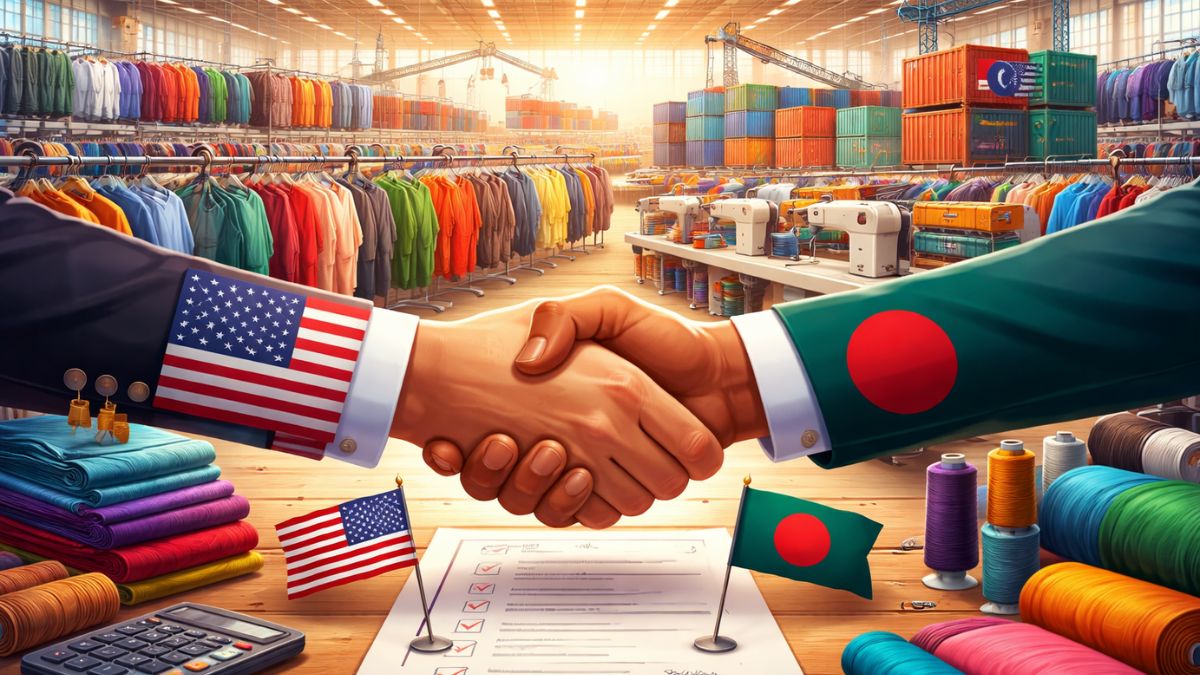
The agreement will strengthen the countries' economic ties and offer both "unprecedented access" to each market. Image courtesy: AI-generated picture via Sora

Just a few days after signing a landmark trade deal with India, which reduced the tariffs to 18%, the United States has entered into a landmark reciprocal tariff agreement with India’s eastern neighbour Bangladesh. The development would mark a significant boost for the country given that it comes just a few days before Bangladesh heads to polls.
Marking a significant reset in bilateral trade ties after months of intense negotiations triggered by sweeping US tariff measures last year, the Reciprocal Trade (Agreement) will provide US and Bangladeshi exporters unprecedented access to each other’s respective markets.
The deal promises tariff relief for Bangladesh’s vital garments sector while opening Bangladeshi markets wider to American agricultural and industrial exports. It also builds upon the longstanding economic relationship, including the US-Bangladesh Trade and Investment Cooperation Forum Agreement (TICFA), signed in 2013.
What is the Bangladesh-US Reciprocal Tariff Agreement?
The agreement, signed on Monday (February 9, 2026), lowers US tariffs on Bangladeshi goods from 20% to 19%, a sharp drop from the original 37% imposed after President Donald Trump’s overhaul of global trade tariffs in April last year. In return, Bangladesh has committed to providing preferential market access to a broad range of American products.
The negotiations stretched over nine months and were concluded by Bangladesh’s commerce adviser Sheikh Bashir Uddin and national security adviser Khalilur Rahman, alongside US Trade Representative Ambassador Jamieson Greer.
Garments sector at the heart of the deal
For Bangladesh, the apparel industry is the backbone of the economy, accounting for over 80% of export earnings and employing nearly four million workers. As the world’s second-largest exporter of clothing after China, even marginal tariff changes can have an outsized impact.
Under the new deal, the US will allow zero reciprocal tariffs on select Bangladeshi textile and apparel products made using US-produced cotton and man-made fibres. The volume of such duty-free imports will depend on how much textile raw material the US exports to Bangladesh.
“This mechanism will provide that a to-be-specified volume of apparel and textile imports from Bangladesh can enter the United States at this reduced tariff rate, but this volume shall be determined in relation to the quantity of exports of textiles, e.g. US produced cotton and man-made fiber textile inputs, from the US,” the White House said.
“This will give substantial added impetus to our garments sector,” said NSA Khalilur Rahman, who served as Bangladesh’s chief negotiator.
What does Washington gain in return?
In exchange for tariff relief, Bangladesh has agreed to open its market significantly to US agricultural and industrial goods. According to the White House, this includes improved access for American chemicals, medical devices, auto parts, information and communicational technology (ICT) equipment soy products and meat.
US officials described the agreement as offering “unprecedented access” to each other’s markets, aligning Bangladesh more closely with Washington’s evolving trade policy priorities.
As part of the deal, Bangladesh has also committed to permit free transfer of data across trusted borders; support the adoption of a permanent moratorium on customs duties on electronic transmissions at the World Trade Organization; follow science and risk-based processes to allow the import of safe US food and agricultural goods; remove barriers in the insurance market.
How does this deal fit into US trade strategy?
The agreement comes against the backdrop of President Trump’s aggressive tariff push aimed at rebalancing US trade relationships. Ambassador Greer said the deal would “fit Bangladesh on US trade policy” and praised chief adviser Muhammad Yunus for his leadership during negotiations.
The US had initially set reciprocal tariffs at 37%, later cutting them to 20% in August last year, before agreeing to the current 19% rate.
Is it a turning point for Bangladesh-US economic ties?
Bangladesh Commerce Adviser Sheikh Bashir Uddin called the agreement “a historically new level” in bilateral economic relations, noting that it substantially enhances access for both countries’ exporters. Beyond tariff cuts, the deal institutionalises cooperation through a new mechanism linking Bangladeshi apparel exports to US textile inputs.
The agreement has been approved by Bangladesh’s Council of Advisers and will come into force once both sides issue formal notifications. Officials from both governments, including Bangladesh Commerce Secretary Mahbubur Rahman and US Assistant Trade Representative Brendan Lynch, were present at the signing.