
Turkey Says It Has Foiled Islamic State Plots Targeting Christmas And New Year Festivities
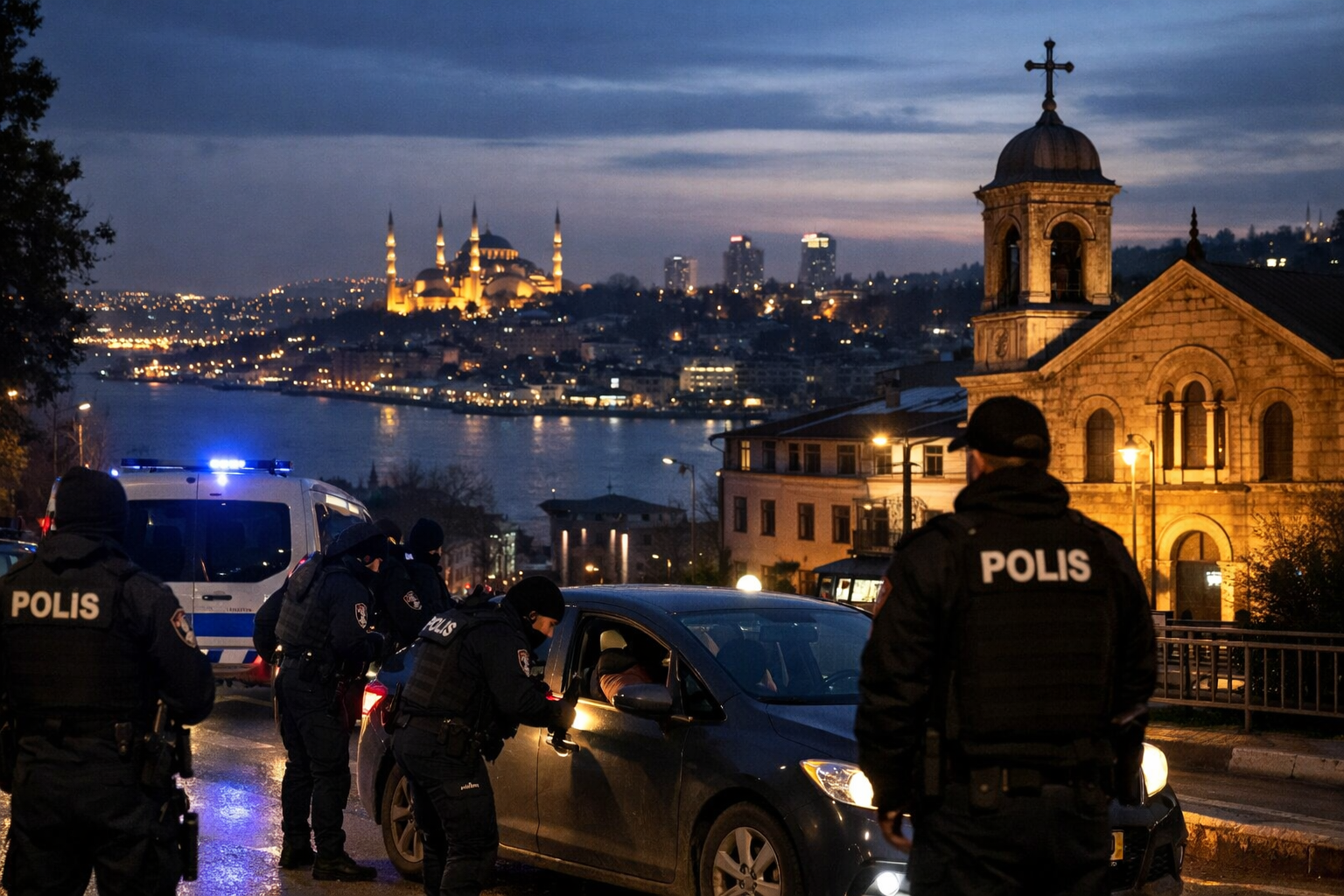
Turkish police officers conduct a security checkpoint in Istanbul at dusk, as authorities intensify counter-terror operations following the foiling of Islamic State plots targeting Christmas and New Year festivities: AI-generated image via DALL-E

Turkish authorities announced on Thursday that they have dismantled a planned wave of attacks on Christmas and New Year’s events after detaining more than 100 suspected members of the so-called Islamic State group in Istanbul. Officials said coordinated raids uncovered weapons, ammunition and organisational material linked to plots against civilians, particularly non-Muslim communities, during the holiday period.
The Istanbul chief prosecutor’s office said police carried out mass operations at 124 addresses across the city, arresting 115 suspects out of 137 individuals sought, with efforts continuing to trace the rest. In statements on social media platform X, authorities said the suspects had been in contact with Islamic State operatives abroad, pointing to the group’s enduring transnational networks.
The announcement follows a separate operation two days earlier, in which Turkish intelligence agents reportedly captured a senior member of an Islamic State-linked faction on the Afghanistan-Pakistan border. That individual, identified as Mehmet Gören, is said to have been involved in planning suicide attacks across several countries, including Turkey, Europe and South Asia.
What is the context of the threat inside Turkey?
Turkey’s geographic position, straddling Europe and the Middle East and sharing a long border with Syria, has made it both a frontline in regional conflicts and a frequent target for jihadist groups. Despite losing almost all of the territory once held by the Islamic State “caliphate” in Iraq and Syria, the group and its offshoots continue to operate in decentralised cells and inspire attacks abroad.
Over the past decade, Turkey has faced repeated Islamist terror incidents. At least one deadly shooting linked to Islamic State supporters occurred in Istanbul in January 2024 when gunmen attacked a church, killing a worshipper.
Security services have also pursued suspected operatives on multiple occasions, with past raids targeting networks thought to be planning strikes on synagogues, churches and other symbolic sites.
The sheer scale of Thursday’s operation signals a heightened alert inside Turkey ahead of internationally observed holidays. Authorities justified their actions as preventive, designed to safeguard public gatherings and deter plots intended to create fear and division.
Why does Ankara keep focusing on IS networks now?
The timing of the arrests coincides with a broader counter-terrorism push that includes expanding intelligence cooperation with partner states, increased surveillance of suspected recruitment and financing channels, and operations against extremists in neighbouring regions. The detention of a senior Islamic State figure on the Afghanistan-Pakistan border is part of this trend, suggesting Turkish agencies are seeking actionable information about networks that transcend national borders.
Turkey officially designated the Islamic State as a terrorist organisation in 2013 and has since conducted repeated operations against suspects with alleged links to the group. Analysts say such efforts reflect both a genuine security concern and a desire to reassure domestic populations and international partners that Turkey remains vigilant against jihadist threats.
Despite these efforts, jihadist groups continue to demonstrate an ability to inspire and coordinate across continents, even without territorial control. The thwarted plots underscore the reality that, while Islamic State has been territorially diminished, its ideological reach and capacity for disruption across Europe, the Middle East and beyond persists.