

US Coast Guard Pursues Sanctioned ‘Dark Fleet’ Tanker Near Venezuela Amid Rising Tensions
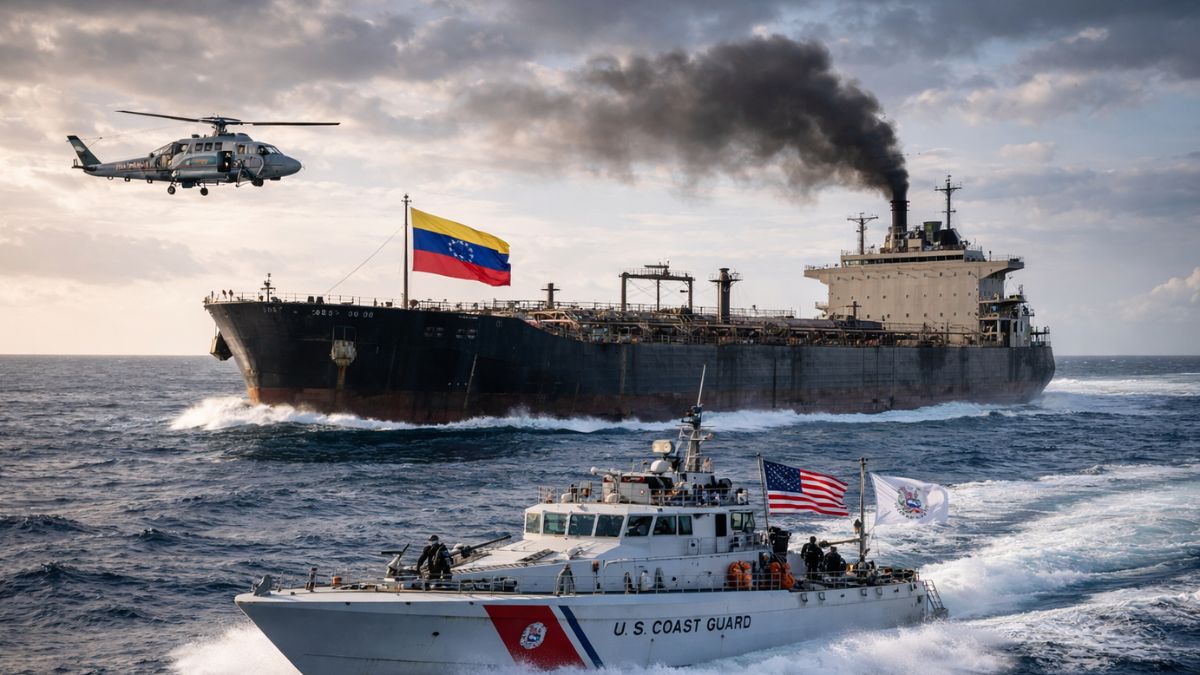
The US Coast Guard moves into active pursuit of a sanctioned oil tanker in international waters near Venezuela as Washington intensifies its crackdown on sanctions evasion and illegal oil shipments. Image courtesy: AI generated picture via DALL-E.

The US Coast Guard is in “active pursuit” of another oil tanker in international waters near Venezuela, a US official said on Sunday (December 21, 2025), marking the latest escalation in Washington’s enforcement campaign against what it calls Venezuela’s illegal oil trade and sanctions evasion.
What did officials say about the oil tanker pursuit?
According to the official, the vessel is a “sanctioned dark fleet tanker” allegedly involved in helping Venezuela bypass US sanctions. The ship is said to be operating under a false flag and is subject to a judicial seizure order.
US authorities have not yet publicly confirmed the pursuit, and details about the tanker’s identity and exact location remain unclear.
How does this US action follow previous incidents?
The development comes days after the US seized a Panamanian-flagged oil tanker in international waters on Saturday (December 20, 2025), the second such seizure this month.
A specialised US tactical team boarded that vessel, which Washington said was transporting oil belonging to Venezuela’s state-run energy company PDVSA.
While the tanker itself is not listed on the US Treasury’s sanctions registry, US officials said the cargo violated sanctions. Shipping records show the vessel has previously sailed under Greek and Liberian flags.
How is the oil tanker pursuit part of Trump’s decision?
Last week, US President Donald Trump ordered what the administration described as a “blockade” of sanctioned oil tankers entering or leaving Venezuela.
US officials argue that oil revenues are being used by Caracas to finance drug trafficking and organised crime.
Why did Venezuela reject US allegations?
Venezuela strongly rejects those claims, describing the seizures as acts of “theft and kidnapping” and accusing Washington of trying to steal its natural resources.
Venezuela, which holds the world’s largest proven oil reserves, relies heavily on crude exports to fund government spending.
How did Venezuela warn of counteractions?
Following Saturday’s (December 20) seizure, the Venezuelan government warned that the actions “will not go unpunished” and said it plans to lodge complaints with the United Nations Security Council and other multilateral bodies.
Data compiled by TankerTrackers.com shows that more than 30 of the roughly 80 ships currently in Venezuelan waters or approaching the country are under US sanctions, highlighting the scale of Washington’s crackdown on maritime oil shipments.
What is the background to the US actions on Venezuela?
The standoff unfolds against a backdrop of increased US military activity in the Caribbean. In recent weeks, US forces have carried out strikes on alleged Venezuelan drug-smuggling boats, operations that reportedly killed around 100 people.
The US has also imposed sanctions on relatives of President Nicolás Maduro and businesses linked to what it calls his illegitimate regime.
How did the war of words escalate between the US and Venezuela?
Secretary of State Marco Rubio said on Friday (December 19) that the “status quo with the Venezuelan regime is intolerable,” signalling the Trump administration’s intent to intensify pressure.
Venezuelan officials accused Rubio of pushing the US toward “regime change,” a charge Washington denies.