Iran Never Initiated A War: Pezeshkian Invites Americans To Look Beyond ‘Machinery Of Misinformation’ In Open Letter
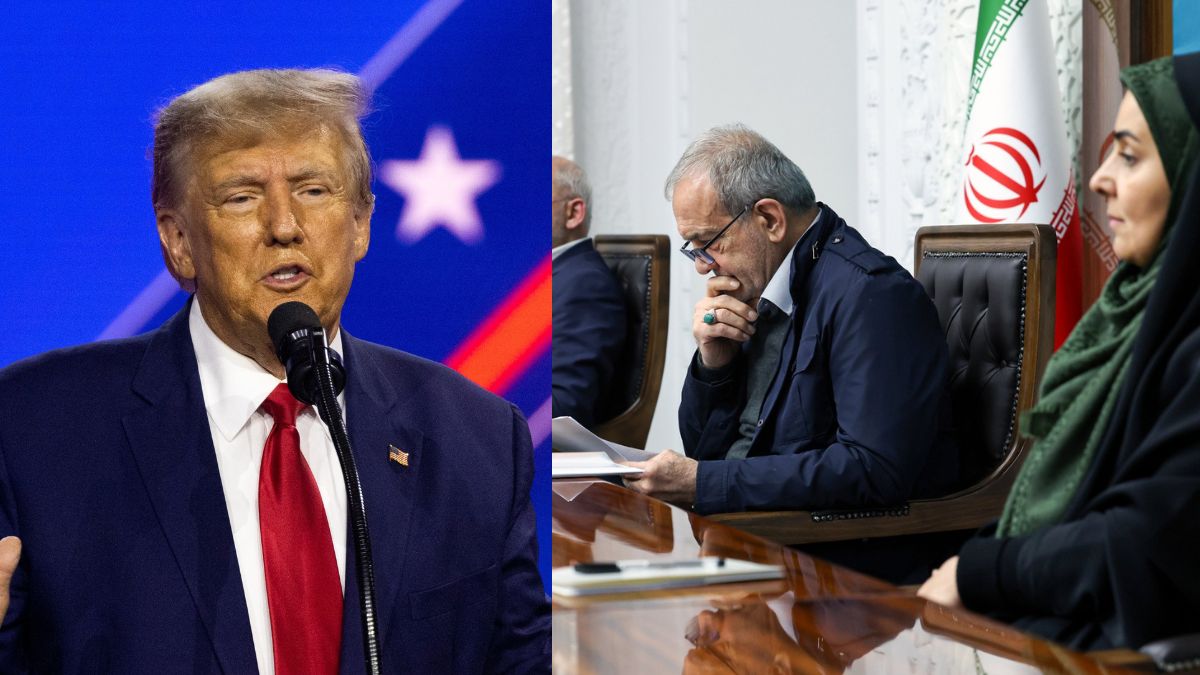
Casting the conflict as costly for both sides, Pezeshkian asked if there had been "any objective threat from Iran to justify such behaviour". Image courtesy: RNA

While the West Asia conflict continues to reshape global geopolitics along with impacting key oil routes, a surprising diplomatic signal has emerged from Tehran. Iranian President Masoud Pezeshkian has addressed an open letter directly to the American people, calling for engagement over confrontation.
His letter, setting the tone for a shift away from conflict and suggesting the possibility of diplomatic engagement, came just as US President Donald Trump claimed Iran was seeking a ceasefire, a claim swiftly denied by Tehran. Notably, Pezeshkian also released the letter ahead of Trump’s speech.
Iran reaches out directly to the American people
In a notable shift in tone, President Pezeshkian chose to bypass official diplomatic channels and speak directly to citizens of the United States. In his letter, he emphasised that the Iranian people “harbor no enmity” toward Americans or other nations, drawing a clear distinction between governments and populations.
The message appeared designed to reshape global perception, portraying Iran as open to dialogue while attempting to counter narratives of aggression. Pezeshkian framed the current moment as a historic crossroads, warning that the choice between “confrontation and engagement” would shape the future for generations.
He noted, “even in the face of repeated foreign interventions and pressures throughout their proud history, Iranians have consistently drawn a clear distinction between governments and the peoples they govern. This is a deeply rooted principle in Iranian culture.”
While the tone of the letter suggests openness to diplomacy, it stops short of explicitly calling for a ceasefire or negotiations. Instead, it signalled a broader willingness to engage, without making concrete commitments. Even as Pezeshkian speaks of dialogue, Iran has not addressed key flashpoints such as the disruption in the Strait of Hormuz.
Why are Trump’s claims being disputed?
The timing of the letter is particularly significant as it came just hours before President Trump was set to deliver a major update on the war. Trump had earlier claimed that Iran was seeking a ceasefire, suggesting that US military pressure had forced Tehran to the table.
However, Iran’s Foreign Ministry quickly rejected this assertion, calling it “false and baseless.” The contradiction highlights the information battle accompanying the military conflict, with both sides shaping narratives to project strength. Trump has repeatedly maintained that Iran’s military has been severely weakened, while Tehran continues to deny such claims.
Iran invokes historical context
A significant portion of Pezeshkian’s letter revisits the long and fraught history between Iran and the United States. He pointed to the 1953 coup, US support for the Shah, backing of Iraq during the Iran-Iraq war, and decades of sanctions as key sources of mistrust.
Despite these pressures, he argued, Iran has not only endured but grown stronger, citing advances in education, technology, and healthcare since the Islamic Revolution. “Iran has never initiated a war. Yet it has resolutely and bravely repelled those who have attacked it,” he wrote, noting, “What Iran has done and continues to do is a measured response grounded in legitimate self-defense, and by no means an initiation of war or aggression.”
Who really controls Iran’s war and peace decisions?
A crucial question remains: how much weight does this letter carry? In Iran’s political system, ultimate authority rests with Supreme Leader Mojtaba Khamenei, not the president. Decisions on war, peace, and negotiations are shaped at the highest level, often with significant influence from the Islamic Revolutionary Guards Corps (IRGC), which has gained prominence during the conflict.
It remains unclear whether Pezeshkian’s outreach reflects a unified position within Iran’s leadership or a limited diplomatic gesture.
He also questioned whether Washington entered the war “as a proxy for Israel, influenced and manipulated by that regime”. “Is ‘America First’ truly among the priorities of the U.S. government today?” Pezeshkian asked. He also said ordinary Americans were not Iran’s enemy, “even in the face of repeated foreign interventions and pressures”.