




Why Somaliland Matters: The Diplomatic Storm Around Israel’s Possible Recognition
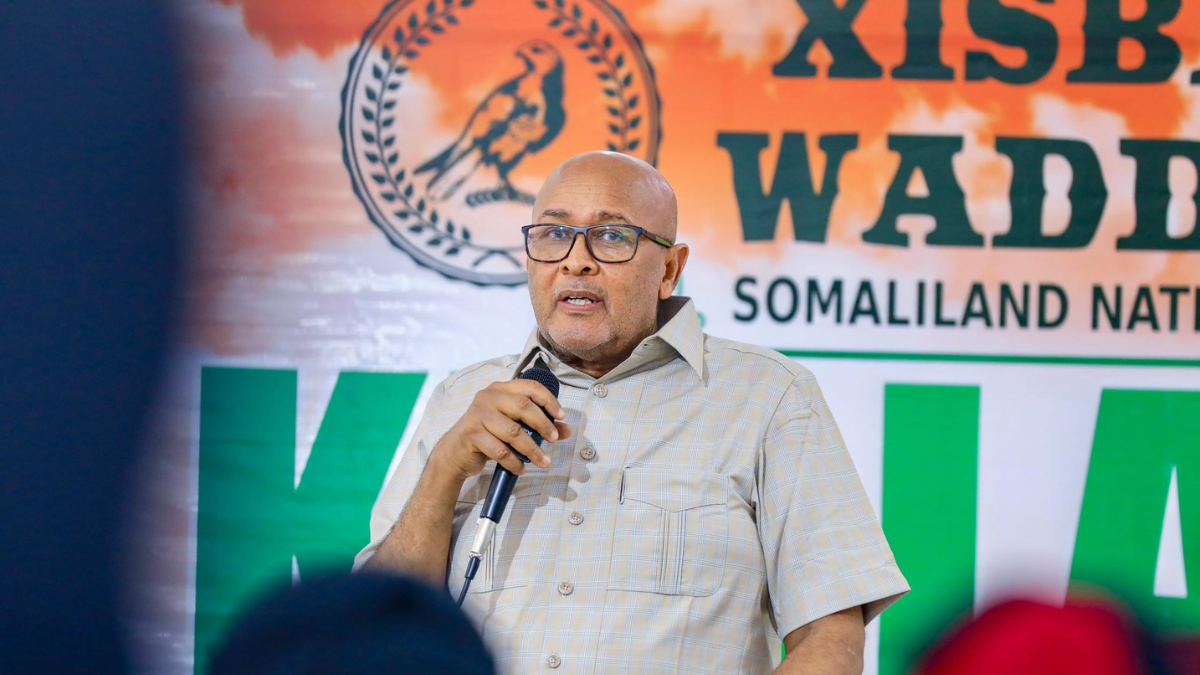
Image Courtesy: X/@Abdirahmanirro

The prospect of Israel formally recognising Somaliland has ignited a quiet but consequential diplomatic debate that stretches from the Horn of Africa to the Middle East and Washington.
Though no official decision has been announced, reports and political signals suggesting Israeli interest have underscored Somaliland’s growing strategic value, and the risks Israel would assume by crossing a long-standing diplomatic red line.
Somaliland, a self-declared republic that broke away from Somalia in 1991, has operated for more than three decades as a de facto state with its own government, currency, and security forces.
Yet it remains unrecognised by the international community, which continues to back Somalia’s territorial integrity. For Israel, any move toward recognition would be unprecedented in Africa since most countries adhere to the African Union’s position against endorsing secessionist entities.
How is strategic geography at the heart of the Somaliland debate?
Somaliland’s importance lies first and foremost in its geography. Sitting along the Gulf of Aden, near the Bab el-Mandeb strait, a critical maritime chokepoint linking the Red Sea to the Indian Ocean, the territory occupies a strategic perch on one of the world’s busiest shipping lanes.
For Israel, whose trade and energy routes rely heavily on secure Red Sea access, the region has gained heightened relevance amid Houthi attacks on commercial shipping and growing Iranian influence in the Horn of Africa.
Israeli security planners have long viewed the Red Sea as an extension of Israel’s strategic depth. Access, intelligence cooperation, or even limited security coordination with Somaliland could help Israel monitor threats emanating from Yemen and safeguard maritime traffic.
This strategic logic helps explain why Somaliland has periodically surfaced in Israeli strategic discourse despite its unresolved legal status.
What are the diplomatic upside versus regional fallout?
Proponents argue that recognising Somaliland would align Israel with a rare example of relative stability and democratic practice in a volatile region.
Somaliland has held multiple elections, maintained internal security, and positioned itself as a reliable partner for foreign investment and counterterrorism cooperation.
Supporters within Israel also frame recognition as consistent with Israel’s own history of seeking international legitimacy against the odds.
However, the diplomatic costs could be substantial. Somalia, which strongly opposes any recognition of Somaliland, has historically supported Palestinian positions in international forums.
An Israeli move could harden Mogadishu’s stance further, pushing Somalia closer to rivals such as Turkey or Qatar, both influential actors in the Horn of Africa and often critical of Israeli policies.
More critically, recognition would place Israel at odds with the African Union’s consensus and could complicate Israel’s carefully cultivated outreach to African states in recent years.
Israel has worked to rebuild diplomatic bridges across Africa, including gaining observer status at the AU—an effort already fraught with opposition from several member states. Endorsing Somaliland could revive accusations that Israel selectively supports separatist movements for strategic gain.
What is the US factor and broader implications for Somaliland?
Washington’s position is another key variable. While some US policymakers have floated the idea of recognising Somaliland as a strategic counterweight to China and Iran in the region, official US policy continues to back Somalia’s unity.
Israel is unlikely to act unilaterally without at least tacit American support, particularly given the sensitivity of Red Sea security and regional alliances.
For Somaliland, Israeli recognition — symbolic or formal — would be a diplomatic breakthrough, potentially encouraging other countries to reconsider their stance. For Israel, it would signal a willingness to reshape norms in pursuit of strategic advantage.
For now, Israel appears to be weighing the strategic allure of Somaliland against the diplomatic shockwaves such recognition would unleash. The controversy underscores how a small, unrecognised territory has become a focal point in the larger contest over security, legitimacy, and influence in the Horn of Africa.